
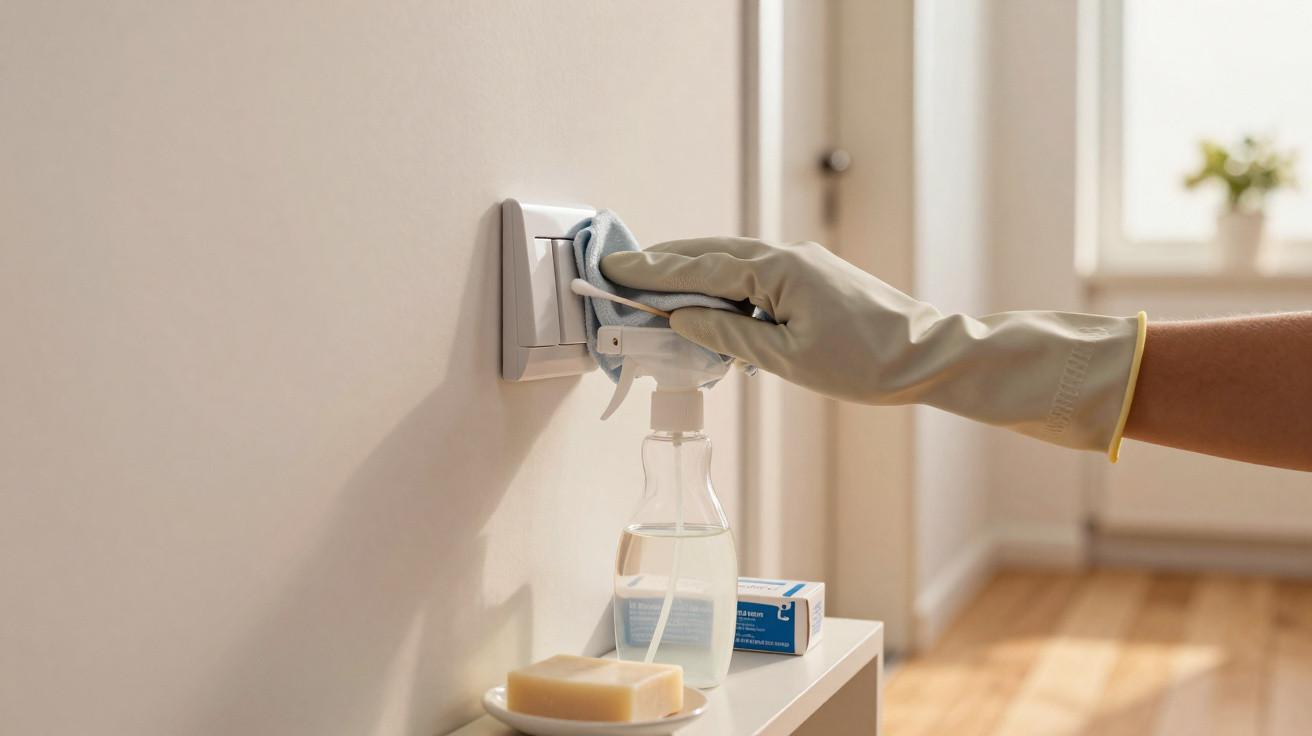
When you do a proper tidy-up at home, you mop the floors, clear clutter, and scrub the bathroom and kitchen. Yet one small detail is almost always overlooked: the light switch. These tiny surfaces we touch countless times a day quietly collect grime, grease and bacteria. With a few tried-and-tested household remedies, you can clean them thoroughly in just a few minutes - without any specialist products.
Safety first: power off, water used sparingly
Before you start on any switch, safety comes first. Electricity and moisture are a poor mix. If you want to be absolutely safe, isolate the relevant circuit at the consumer unit. It sounds like a faff, but it usually takes only a few seconds.
- Switch off the fuse/MCB for the room you’re working in
- Check that the light really no longer turns on
- Never spray cleaner directly onto the switch
- Dampen a cloth lightly - never use it dripping wet
If liquid runs into the gaps around the switch, it can damage the mechanism or, in the worst case, cause a short circuit. The rule is simple: a well-wrung cloth and a bit of patience beat too much cleaner every time.
"If you’re cleaning light switches, you don’t need a specialist product - just a little water, the right household remedy and a cool head at the consumer unit."
1. White household vinegar: the all-rounder for dirt and grease
White household vinegar is a staple in many cleaning cupboards. It cuts through grease, neutralises odours and has a mild disinfecting effect. For everyday marks on light switches, it’s usually more than enough.
Mix for cleaning switches:
- 1 part white vinegar
- 2 parts lukewarm water
- Optional: a few drops of lemon juice for a fresher smell
Dip a lint-free cotton cloth into the mixture and wring it out well until it’s only slightly damp, then wipe the switch surface and the surrounding plate. Follow immediately with a dry cloth so you don’t leave streaks behind.
2. Bicarbonate of soda or baking powder for yellowed switches
Plenty of people know the problem: once-bright white switches can look yellowish or grey over the years. Causes include nicotine, cooking fumes, sunlight, or simply ageing. One straightforward household remedy can make a real difference here: bicarbonate of soda (sodium hydrogen carbonate).
How to make a bicarbonate paste:
- Put 2–3 teaspoons of bicarbonate of soda into a small bowl
- Add water drop by drop until you get a thick, creamy paste
- Apply with a slightly damp cloth or an old soft toothbrush
- Rub gently - don’t scrub
- Leave for 1–3 minutes, then remove with a damp cloth
- Finish by wiping dry
If you need a bit more degreasing power, you can work in a tiny piece of traditional household soap (such as pure soap) or a solid laundry soap. If you’re dealing with a sensitive type of plastic, it’s worth testing an inconspicuous spot first before doing the whole surface.
3. Traditional bars of soap: gentle yet effective
Solid soap blocks - the sort many households used to keep by the sink - are excellent for cleaning hard-wearing surfaces. They lift day-to-day dirt and are noticeably gentler than many modern spray cleaners.
Method:
- Grate a few soap flakes into a bowl of warm water
- Stir until the water turns slightly cloudy and soapy
- Dip in a cloth and wring it out thoroughly
- Wipe the switch and plate gently
- Go over it again with a second cloth dampened with clean water only
- Finish by drying and buffing
A key benefit of this approach: it’s a good option if you have children at home and want to avoid harsher products.
4. Rubbing alcohol for more hygienic surfaces
If you’re concerned about germs - for example in the bathroom, kitchen, or in a busy household - rubbing alcohol can be a sensible choice. Products at around 70% alcohol are highly effective against bacteria and viruses, without necessarily damaging sensitive plastics.
How to use it:
- Lightly dampen a clean cloth
- Put a few drops of rubbing alcohol onto the cloth
- Wipe the light switch thoroughly
- Let it air-dry - alcohol evaporates very quickly
If you only have higher-proof alcohol at home, simply dilute it with a little water until you reach roughly 70%. Gloves are a good idea, as repeated use of alcohol can dry out and de-grease the skin.
5. Solvent for paint splashes: only as a last resort
After decorating, stubborn drips and splatters often remain on the switch. If the paint is fully dry and no longer comes away easily, a mild solvent can help - especially with certain coatings such as epoxy or synthetic resin paints.
One possible approach:
- Mix a tiny amount of solvent with a little vinegar
- Apply using a cotton cloth, keeping it only lightly damp
- Dab the stain carefully - don’t rub
- Wait briefly for it to work
- Wipe with a damp cloth, then dry and buff
Only use these products in small, targeted areas and make sure the room is well ventilated. In homes with children or pets, take extra care and re-seal containers immediately.
6. Cotton buds for awkward gaps and edges
Dirt rarely sits only in the middle of the switch. The narrow gaps around the edges, corners and grooves are real dust traps, and a normal cloth often can’t reach properly. This is where a simple cotton bud comes into its own.
For the finishing touches:
- Dip a cotton bud into vinegar water, a soapy solution, or alcohol
- Remove excess liquid
- Carefully run it along edges and into small grooves
- Swap it out regularly, as it gets dirty quickly
On light-coloured switches the difference is immediate: once the dark build-up around the edges is gone, the whole switch looks noticeably cleaner.
7. Removable faceplates: a proper bath for the light switch
Many modern switches have a removable cover plate. If you’re reasonably handy, you can often lift it off with a small screwdriver - without touching any internal components. The key point: only work on the plastic faceplate, never on the electrical installation itself.
These parts can be cleaned with a soak:
- Fill a bowl with hot (but not boiling) water
- Add a small amount of detergent or soap flakes
- Place the cover plates in and leave to soak for several hours
- Wipe over with a soft sponge or cloth
- Rinse with clean water and dry thoroughly
- Refit only once everything is completely dry
This can noticeably improve the appearance of older, heavily greyed switch plates.
How often should light switches be cleaned?
There’s no fixed rule. In a single-person household, it’s often enough to wipe switches every few weeks. In families, shared houses, or if you have frequent visitors, a shorter routine makes sense - for example weekly in the hall, bathroom and kitchen.
| Room | Recommended cleaning intervals |
|---|---|
| Kitchen | once a week |
| Bathroom | once a week |
| Hall / entrance area | every 1–2 weeks |
| Bedroom / living room | every 2–4 weeks |
If you hate cleaning, simply build switches into routines you already have: give them a quick wipe when you’re doing door handles or worktops anyway. That way, they never reach the “too gross” stage.
Why switches become grimy faster than you’d expect
Like door handles or smartphone screens, light switches are among the most frequently touched surfaces in the home. Every trip to the bathroom, every time you come back in, every late-night visit to the fridge - your hand automatically goes to the switch. During cold and flu season in particular, germs can pass from person to person this way.
Vinegar water or rubbing alcohol can significantly reduce the germ load. If you quickly wipe the switch in the bathroom after washing your hands, you help prevent bacteria from settling back in. In households with young children, this can noticeably improve hygiene without tipping into unrealistic, clinical-clean expectations.
Common cleaning mistakes and how to avoid them
Most issues come not from the wrong product, but from using it incorrectly. Three common culprits:
- Too much liquid: Soaking-wet sponges or spraying directly onto the switch is risky and can harm the mechanism.
- Harsh abrasives: Powders or rough pads scratch the surface, and dull patches are difficult to restore.
- Unsuitable solvents: Overly aggressive products can soften or discolour plastic - when in doubt, test on a small area first.
With soft cloths, carefully controlled moisture and proven household remedies, the risk stays low - and the improvement is still clearly visible.
A practical side benefit: small details make a room look tidy
Clean light switches can change how a room feels more than you might expect. Anyone who’s had guests over will recognise it: a freshly mopped floor draws less attention than yellowed switches or dirty socket surrounds. These small surfaces sit in your line of sight and, consciously or not, signal how well a home is kept.
So if you want your place to look “more pulled together” with minimal effort, this is an easy win. A microfibre cloth, a little vinegar water, a splash of rubbing alcohol - that’s usually all it takes. And once you’ve seen how a dull old switch looks noticeably brighter after a bicarbonate treatment, it tends to become a regular part of your cleaning routine.


Comments
No comments yet. Be the first to comment!
Leave a Comment