
Between a stack of plates and a bottle of washing-up liquid, you will find the same unremarkable item in almost every kitchen: the washing-up sponge. Most of us reach for it without thinking-whether it’s to quickly rinse a glass or scrub a pan. Hygiene researchers, however, are now issuing a clear warning: this tiny helper is among the most heavily contaminated objects in the home. A study from Germany backs up that criticism-and draws attention to a simple accessory from Action for around €3 that can noticeably improve the situation.
Why the classic kitchen sponge is a bacteria magnet
Many people immediately think of the toilet when they think about germs indoors. Yet studies show that the modest sponge by the sink is often home to far more bacteria than the toilet seat.
That comes down to a combination of factors:
- constant dampness inside the sponge
- warmth in the kitchen, especially after cooking
- leftover food particles and grease
- lots of tiny pores and fibres with a large surface area
This mix creates near-perfect conditions for microorganisms to multiply. Even if you squeeze the sponge out regularly or rinse it with hot water, the underlying issue is hard to control.
"Hygiene specialists class the kitchen sponge as one of the most bacteria-laden objects in the entire household."
A research group at Furtwangen University of Applied Sciences in Baden-Württemberg found that after only a short period of use, the germ count in the material rises so sharply that it returns to the level from before the last “cleaning attempt”. Measures such as rinsing with very hot water, a quick stint in the microwave, or adding a splash of vinegar may reduce certain germs, but they do not deliver a true reset.
What the study specifically suggests
The researchers examined a range of approaches households use to try to keep sponges clean. The outcome is sobering: over the longer term, none of the common methods reliably keeps germ levels low.
The core advice is therefore:
- replace the sponge very regularly, ideally weekly
- let it dry out as completely as possible between uses
- don’t wash up glasses “quickly” after scrubbing heavily soiled pans
- dispose of it immediately if there is a noticeable smell or discolouration
Washable versions made from microfibre or cotton can cut down on waste, but they do not automatically solve the moisture problem. If the cloth is left wet in sink water, bacteria can thrive just as readily as they do in a traditional sponge.
The Action option: a dish soap dispenser with a sponge tray
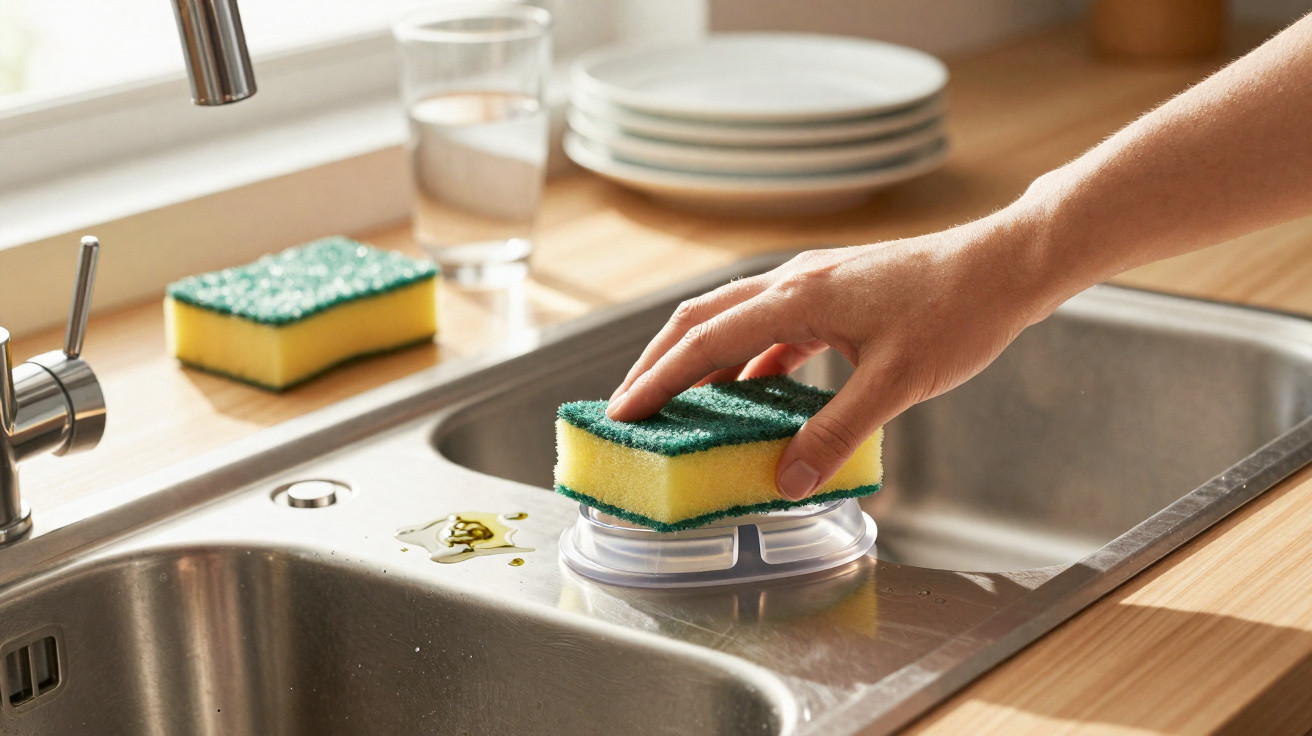
This is exactly where an accessory currently sold in Action’s household section for under €3 comes in. It’s a compact dish soap dispenser with an integrated sponge resting area.
The design is straightforward:
- a container at the bottom that you fill with washing-up liquid
- a small pump above it that pushes the liquid upwards
- a firm platform on top where the sponge sits
- a non-slip base so it stays secure by the edge of the sink
To dispense, you simply press down with your hand on the sponge placed on top. A hole in the centre releases only a limited amount of liquid onto the underside. That means you are no longer pouring half a “bath” of washing-up liquid into the sink each time, but using a much more controlled dose.
"The clever part: the sponge sits raised up and dries faster, instead of lying in a puddle of dirty water."
Experienced users mainly praise three things: the tidier look around the sink, less wasted washing-up liquid, and the fact that excess water can drain out of the sponge into the lower container. This container can be taken apart and cleaned separately.
How the dish soap dispenser improves hygiene
This kind of accessory is not a disinfectant, and it will not turn an old sponge that has already “gone off” into a sterile tool. What it does do is change the conditions that allow germs to multiply-at several points.
Faster drying instead of constant wetness
Because the sponge rests on the upper platform, it is not sitting in dirty sink water all the time. Air can reach all sides, so the material dries out far more quickly after use. Dry periods matter because many bacteria need moisture to grow.
More accurate dosing of washing-up liquid
In many homes, washing-up liquid is used far too generously straight from the bottle. One quick squeeze and half the plate is covered. That not only increases costs, it can also leave foam residues trapped in the sponge.
With a dosing dispenser, one or two short presses are usually enough. That results in:
- less unnecessary foam in the sink
- more economical use of the bottle
- less time with the sponge sitting in thick soapy water
Easier cleaning around the sink
The lower container collects both leftover detergent and draining water. It can be dismantled and rinsed with hot water. If you give this container a quick clean every few days, you remove a large share of the nutrients that bacteria feed on.
"The dispenser creates clearer routines at the sink: a fixed place, a controlled process, less chance."
Important rules that still apply, even with a gadget
Hygiene experts stress that even with a well-designed dispenser, a sponge remains a consumable item. If you use the same one for months, you still risk high germ levels-regardless of how clean the container looks.
Practical minimum rules for everyday life:
- throw away the washing-up sponge after a week at the latest
- use separate sponges or cloths for the bathroom, kitchen and worktops
- after handling raw meat, fish or eggs, use disposable kitchen paper or a separate washable cloth
- wipe the rim of the sink quickly each day with hot water and a little cleaner
If you want a more sustainable approach, you can put reusable cloths into a 60°C wash. What matters then is letting them dry completely and not leaving damp textiles scrunched up.
How serious is the health risk, really?
Not every bacterium in the home automatically causes illness. Many germs are harmless, and some are even beneficial. The risk is greatest for people with weakened immune systems, older adults, small children, or those with chronic illnesses. For them, stomach bugs or certain microbes from spoiled foods can genuinely become a problem.
In this context, the kitchen sponge works like a “taxi”: it picks up microorganisms from chopping boards, worktops, meat juices or plates and spreads them widely. The longer a sponge is used, the denser this “microfilm” becomes inside it.
Tips for a more hygienic kitchen with minimal effort
A lot can be improved with a few simple habits. The best results usually come from combining measures:
- use a dish soap dispenser or soap pump with a sponge tray
- squeeze the sponge out thoroughly after each use and store it openly
- replace it immediately if it smells unpleasant-don’t keep it “for a few more days”
- wipe worktops after cooking with a fresh cloth
- wash tea towels regularly at high temperatures
The Action dispenser fits into this line-up of small helpers that can turn a chaotic washing-up zone into something a bit more structured and predictable. If you need to buy washing-up liquid anyway, it is a relatively low-cost way to see whether you can reduce usage and keep the sponge drier.
In the background is a broader question: how much hygiene does a kitchen really need? Studies suggest that a handful of consistent habits make the difference-such as changing sponges regularly and ensuring they dry out between uses. A simple gadget cannot replace an awareness of cleanliness, but it can make day-to-day routines noticeably easier.


Comments
No comments yet. Be the first to comment!
Leave a Comment