
Often, the real culprit isn’t your bedding at all - it’s the mattress.
Plenty of people keep on top of cleaning the kitchen, bathroom and floors, yet the mattress is surprisingly often ignored. And that’s despite the fact we spend several hours every night lying directly on it. Look after a mattress properly and you’ll not only sleep more hygienically, you’ll also significantly extend the life of a costly sleep surface.
Why your mattress deserves more attention
Over time, a mattress gradually accumulates sweat, skin flakes, dust, mites and sometimes stains. You may barely see any of it, but you can notice the effects: unpleasant odours, more sneezing, restless nights, and back pain caused by dips.
"If you give your mattress a thorough care session a few times a year, you’ll save money in the long run, protect your back and sleep noticeably better."
Professional mattress-cleaning services are booming, but many of the key steps can be done at home with a little time and a few everyday helpers. Here’s a practical step-by-step guide.
Step 1: Rotate and turn your mattress regularly
As weeks and months pass, the spots you sleep on most develop visible hollows and less obvious pressure points. At first it can feel pleasantly soft, but it can quickly turn into that “saggy” feeling.
- In the first year: rotate once a month
- After that: rotate every three months
- One-sided mattresses: rotate 180 degrees so the head end becomes the foot end
- Two-sided mattresses: rotate and also flip it over
This habit spreads the load more evenly, reduces indentations and noticeably slows wear. If you’re likely to forget, set a repeating reminder in your phone calendar.
Step 2: Let your mattress breathe
Moisture is the best friend of odours, mould and mites. Every night we release moisture through our skin and breathing - and some of it ends up in the mattress.
How to air it properly
Strip the bed completely. Remove the sheets, duvet and pillows, and put them aside while the mattress airs - for example over a chair, or by an open window to freshen.
- Open the window wide, ideally to create a through-draught
- Leave the mattress uncovered for two to four hours
- Avoid harsh, direct sunlight, especially with foam mattresses
A slatted bed base (rather than a solid board) helps air circulate underneath. In damp homes, this is important for preventing mould.
Step 3: Tackle sagging and dips directly
A slight “nest” can be normal; sinking deeply is not. If you wake with back pain or stiff shoulders, it’s worth taking a closer look.
What to check
- Bed base/support: Are any slats broken, bowed or loose?
- Mattress: Are there clear hollows that don’t spring back after a short time?
- Load distribution: Is the bed possibly resting mainly on a few central supports?
As an immediate fix, a high-quality topper can help level the surface and add support. At the same time, check the condition of the slatted base - a warped frame can ruin even a new mattress surprisingly quickly.
"If you act early, you can often rescue a sagging mattress for a few more years before you need to buy a new one."
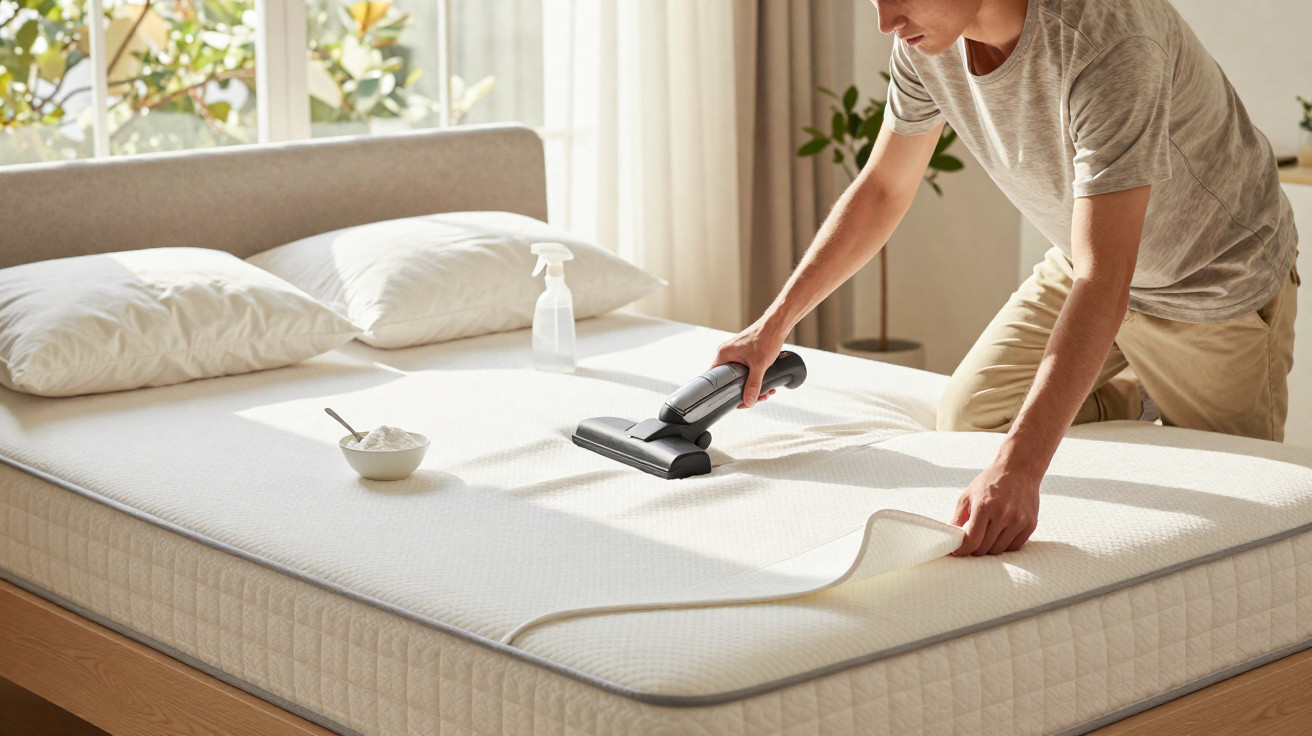
Step 4: Hoover thoroughly - the hygiene step
Dust, mite droppings and skin flakes sit largely in the top few centimetres. That’s exactly where a vacuum cleaner with an upholstery attachment can reach.
The right way to hoover in a few minutes
- Strip the bed and expose the mattress
- Use an upholstery or furniture nozzle
- Move slowly in overlapping lines across the entire surface
- Don’t forget edges and seams - a lot collects there
If you’re allergic to house dust, plan to do this every four to six weeks. A machine with good filtration (for example a HEPA filter) is ideal so fine dust isn’t blown back into the air.
Step 5: Remove stains without soaking the mattress
Whether it’s coffee in bed, a spilled mug of tea or sweat marks: there’s no need to panic - but flooding it with water is just as unhelpful. The aim is always targeted cleaning and getting the mattress dry again quickly.
Gentle stain treatment, step by step
- Blot up liquid immediately with kitchen roll or a clean cloth. Don’t rub - just dab.
- Mix a mild detergent (for example a little delicates detergent) with lukewarm water.
- Dab the stain with a lightly dampened cloth - do not saturate.
- Use a second, dry cloth to lift out the moisture.
- Let the mattress dry thoroughly, ideally with the window open.
Heavy scrubbing damages the surface and pushes dirt deeper into the material. Harsh cleaners or bleach can attack the structure and may even make odours worse.
Step 6: Wash the cover and protective layers regularly
Many modern mattresses come with a removable zip cover. It’s easy to overlook in day-to-day life, even though it’s the first “filter layer” protecting the core.
- Check the care instructions on the label
- Usually washable at 40 or 60 °C
- Close the zip before washing, otherwise the cover can lose its shape
Ideally, you should always use a mattress protector on top of the cover. It catches spills, sweat and dust and is far easier to clean.
"A good mattress protector is like an airbag: you hope you’ll never ‘need’ it, but you’re glad it’s there when something happens."
What really matters in a mattress protector
There’s a huge range on the market - and just as big a price difference. These criteria make choosing easier:
- Breathable: otherwise it will feel sweaty and clammy
- Waterproof: protects against spilled drinks or small accidents
- Washable at at least 40 °C: 60 °C is better for allergy sufferers
- Secure fit: with elasticated edges like a fitted sheet so it doesn’t slip
If you change the protector whenever you change the bedding, you can keep the mattress almost stain-free for the long term. People with allergies may also benefit from a specialist encasing cover that largely blocks mites.
How often should you clean a mattress?
A rough guide for a household without particular allergies or illnesses:
| Task | Interval |
|---|---|
| Airing without bedding | Once a week |
| Thorough hoovering | Every 4–6 weeks |
| Washing the cover (if removable) | 2–4 times per year |
| Rotating / flipping the mattress | Every 1–3 months |
| Washing the mattress protector | With the bedding or at least every 4 weeks |
If you sweat heavily, let pets sleep on the bed, or have a house dust allergy, shorten the intervals slightly.
When a new mattress starts to make sense
Even with excellent care, there comes a point when a deep clean won’t solve the problem. Obvious hollows, springs you can feel, creaking noises or ongoing back pain are clear warning signs. A strong smell that persists after several cleaning attempts also suggests replacement is the better option.
As a rule of thumb, most mattresses have passed their best after eight to ten years - often sooner with budget models. If you buy good quality and maintain it regularly, you can extend that lifespan noticeably.
Practical extra tips for better sleep
If you’re already giving your mattress some attention, it’s worth adjusting a few other factors that can further improve sleep quality:
- Air the bedroom regularly, especially in the evening before going to bed
- Use cotton or linen bedding that absorbs moisture
- Avoid leaving heat-trapping electrical devices (for example laptops) on the bed for long periods
- If you have mould issues at home, use a hygrometer and check indoor humidity
Your own body is also a reliable indicator. If, after a few weeks of regular care, your back settles, your nose is less irritated and the bed smells neutral to fresh, you’re on the right track. And that’s the whole point: sleeping better - in the most literal sense.





Comments
No comments yet. Be the first to comment!
Leave a Comment