
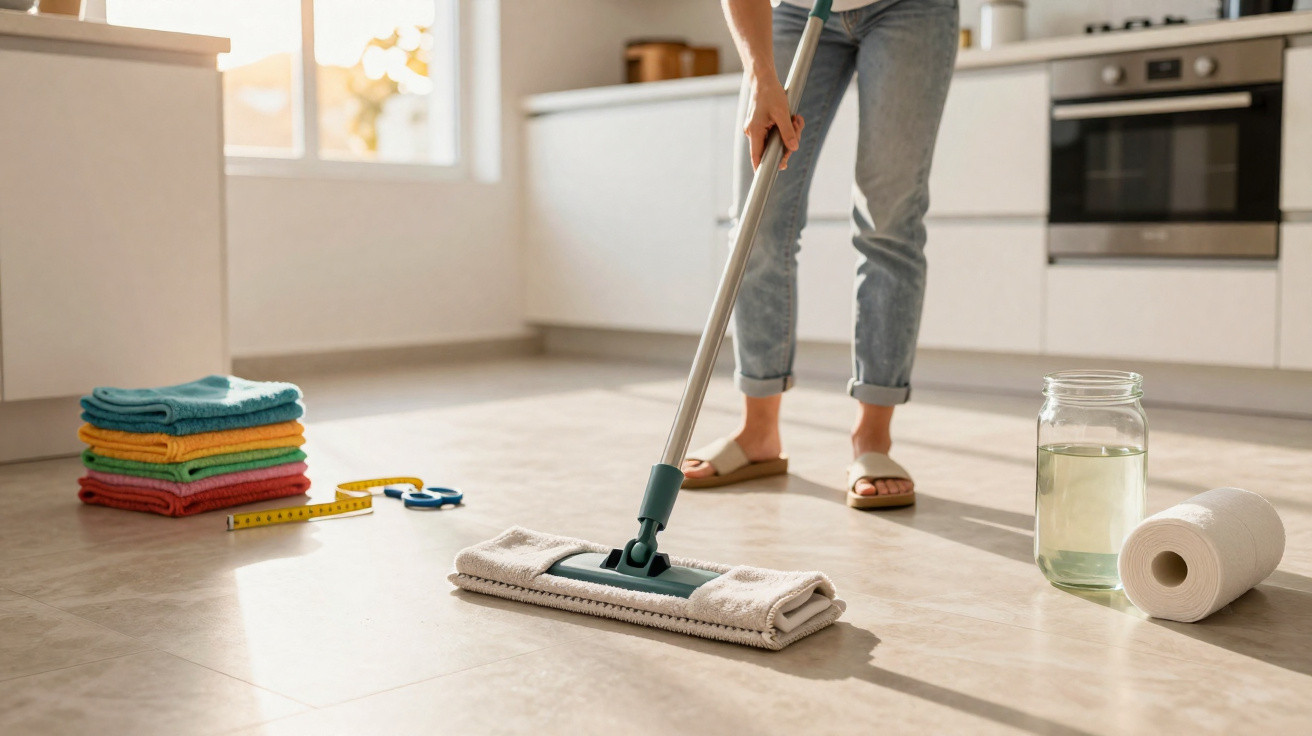
Many households regularly buy disposable floor wipes for a flat mop, then throw them away again after just a few minutes. Yet the more sustainable, cheaper option is often already sitting in the airing cupboard: a retired terry towel. With a few straightforward steps, you can turn it into a reusable floor cover that often grips dirt and dust better than shop-bought throwaway wipes.
Why an old towel can become a powerful floor-cleaning workhorse
Terry fabric is made from lots of small cotton loops. That looped texture acts like countless tiny hooks, lifting and holding on to dust, crumbs, pet hair and even fine grit.
"Cotton absorbs liquid and dirt deep into the fibre – unlike many synthetic disposable cloths, which tend to repel moisture."
Professional building-cleaning services often rely on the same basic idea: mops, fringes and floor cloths need to take up plenty of water, trap grime securely and withstand hot washes. A thick, well-worn bath towel meets those requirements too - just scaled down for a household flat mop.
The hidden cost of disposable wipes
If you mop twice a week using a flat mop designed for disposable wipes, you can easily get through more than 200 wipes a year. At €0.30 to €0.40 each, that adds up to roughly €60 to €80 annually on items you bin immediately.
A large bath towel of about 70 x 140 centimetres, by contrast, has plenty of life left in it:
- it can be cut into several floor-mop covers of the right size
- each cover survives dozens of 60 °C washes
- the material is already in the house instead of going into general waste
That means less packaging and fewer single-use items, while your household budget benefits over time.
Step-by-step: converting a towel into a reusable floor sleeve
You don’t need a sewing machine or advanced crafting skills for this. Most of the time, a sharp pair of scissors and a tape measure are enough.
Measure up and cut the fabric
Start with a standard flat mop with a low-profile head - the sort commonly sold with disposable floor wipes.
- Place the mop head in the centre of the towel.
- Trace a rectangular outline using tailor’s chalk or a pen.
- Add an extra 5 to 7 centimetres all the way around so the cover will hold securely later.
- Cut the rectangle out neatly.
If you want several covers, measure carefully once and then cut multiple identical rectangles. That way, you always have a clean one ready while the other is in the wash.
Cut corner notches so the mop head fits
A small tweak makes thick terry easier to tuck into the mop’s holders:
- Cut a straight notch of about 2 centimetres into all four corners.
- Put the mop head back in the centre of the cut piece.
- Fold the edges up and push the excess fabric into the rubber flaps or clips that normally hold the disposable wipes.
Those corner notches help the fabric wrap around the edges without pulling tight. The cover stays put, but you can remove it in seconds when needed.
"The mop head remains just as versatile, only the disposable wipes disappear – the convenience stays, the waste goes."
How to get the best everyday results from the towel cover
Depending on how dirty the floor is and what surface you have, the cover works either dry or slightly damp. Each approach has its own strengths.
Dry: a quick dust-grabber
When used dry, terry behaves a bit like a static dust cloth. The loops attract and hold dust, hair and crumbs well. It’s particularly handy for:
- a fast dust run through the hall or living room
- hair in the bathroom after blow-drying
- pet hair near a bed, scratching post or favourite blanket
Afterwards, shake the cover out outside or over the bath, then wash it if required.
Damp: a small-scale floor wash without the bucket hassle
With a light dampening, the cover turns into a mini mop head. How wet it should be depends on the flooring:
- Tiles and porcelain stoneware: wet the cover thoroughly and wring it out well so you don’t leave puddles.
- Laminate and vinyl: keep it only slightly damp to avoid warping.
- Parquet: work almost dry, meaning just minimal moisture.
In high-traffic areas such as the kitchen, entrance hall or feeding area, a two-step routine can pay off: first dry for crumbs and hair, then damp for marks and sticky patches.
Cleaning solution in a jar: soaking towel covers in advance
If you want things as quick and convenient as possible, mix a simple cleaning solution in a screw-top jar. The covers can sit inside, ready to use.
One possible mixing ratio:
| Ingredient | Amount | Purpose |
|---|---|---|
| White vinegar (clear) | 1/3 | breaks down limescale and grease, neutralises odours |
| distilled water | 2/3 | dilutes, helps prevent limescale marks |
| lemon essential oil | a few drops | fresh scent, light degreasing effect |
Place several covers in the jar, let them soak, and wring one out whenever you need it. The used cover then goes straight into the laundry basket.
Washing, hygiene and lifespan
For this to work long term, a consistent washing routine matters. Ideally, wash the covers with kitchen towels or bed linen at 60 °C. That reliably removes grease, dirt and any potential germs.
"It’s best to skip fabric conditioner – it coats the fibres and noticeably reduces the terry’s absorbency."
If a cover is heavily soiled, rinse it briefly before washing or keep it in a separate bucket. For unpleasant odours, an occasional wash cycle with a little baking soda or a laundry sanitiser can help.
How much can you realistically save?
If you’ve been buying disposable floor wipes regularly, you’ll usually notice the difference quickly. Once the last pack you already have is used up, there’s no need to buy more. In many homes, that genuinely frees up €60 to €80 per year for other things.
There are also indirect savings:
- less general waste, meaning bin bags fill up more slowly
- no last-minute dash to the chemist just for floor wipes
- no need to store bulky multipacks
At the same time, you reduce plastic use because both the wipes themselves and their packaging are eliminated.
Practical variations and small risks to keep in mind
If you like, you can cut different covers for different rooms over time - for example, separate colours for the bathroom, kitchen and living areas. That makes it obvious at a glance which cloth belongs where. Old guest towels or children’s towels work well too, especially if your mop head is a bit smaller.
One thing is worth watching: towels that have been treated with strongly chlorinated products or harsh bathroom cleaners can cause issues on sensitive floors if residues remain in the fabric. A thorough wash before using them on the floor is a sensible precaution. On delicate parquet, use vinegar solutions very sparingly and well diluted, as acidic cleaners can damage the finish over time.
Day to day, it becomes clear how many covers a household actually needs. Two to three is often enough for a flat; families with children or pets are better planning for four to six. That way, a fresh cover is always within reach, even if the washing machine is already running.
One unloved old bath towel can become a small stockpile of tough cleaning tools. Floors come up clean, the bin fills more slowly, and spending at the chemist drops - all from one simple switch with surprisingly big impact.


Comments
No comments yet. Be the first to comment!
Leave a Comment