
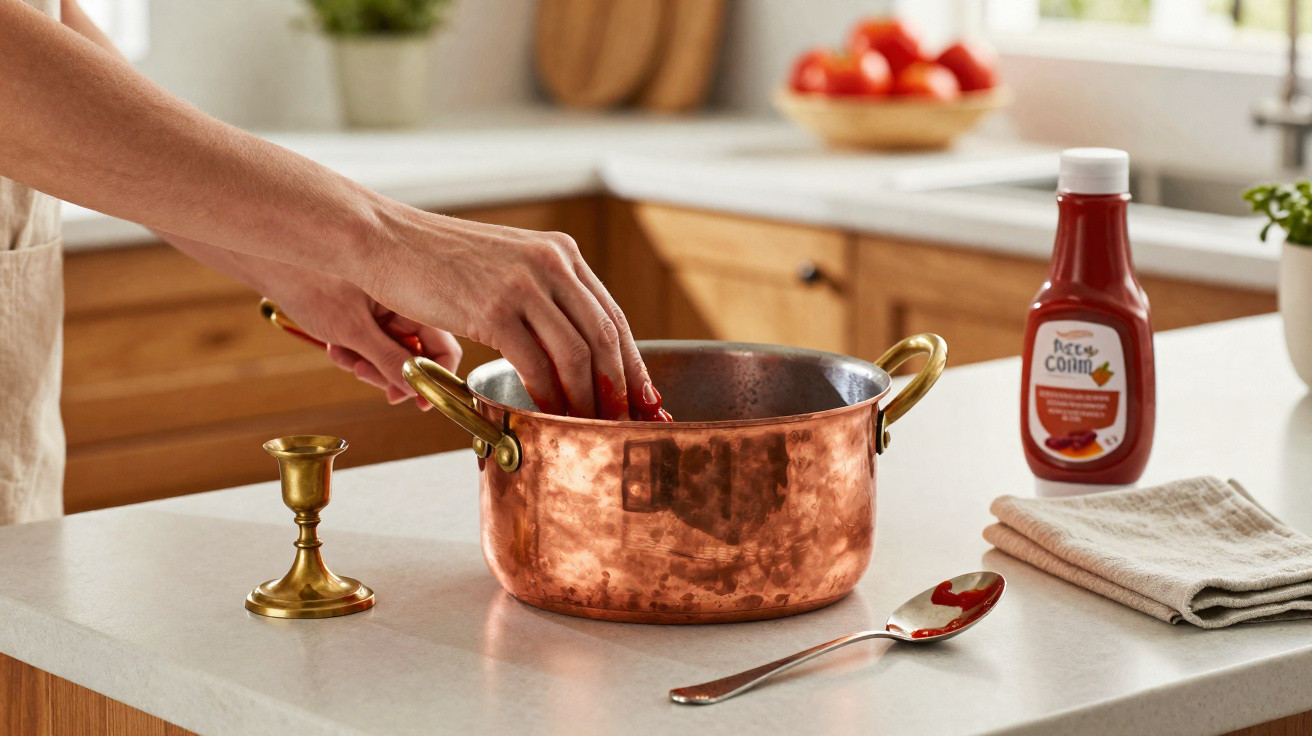
Many people put off cleaning copper, brass or silver for months. It feels like hard work: too much rubbing, too much effort, and specialist cleaners that seem overly harsh. Yet a badly underestimated household helper is sitting in plenty of fridges, and it can do in a quarter of an hour what usually takes polishing paste, a sponge and patience: ordinary ketchup. What sounds like an internet joke is actually based on chemistry - and it can genuinely change your cleaning routine at home.
Why ketchup is the one thing that brings metals back to a shine
Ketchup is usually seen as a side for chips or a burger. Hardly anyone expects it to double as a gentle cleaner for metal surfaces - but that is exactly what can happen when the red sauce meets copper, brass, bronze or tarnished silver.
"Ketchup combines weak acids with a slightly sticky consistency - exactly the mix that lifts deposits without scratching the metal."
The secret is its ingredients. Ketchup contains, among other things, vinegar and tomato concentrate. Together they provide two substances that act like a mini chemistry kit for the household:
- Acetic acid from the vinegar
- Citric acid from tomato and tomato purée
These acids do not attack the metal itself; they target the oxide layer on top - the part we notice as patina, verdigris or tarnish. Instead of scrubbing for ages, the acids loosen the build-up until it can be wiped away with a cloth almost effortlessly.
The chemistry behind it: gently acidic rather than aggressive
How acetic acid and citric acid break down build-up
When copper, brass or silver comes into contact with oxygen and moisture, an oxide layer forms. It does help protect the metal, but it rarely looks good: green, brown or grey. This is precisely where the acids in ketchup go to work.
Acetic acid and citric acid react with those oxides and turn them into compounds that are easier to wipe off. The benefit is that it happens without heavy-duty scrubbing. While traditional abrasive cleaners can slightly roughen the surface, ketchup works through a chemical reaction - and is therefore far kinder to the material.
That is why you can simply leave the sauce to sit for a while. The molecules do the work, not your arm strength. For delicate items - heirlooms, older bowls, intricate handles - that is a real advantage.
Why the pH value makes the difference
With a pH value of around 3.9, ketchup sits in the range of weak acids. That may sound like lab talk, but in everyday terms it means: strong enough to loosen oxide layers, but still mild enough for most metals.
"Stronger cleaners may work fast, but they often leave dull patches or even real ‘burn marks’ on delicate surfaces."
This balance is what makes ketchup so useful:
- Enough acidity to lift verdigris and tarnish marks
- Too weak to aggressively attack intact metal
- Ideal for decorative pieces, cutlery or jewellery you do not want to ruin
Many shop-bought metal cleaners rely on much stronger acids or abrasive particles. They may clean quickly, but especially on thinly silver-plated or older items they can cause lasting damage. Ketchup is noticeably gentler - as long as you do not overdo the contact time.
How to use the ketchup method properly
The biggest advantage is that you do not need specialist knowledge or specialist tools. The process is straightforward and done in a handful of steps.
What you should have ready
- Ketchup (standard; avoid light versions or gourmet types with unusual added ingredients)
- A soft cloth or a brush with fine bristles
- Lukewarm water
- Another cloth for thorough drying
Step by step to a shiny surface
- Clean the item first: Quickly remove dust or grease with water and a little washing-up liquid, then dry.
- Apply a thin layer: Spread an even, fairly thin coating of ketchup - roughly the amount you would put on a bread roll.
- Leave it to work: Depending on how oxidised it is, wait 15 to 30 minutes. For heavy build-up, go a bit longer, but not for hours.
- Gently rub over: Use a soft cloth and small movements across the surface. The ketchup often turns brownish, which shows it has lifted deposits.
- Rinse thoroughly: Use lukewarm water to remove all residue so nothing sticky remains.
- Dry immediately: Wipe with a dry cloth straight away to prevent new water marks or fresh oxidation.
This approach works for larger items such as pots and bowls as well as smaller decorative pieces or cutlery. On fine details - reliefs or ornaments, for example - a soft toothbrush helps you reach into every recess.
Which metals particularly benefit from ketchup
The classics: copper, brass and bronze
This is where ketchup tends to perform best. These metals are especially prone to patina and verdigris, which may look characterful, but many people find it bothersome.
- Copper: pots, pans, old kettles, vases, wall plates
- Brass: candlesticks, door handles, decorative bowls, vintage décor
- Bronze: sculptures, figurines, older fittings
Anyone who picks up pieces at car-boot sales or buys antiques can take particular advantage of this method. Rather than paying for pricey specialist cleaners, a small squeeze from a ketchup bottle can visibly reduce years of build-up.
Tarnished silver and silver-plated pieces
Silver - whether solid or an alloy - also responds well to mild acidity. Especially suitable are:
- Table cutlery that has darkened in the cupboard
- Serving platters and bowls
- Jewellery without delicate stones
With silver-plated items, a bit more care is sensible because the layer can be thin. It is better to wipe gently than to polish aggressively. Used once every three months, the method is usually more than enough for many households to keep silver looking fresh.
When you should avoid using ketchup
As handy as this trick is, it is not right for every material.
- Aluminium: it often reacts sensitively to acids; marks or discolouration are possible.
- Very delicate coatings: lacquered or coated metals can react unevenly.
- Metals with a deliberate patina: for example, design pieces where the “vintage look” is part of the style.
If you are unsure, test it on an inconspicuous spot first. If the result looks good there, you can move on to the visible area.
Eco and cost: what does this method offer day to day?
If you buy metal cleaner, you can easily spend several pounds per bottle - often on products with strong fragrances and harsh additives. Ketchup, on the other hand, is already in many fridges. What is left at the bottom of a bottle is often enough for several items.
"For many households, ketchup becomes a pragmatic option: fewer chemicals, fewer plastic bottles, more use from one product."
It can also appeal to people with sensitive skin: you can often work without gloves because the ingredients are intended for consumption. Even so, if you are very reactive, it is sensible to check quickly whether your skin tolerates contact.
Practical tips for even better results
If you want to refine the method, a few details can make a difference:
- Check the consistency: If the ketchup is too runny, it slips off vertical surfaces quickly. Thicker varieties cling better.
- Do multiple rounds: On heavily oxidised items, a second pass can be better than leaving one application on for too long.
- Combine with other household basics: Pre-clean with washing-up liquid, then ketchup, then finish with a dry microfibre cloth.
Expectations matter too. This method will not make a deeply scratched, decades-old pan look brand new. What it can do is bring back a clearly visible shine and remove the grey or greenish haze that makes many pieces look neglected.
Where the ketchup trick is especially useful around the home
Once you have seen how quickly an old copper pot can gleam again, you will often use the ketchup method deliberately in certain places:
- Kitchen: decorative pots, old ladles, brass cupboard handles
- Living room: candlesticks, bowls, brass or bronze figurines
- Dining room: quickly brighten silver cutlery before special occasions
For many people, ketchup becomes more than just a sauce: a practical, low-cost helper that waits in the fridge and makes dull metals look presentable again in about a quarter of an hour.


Comments
No comments yet. Be the first to comment!
Leave a Comment