
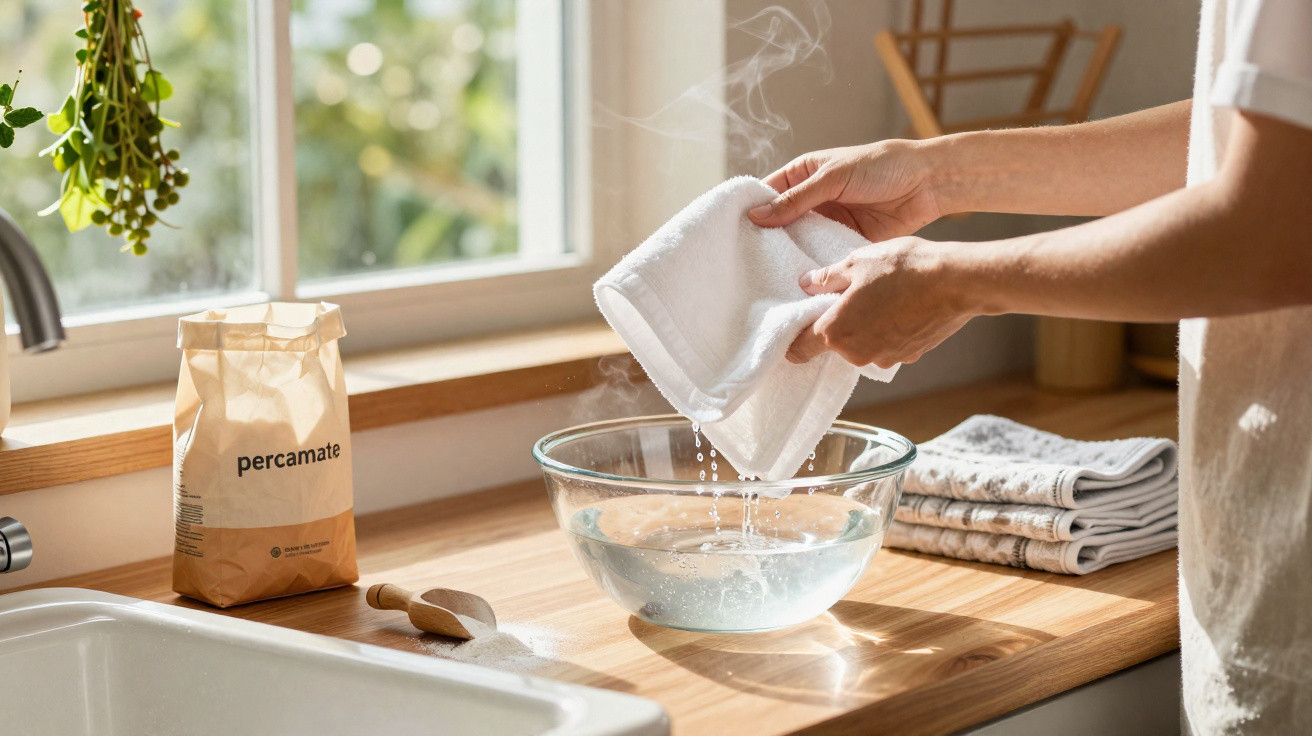
If you enjoy cooking, you will recognise the scene: a cupboard shelf packed with stained, slightly greasy tea towels that never look truly clean again, even after a hot wash and bleach. The fabric turns dull, fibres weaken, and the smell seems to linger. Yet there is a familiar powder that often sits forgotten in the cleaning cupboard - and it can bring back the original whiteness far more effectively than standard chlorine bleach.
Why tea towels turn grey – even after a hot wash
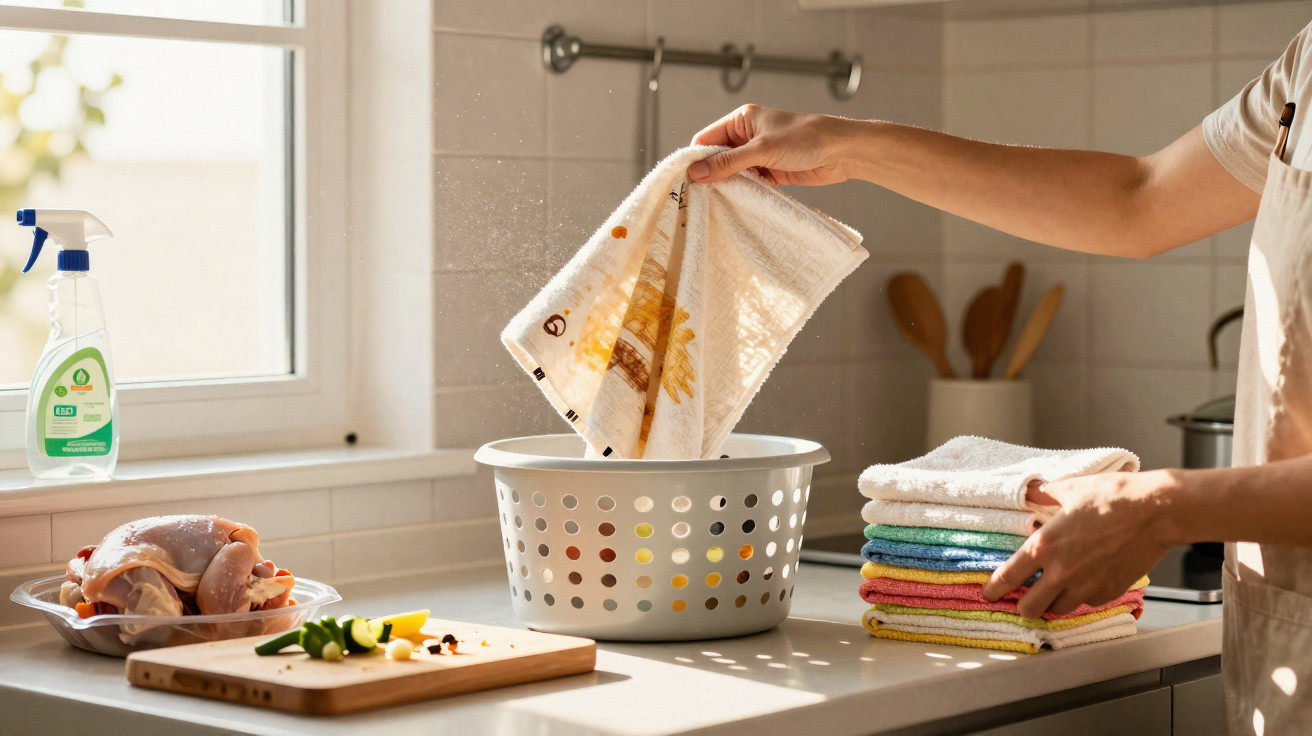
Tea towels are the real workhorses of the kitchen. They deal with everything that comes their way: grease, sauces, tomato splashes, coffee, tea, wine, egg and flour. It is exactly this combination that creates the typical grey film.
- Fats and oils settle deep inside the cotton fibres.
- Dyes and tannins from coffee, tea and red wine act like a faint, persistent stain.
- Limescale from tap water coats the fibres and traps dirt particles in the weave.
With every wash, new deposits build up; the machine mostly removes what is on the surface. The result is a towel that absorbs less, takes longer to dry and starts smelling musty more quickly. Reaching automatically for the hottest programme and lots of bleach often makes things worse.
Why conventional bleach ruins towels over time
Chlorine-based bleaches may brighten fabric at first glance, but they show their drawbacks with kitchen laundry:
- They attack cotton fibres, leaving the towel stiff and prone to tearing.
- They can create a yellowish cast rather than restoring a clean white.
- They only partially remove grease and protein residues - the “ground-in grime” stays in the fabric.
Another common mistake is putting towels with fresh, intense stains straight into a very hot cycle. Heat effectively “bakes” proteins and certain colour compounds into the fibres. Afterwards, the mark can look almost as if it has been fixed in place like textile dye.
"Anyone who constantly washes tea towels at boiling-hot temperatures with strong bleach may get a visually brighter textile, but one that is structurally damaged and never genuinely thoroughly clean."
The forgotten powder in the cleaning cupboard: what sodium percarbonate can do
Many households already have it at home but rarely use it deliberately: sodium percarbonate, often sold as “active oxygen bleach” or “oxygen bleach”. It looks like coarse white crystals and is frequently confused with bicarbonate of soda - but it does a different job.
When the powder meets hot water, three key things happen:
- It breaks down into washing soda (sodium carbonate) and hydrogen peroxide.
- The washing soda cuts through grease, loosens old soap residues and helps release limescale bonds.
- The hydrogen peroxide releases active oxygen, which oxidises organic stains and brightens them.
This reaction starts from around 40°C and reaches its full effect at roughly 60°C - ideal for hard-wearing cotton and linen tea towels.
"Sodium percarbonate penetrates deep into the fabric, dissolves grease and tannin residues, and delivers real cleaning rather than mere cosmetic brightening."
Advantages over classic bleach
This powder brings several benefits that make it particularly suitable for tea towels:
- No yellowing: light cotton stays clearer, and the usual yellowish haze appears less often.
- Less fibre breakage: the weave is not attacked as aggressively as with chlorine bleach.
- Odour neutralisation: musty, rancid smells disappear instead of being masked.
- Environmental profile: what remains is water, oxygen and washing soda - comparatively unproblematic.
Important: this product is only for robust materials such as cotton and linen. Wool, silk and very delicate dyes often do not tolerate this type of bleaching action.
How to get old tea towels white again: step-by-step
The key is not the standard wash cycle, but a targeted pre-soak. This soak lifts the built-up grey film before the washing machine finishes the job.
The right pre-soak with sodium percarbonate
- Prepare hot water: Fill a large bowl or bucket with very hot water - at least 40°C, ideally close to 60°C.
- Measure the powder: Add around 1–2 tablespoons of sodium percarbonate per litre of water, then stir well until most crystals have dissolved.
- Pre-treat fresh stains: For newer marks, lightly rub the towel under lukewarm water with traditional bar soap (household soap).
- Submerge the towels: Fully immerse cotton or linen tea towels, making sure everything is covered.
- Leave to work: Depending on how dirty they are, soak for 2–6 hours. For heavily greyed towels, leaving them overnight is acceptable.
- Wash in the machine: Wring out briefly, then run a normal wash cycle at at least 40°C. Skip fabric softener so the towels keep their absorbency.
- Air-dry: Outdoors is best, preferably in sunlight - UV light supports the brightening effect.
You can see the results in the soak water: it turns noticeably cloudy, sometimes almost brownish - a clear sign that old residues have been pulled out of the fibres.
What you should avoid doing
Even though the method is straightforward, there are a few firm no-goes:
- Do not simply tip the powder into a cold wash - it will do almost nothing.
- Do not mix it in a sealed container with vinegar or lemon juice, as the reaction can produce gases.
- Wear gloves when handling it, because the powder can irritate skin and mucous membranes.
Care routine: keeping tea towels fresh for longer
If you only do a “shock treatment” every few months, you will keep ending up back where you started. A handful of simple habits can keep tea towels in good condition long term.
- Change them often: Depending on use, a tea towel should go in the wash after 1–2 days.
- Do not leave them soaking wet: Dry damp towels spread out, not screwed up on an oven handle.
- Wash hot regularly: If the fabric can handle it, wash at 60°C once a week.
- Watch the heavy grease jobs: For very oily tasks (deep-frying, roasting), use kitchen roll first before the towel comes into play.
"If you treat your tea towels like a hygiene product rather than a decorative item, you will enjoy bright white fabric and a fresh smell for longer."
Risks, limits and sensible combinations
As useful as sodium percarbonate is, it is not a miracle cure without boundaries. Strongly coloured prints can fade over time, and delicate fabrics may warp or lose their texture. With new towels in intense colours, it is best to wash them separately first and without any bleach to check how they react.
In areas with very hard, limescale-heavy water, it can also help to use a water softener or classic washing soda in the main wash. Less limescale in the water means fewer deposits on the fibres - and it makes oxygen bleach work more effectively over time.
For everyday use, a tiered approach pays off: rely on a solid all-purpose detergent base for normal washes; for light yellowing, occasionally add oxygen bleach in the detergent drawer; and for truly “hopeless cases”, use the intensive pre-soak. That way you rarely need to buy new tea towels, saving money in the long run - and reducing textile waste at the same time.
If you handle your towels more deliberately from now on, you will notice the difference quickly: the kitchen cupboard smells less harsh, your hands no longer feel a hard, dull fabric when drying up, and guests will pick up on the small but clear change. Of all things, a commonly overlooked powder can make shabby, greyed cloths feel like fresh kitchen helpers again.
Comments
No comments yet. Be the first to comment!
Leave a Comment