
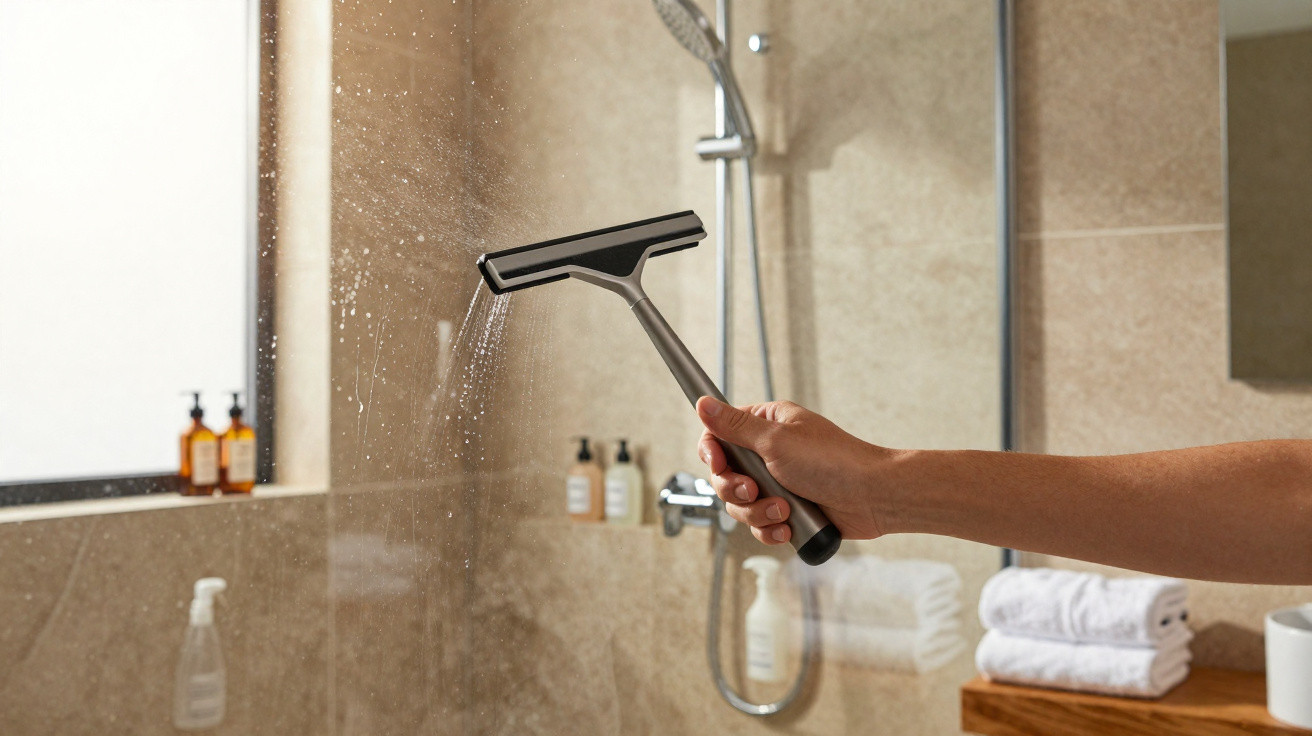
The shower screen is gleaming: no limescale, no water marks, not even that faint line along the lower seal. You run your hand over the glass and wonder how they manage it across dozens of rooms, day after day. Standing under the spray, you think of your own bathroom: the half-hearted “deep clean” on Saturday, the bargain glass spray, the squeegee you “meant” to use every time.
Let’s be honest: hardly anyone actually does it daily. Yet hotel glass still looks brand new. The secret is far less dramatic than you’d expect - and that’s exactly why it works so well.
Why shower screens at home start looking miserable so quickly
We all know the moment the morning sun hits the bathroom at just the wrong angle and suddenly every mark is on display. It stops looking like glass and starts looking like an archive: toothpaste specks, chalky limescale lines, dried droplets. Under the bathroom light the night before, it felt like “good enough”. Now it’s more “I only clean when someone’s coming over”.
Then you step into a hotel bathroom and it’s like a different universe: crystal-clear shower screen, no streaks, no shadows. And quietly you think: there has to be a better method than my spray-and-wipe chaos.
A building cleaner I spoke to described a simple comparison. They set up two identical bathrooms side by side. One was cleaned with standard glass cleaner only. The other followed the “hotel trick” that many properties discreetly build into the cleaning schedule. After a fortnight, the first shower screen looked like one in an average rented flat. The second still looked almost like day one. No magic, no £££ specialist coating - just a routine you can learn in five minutes, and it’s almost cheekily simple.
The unromantic explanation is straightforward: water marks are simply dried tap water and whatever’s dissolved in it - especially limescale. If droplets sit on the glass, the minerals stay behind. With every shower, another thin layer builds up. What seems so perfect in a hotel is really just consistent habits, applied systematically. Instead of waging a monthly cleaning war, they add one tiny micro-step after each use. That’s the real game-changer at home.
The hotel trick step by step: how professionals keep shower screens clear
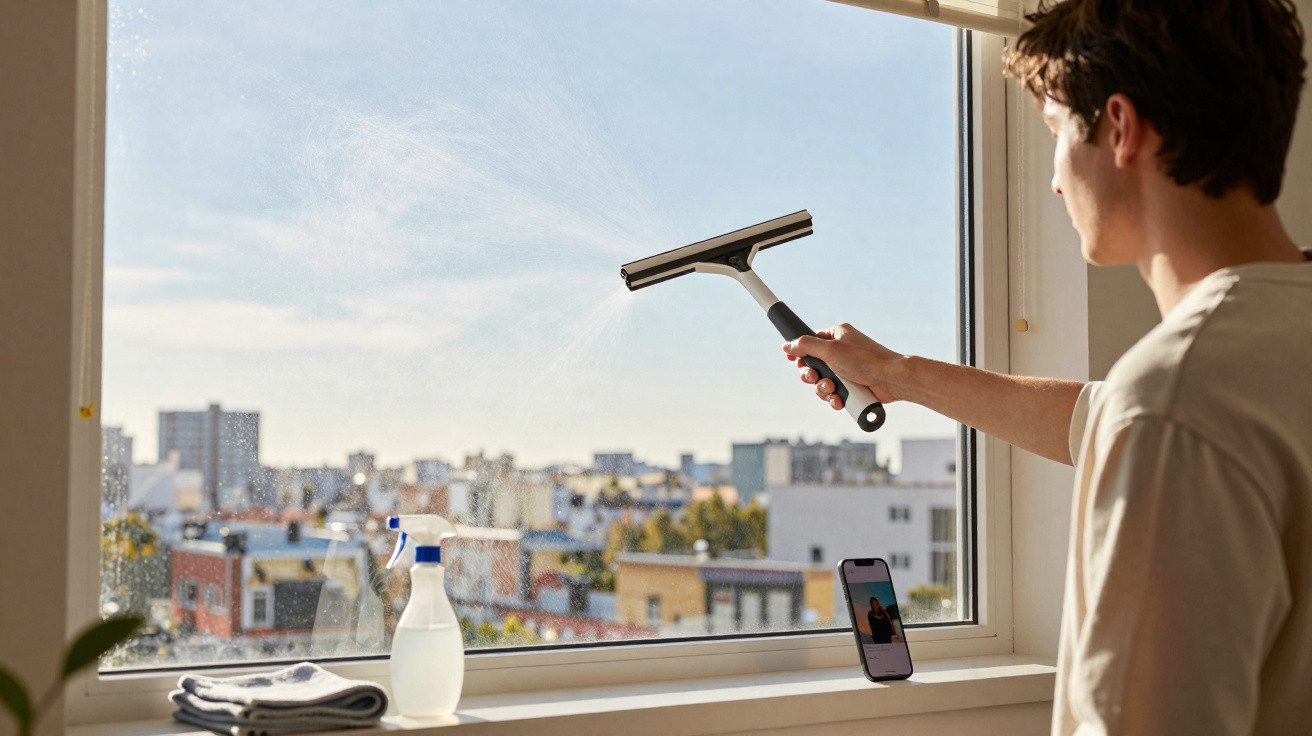
The key part of the hotel trick starts immediately after the shower - not ten minutes later, and not “when I remember”. While the screen is still warm and wet, use a simple rubber squeegee. No heavy pressure and no perfectionism: pull from top to bottom, strip by strip.
A head housekeeper at a four-star hotel told me: “Our staff need about 30 seconds for it in the room.” After that, they gently dab away the remaining water with a microfibre cloth. No scrubbing - more like drying a pair of spectacles. That removes the droplets before they ever get the chance to become stains.
The second step sounds like extra effort at first, but it saves a lot of frustration later. Once a week - not every day - use a mix of lukewarm water and clear vinegar. Combine it 1:1 in a spray bottle, mist the screen, leave it for two minutes, spread it with a soft sponge and rinse.
If you have delicate silicone seals, avoid the edges. Many people struggle not because cleaning is hard, but because of a common mistake: they assume strong, harsh cleaners will get the job done faster. In reality, they can damage the glass and the seals, roughen the surface - and then limescale clings on even more readily.
“We treat shower screens like sensitive surfaces, not like crusted baking trays,” a head housekeeper told me with a laugh. “The gentler we are, the longer they stay like new.”
- Prevention beats scrubbing: A quick squeegee after showering works better than monthly mega-cleans.
- Vinegar water instead of harsh chemicals: mild acidity shifts limescale without punishing glass and seals.
- Use soft microfibre cloths: they leave fewer streaks than kitchen roll or old cotton cloths.
- No scouring pads on glass: they roughen the surface and make it more prone to marks over time.
- Keep the routine smaller than the excuse: if it stays under two minutes, it fits real life.
How a cleaning tip can turn into a quiet little luxury
It gets interesting when you stop treating the hotel trick as yet another chore and start seeing it as a tiny ritual. Many people I spoke to said the same thing: “Since I do it straight after the shower, my bathroom feels different.” It’s that small moment when you squeegee the screen and realise you’re not letting the slow creep of mess build up again.
Your future self won’t be on their knees scrubbing for an hour in three weeks’ time. Instead, they get a bathroom that feels almost like being away - just with your own towels.
We all recognise a bathroom that looks like everyday life: toothbrushes out, half-used shampoo bottles, a disposable razor left somewhere. But if the shower screen is at least clear, the whole room instantly feels bigger, brighter and more organised. That visual calm isn’t just decoration - it takes the edge off the morning. You don’t start your day with the nagging thought of “I really should…”, but with a clear view. Once you’ve seen how a streak-free glass screen changes the entire bathroom, it’s hard to go back to “it’ll do”.
The reality remains: no one has time to keep the entire home at perfect hotel standards. That’s exactly why this one small trick feels so powerful. A squeegee next to the shower, a microfibre cloth within reach, a vinegar spray bottle in the cupboard - that’s all you need for a shower screen that keeps looking new. And perhaps there’s something else in it too: the sense of bringing a little, quiet hotel comfort into everyday life, without having to book a night away.
| Key point | Detail | Benefit for the reader |
|---|---|---|
| Consistent water removal after every shower | 30 seconds with a rubber squeegee from top to bottom | Prevents limescale spots before they form and saves cleaning time later |
| Gentle vinegar clean once a week | 1:1 vinegar–water mix, brief dwell time, rinse | Shifts stubborn limescale without pricey specialist products or aggressive chemicals |
| The right tools instead of brute force | Microfibre cloth, soft sponge, no scouring sponge | Streak-free glass and a longer lifespan for glass and seals |
FAQ:
- How often should I actually clean the shower screen? Ideally, squeegee it quickly after every shower and do the vinegar–water step once a week. Small, regular actions beat rare cleaning marathons.
- Will vinegar damage my silicone seals or taps? With normally diluted vinegar (1:1 with water) and a short contact time, it’s generally fine. If you have sensitive seals or metal parts, avoid them or wipe them with a lightly damp cloth instead.
- Does the hotel trick work on plastic shower screens too? Yes, but be extra careful to use soft cloths. Plastic scratches more easily, yet it benefits just as much from consistent water removal and gentle vinegar cleaning.
- What if my shower screen is already heavily scaled? Start with a stronger vinegar or citric acid treatment, ideally in several rounds. Once the base layer is gone, the daily quick routine works properly.
- Is a specialist glass sealant worth adding? It can help water bead and run off, but it isn’t essential. The biggest impact comes from removing droplets regularly - the sealant is, at most, a bonus.
Comments
No comments yet. Be the first to comment!
Leave a Comment