
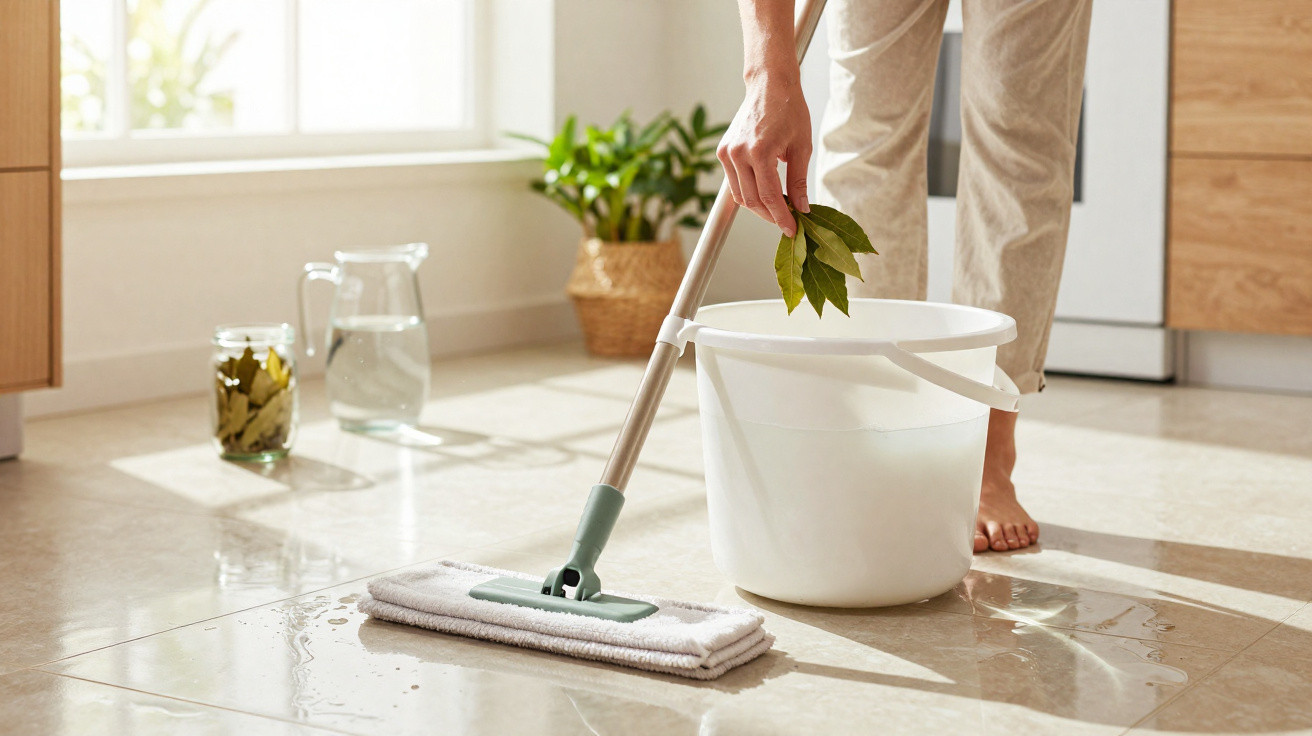
Anyone who has ever despaired with a mop will recognise the pattern: straight after cleaning, the room looks reasonably fine, yet a few hours later the floors seem patchy, dull and somehow tacky again. A simple kitchen trick can make a surprising difference - without resorting to an aggressive chemical cocktail.
Why your floors stay dull and streaky even after mopping
In many areas, tap water contains a lot of limescale. When you mop, the water evaporates and leaves behind an ultra-thin mineral film on the floor. That residue behaves like a fine chalk dust and steals the surface’s shine.
On tiles or laminate, it can look as if a grey haze has settled over everything. Underfoot it doesn’t feel properly clean; instead it feels slightly flat, or even greasy. You notice this especially when walking barefoot.
There’s another factor too: plain water will shift dust, but it only partly breaks down grease and shoe scuffs. A small amount remains on the surface, mixes with the limescale film, and then seems to attract the next layer of dirt. That’s why it can feel as though cleaning hardly makes any difference.
Common cleaning mistakes that damage floors or make them sticky
Out of frustration, many people reach for stronger and stronger products - and that often backfires.
- Heavily perfumed floor cleaners: They promise a high-gloss finish, but can leave an invisible plastic-like film. That film can feel slightly sticky and quickly shows streaks.
- Too much soft soap or soap-based cleaner: Soap doesn’t fully rinse away; instead it builds up in layers. Before long, the floor can look greasy.
- Regular use of chlorine cleaner: It can attack grout and delicate surfaces, and it can irritate your airways while you’re cleaning.
- Too much vinegar essence: It does dissolve limescale, but it can permanently roughen natural stone, marble or sensitive sealants.
There’s also a classic problem that’s easy to underestimate: a dirty mop head. If you don’t rinse the mop fibre thoroughly or you replace it too rarely, you simply spread old dirt back around the room with every pass.
"The wrong cleaner, overdosing and hard water are the main reasons for cloudy, sticky floors - not a lack of motivation to clean."
The surprising trick: bay leaves in the mop bucket
The key ingredient is a spice found in many kitchen cupboards: dried bay leaves. You can use them to make a mild floor cleaner that helps lift grease, neutralise odours and reduce that limescale haze.
How the bay leaf method works, step by step
The process is straightforward and needs only a few ingredients:
- Put six dried bay leaves into a pan (if the leaves are very large, four to five are enough).
- Pour over about 1 litre of hot water.
- Leave to steep for 10 minutes, until the water smells noticeably aromatic.
- Remove the leaves and pour the “bay leaf tea” liquid into your mop bucket.
- Top up with lukewarm water to the amount you need.
- Optional: add 1 tablespoon of clear household vinegar to help loosen limescale deposits.
- Work with a clean microfibre mop using slow, circular movements, and avoid flooding the floor.
The bay leaf infusion breaks down greasy marks and everyday grime far better than water alone, without leaving a slick film behind. At the same time, it leaves a subtle, spicy-fresh scent that’s reminiscent of a herb garden.
"The combination of hot bay leaf infusion, a hint of vinegar and microfibre delivers clean, smooth floors - without the harsh chemical smell."
Why bay leaves work so well for cleaning
When you brew the leaves, natural essential oils release into the water. These can:
- help loosen greasy residues,
- bind unpleasant odours lingering on the floor,
- create a mildly antibacterial environment,
- work without harsh additives.
Warm water boosts the effect because warm liquid dissolves fats and shoe scuffs better than cold. The small amount of vinegar helps break up the limescale haze that’s responsible for the dull look.
What matters too is pairing the mix with a good-quality microfibre pad. The fine structure of the fibres lifts and holds the loosened dirt instead of just pushing it around. The result is a genuinely smooth, clean finish - even when you view the floor against the light.
Where the bay leaf method shines - and where you should be cautious
This trick is particularly suitable for:
- glazed tiles and stoneware,
- sealed laminate,
- vinyl and PVC flooring,
- durable sealed parquet surfaces.
It’s worth doing a quick test in an inconspicuous spot first, especially on very delicate or older floors.
Natural stone needs extra care. Calcium-rich stones such as marble or some types of travertine can react sensitively to acids, even at low doses. In that case you should:
- leave out the vinegar,
- dilute the bay leaf infusion heavily with water,
- test first on a small corner to check whether the surface changes.
"If you want to protect your floors, test new mixtures on just a few square centimetres first - then slowly increase the strength."
How often to mop - and what to combine the method with
For most households, mopping once a week with the bay leaf mixture is plenty. In hallways, kitchens, or homes with children and pets, you can treat heavily used areas again in between whenever needed.
A simple routine that works well:
- Daily: remove crumbs and dust with a broom or vacuum.
- Weekly: mop the whole floor with bay leaf infusion, a light vinegar addition and microfibre.
- Monthly: wash microfibre pads at 60°C without fabric conditioner to maintain absorbency.
If you like a hint of fragrance in the room, you can also add one to two drops of a mild essential oil (for example lemon or lavender) to the bucket. The key is to use only a few drops - otherwise you risk creating a greasy film again.
What terms like “hard water” and “limescale marks” really mean
When people talk about “hard water”, they mean its limescale content. The higher the water hardness, the more limescale is left behind during cleaning, washing or rinsing. In those regions, floors benefit especially from a small acidic addition such as vinegar or citric acid in modest amounts.
Those typical white rings around old water spots on tiles are exactly these limescale residues. They sit like a veil over the surface and can make any finish look older. Used with a little vinegar, the bay leaf method loosens that layer gradually, without filling the air with harsh, throat-catching fumes.
If you adjust your cleaning routine for the long term, you’ll notice a clear difference after a few weeks: fewer streaks, pleasantly smooth surfaces, and far less grey tracking after a day of street shoes, children’s toys or pet paws.

Comments
No comments yet. Be the first to comment!
Leave a Comment