
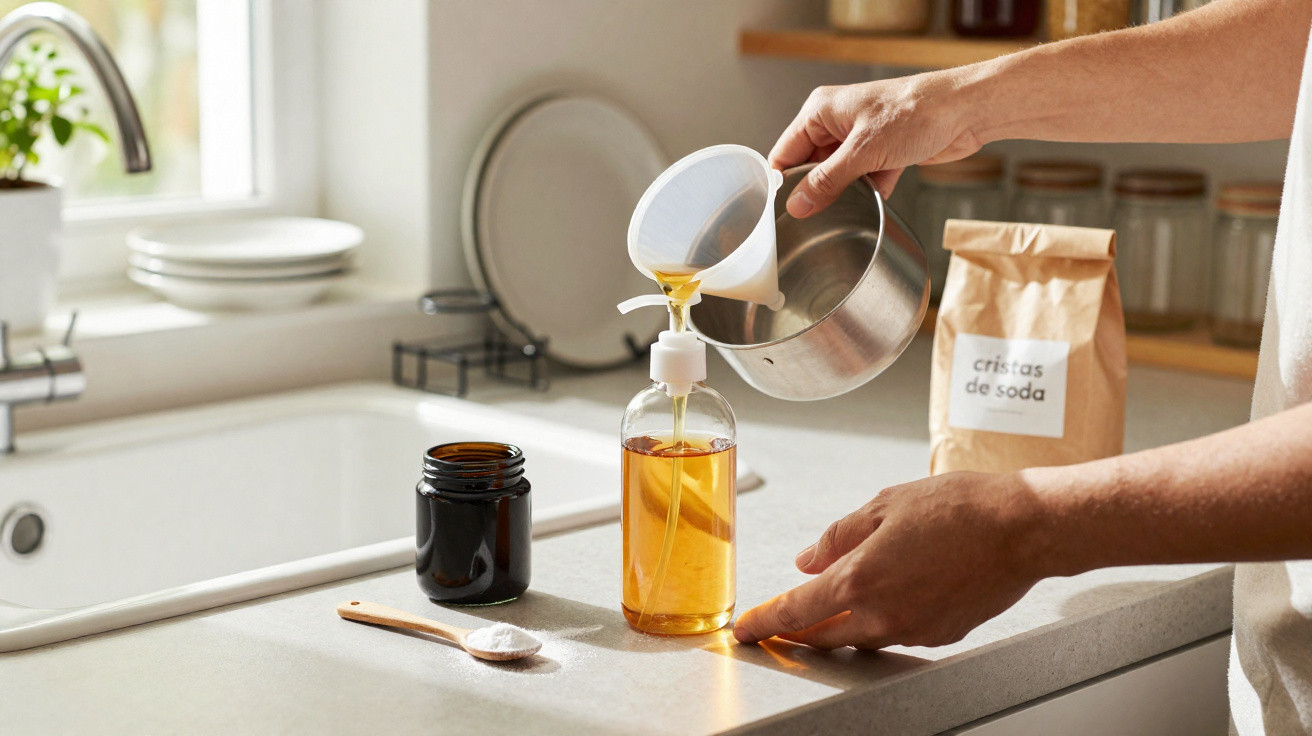
When you wash the dishes, you rarely stop to consider what is actually in the foam. Surfactants, preservatives, fragrances, colourants - and plenty of plastic waste. More and more people are looking for alternatives that cost less, create less rubbish and are kinder to the skin. A straightforward blend made from just three basic ingredients shows it can be surprisingly easy.
Why conventional washing-up liquid can become a problem
Off-the-shelf products from the supermarket clean reliably, but they often come with a bundle of downsides:
- harsh surfactants that dry out the skin
- preservatives and perfume that can trigger or worsen allergies
- plastic bottles that are frequently not recycled
- chemical residues that enter the environment via wastewater
Many of these substances take a long time to break down. Some end up in rivers and lakes, while others accumulate in sewage sludge. On top of that, hardly anyone truly measures out washing-up liquid sparingly. One extra squeeze onto the sponge and usage quickly shoots up.
"If you switch to a simple, home-mixed washing-up liquid, you save money and plastic - and you protect both your skin and waterways at the same time."
The basics: three ingredients most people already have at home
This homemade washing-up helper relies on three key components that work well together:
1. Black soap as a gentle cleaning base
Black soap (often made from olive oil or linseed oil) forms the core of the cleaner. It contains plant-based fats that have been saponified with lye, creating a concentrated liquid cleanser without aggressive additives.
- cuts through grease and grime effectively
- is much gentler on the skin than many industrial concentrates
- does not leave a greasy film on surfaces
- is usually free from synthetic fragrances
In shops, it is often sold as “Savon noir” or “black soap for household use”, and it is also used for mopping floors or cleaning bathrooms.
2. Bicarbonate of soda for mild abrasion and a fresher smell
Sodium bicarbonate - better known as bicarbonate of soda - does two jobs at once: it provides a light abrasive action and it neutralises odours.
It helps lift dried-on sauce residues or stuck-on starchy marks without scratching glasses or delicate surfaces. At the same time, it reduces kitchen smells from onions, fish or garlic in the washing-up water.
3. Washing soda crystals against grease and stubborn build-up
Washing soda crystals (sodium carbonate) are more alkaline than bicarbonate of soda and are a classic choice in a more sustainable household. They cut through grease, loosen burnt-on food and help reduce limescale build-up in pipework.
In washing-up liquid, they help fats “saponify” properly and become soluble in water. That makes rinsing easier and reduces the chance of a greasy film settling on dishes or in the sink.
Recipe: mix your own washing-up liquid in 5 minutes
For around 500 millilitres of an all-purpose hand dishwashing liquid, you only need a clean, empty bottle - for example, an old washing-up liquid bottle.
Basic recipe for about 500 ml
- 1 tablespoon bicarbonate of soda
- 1 tablespoon washing soda crystals
- about 2 cm of liquid black soap in the bottom of the bottle
- hot tap water to top up
- Using a funnel, pour the bicarbonate of soda and washing soda crystals into the empty bottle.
- Add liquid black soap until it covers the bottom by roughly two centimetres.
- Top up with hot water from the tap, leaving one to two finger widths of space at the top.
- Close the bottle tightly and shake vigorously until all crystals have dissolved.
- Let it cool a little - your washing-up liquid is ready.
If you prefer more foam and a thicker gel, you can use an expanded version that also includes grated bar soap, such as traditional pure soap or Marseille soap. This makes the result creamier and closer in feel to familiar branded products.
| Ingredient | Function |
|---|---|
| Black soap | Base cleanser; breaks down grease and dirt; kinder to skin |
| Bicarbonate of soda | Gentle abrasion; odour neutraliser |
| Washing soda crystals | Strong grease-cutting; fewer deposits in pipes |
How well does it actually clean?
Feedback from households that have used this mixture for several months paints a clear picture: plates, glasses and pans come out clean, shine well and do not show greasy streaks. What many people notice at first is that it foams far less than they are used to.
"Less foam doesn’t mean less cleaning power - the effective amount depends on the ingredients, not on the size of the foam mountain."
That difference tends to change how people wash up. Instead of judging by bubbles, users quickly find that half a squeeze is usually enough for a full load of breakfast dishes. That reduces product use, saves money and is better for wastewater.
A further benefit: pipes clog up less quickly. The combination of washing soda and milder soaps helps prevent thick grease plugs forming in the trap, which over time can make drain cleaners - and, in extreme cases, the plumber - unnecessary.
Benefits for your budget, your skin and the environment
Many people buy branded bottles without checking the price per litre. If you cost out the basic ingredients above, the home-mixed washing-up liquid works out at just a few pence per 100 millilitres.
- one pack of bicarbonate of soda often lasts for dozens of refills
- washing soda crystals are inexpensive and go a long way
- black soap is usually sold as a concentrate and only needs a small dose
If you keep refilling the same bottle, you also cut down on packaging. Instead of bringing home new plastic containers every few weeks, you only need a small supply of powders and a larger container of liquid base soap in the cleaning cupboard.
For people with sensitive or cracked skin, the change can be noticeable too. Because the mixture avoids brightly scented fragrance blends and over-strong surfactants, many report less tightness or itching after longer washing-up sessions.
How to use it correctly day to day
Using it is much the same as conventional products:
- a small squeeze straight onto a sponge or brush
- for the sink: run the water first, then add a little of the mixture
- for heavily burnt-on food: soak the pan with hot water, a splash of the mixture and, optionally, an extra teaspoon of bicarbonate of soda
If you have very hard tap water, a splash of white vinegar in the sink can help glasses dry without limescale marks. Do not let vinegar come into direct contact with concentrated washing soda, so add it to the ready-made washing-up water - not into the bottle.
What to watch out for with homemade washing-up liquid
Even with natural ingredients, the product is still alkaline. That means it should be kept away from children and it must not get into the eyes. For people with extremely sensitive skin, wearing washing-up gloves or doing a brief allergy check can be sensible.
Another consideration is shelf life. Because the mixture is mostly water and contains no strong preservatives, it is best to make smaller batches and use them within a few weeks. If the bottle is stored somewhere very cold, the product can thicken slightly - a good shake or a small splash of hot water will sort it.
If you like a particular scent, you can add a few drops of essential oil, such as lemon or lavender. A very small amount is enough; otherwise skin irritation is more likely. Synthetic fragrance oils from craft shops are less suitable, as they often contain unnecessary additives.
How the switch can spread to other cleaning jobs
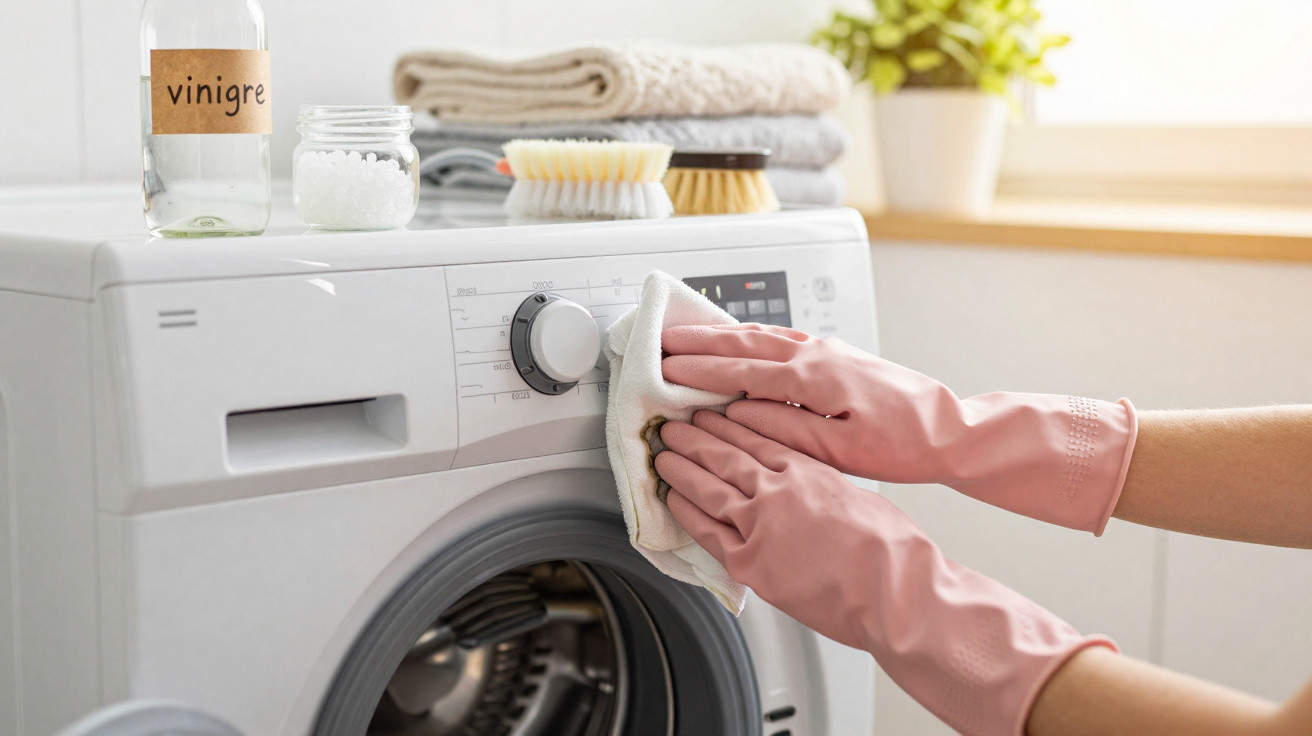
Many people who begin with homemade washing-up liquid later apply the same idea elsewhere: multi-purpose cleaner made with vinegar or citric acid, washing powder made with pure soap and washing soda, or an alcohol-based window cleaner. The principle stays the same: a few clearly labelled ingredients used for targeted effects.
At first, terms like bicarbonate of soda, washing soda and black soap can be confusing. Bicarbonate of soda is the milder powder commonly used in the kitchen, for example in baking. Washing soda crystals are significantly stronger and belong in the cleaning cupboard only. Black soap is a concentrated household helper rather than a cosmetic product.
If you take it step by step, you often notice after a few weeks that the cleaning cupboard becomes simpler, the bin gets lighter - and the washing-up bottle is no longer disposable, but a refill system you keep using.

Comments
No comments yet. Be the first to comment!
Leave a Comment