

Putting warm clothes into plastic and pushing them to the back of the wardrobe feels like protection. In reality, the fabric can suffer, the smell turns stale, and after a few months some pieces look older than they really are. A simple trick using an old bed sheet fixes the problem - it costs nothing, cuts out plastic and keeps clothes looking good for much longer.
Why plastic does more harm than good in your wardrobe
Moisture, heat and static: the hidden issue
Plastic garment covers look handy: you can see what’s inside, they’re light, and they’re cheap. The downside is the material itself. Plastic is airtight, so in a wardrobe it behaves like a mini greenhouse.
- Residual damp from your body, rain or steam ironing stays trapped.
- Air barely circulates, so warmth builds up.
- Condensation forms - ideal conditions for mould.
- The synthetic cover builds static and attracts dust.
Delicate fabrics such as wool, cashmere, silk or lace are particularly sensitive. Fibres can break sooner, creases set more deeply, and heat plus moisture can lead to yellowish marks, especially on light-coloured items.
“Plastic doesn’t let clothing ‘breathe’ - moisture, warmth and dust stay trapped and attack the fibres.”
Common damage you only notice months later
Most people only see the effects at the next seasonal changeover. You open the cover and the disappointment hits:
- a faint musty smell that lingers even after airing
- yellowed areas on collars, underarms or button plackets
- fabrics that feel stiff or dull, especially natural fibres
- pulled or torn stitches in knitwear due to static and friction
There’s also the environmental angle: many of these covers split quickly and end up in the bin. If you buy new plastic covers every year, you create a steady stream of waste - completely unnecessarily.
The clever alternative: old bed sheets as a breathable protective layer
Why cotton and linen make better “armour”
Many homes have old bed sheets or retired duvet covers tucked away - too good to throw out, but no longer nice enough for the bed. They’re exactly what you need for protecting clothes.
Cotton, linen or high-quality blends come with several advantages:
- absorbent fibres that take up leftover moisture
- natural airflow, rather than a sealed plastic chamber
- less static, which also means less dust
- gentle contact with clothing, with no hard edges or abrasive seams
“An old sheet works like a filtering curtain: dust stays out, while air and moisture can escape.”
That keeps fabric supple, reduces odours, and helps colours stay richer for longer. For high-quality coats, blazers or fine dresses, the small effort is well worth it.
Which textiles work best
Best choices include:
- smooth cotton sheets, ideally a little heavier
- linen bedding that’s already been washed soft
- plain, light-coloured duvet covers without appliqués or zips
Very thin, see-through fabrics, or materials with lots of synthetics, protect less and can reintroduce static. A simple rule of thumb: if it feels comfortable on your skin, it’s likely a good “home” for your coat too.
Turning an old sheet into a made-to-measure garment cover
What you need for the zero-cost solution
You don’t need a sewing machine or a trip to a craft shop to make a protective cover. In most cases, you can use what you already have at home:
- an old bed sheet or a duvet cover you no longer use
- sharp scissors
- needle and thread in a similar colour
- wooden hangers, if you have them, as they’re sturdier and gentler
“The best garment cover is made from things that have been sitting in your wardrobe for ages - with no need to buy anything new.”
Step by step: a fabric cover in minutes
This straightforward method is quick, yet still looks tidy:
- Lay the sheet flat on a table and smooth out any creases.
- Cut rectangles to size - a rough guide is about 100 cm long and 60 cm wide, depending on the length of the garment.
- Fold each rectangle lengthways so you have a long, narrow piece.
- Stitch the two long sides and the bottom edge with simple stitches to form a large pouch.
- At the top centre, cut a small, neat slit; the hanger hook will go through here.
- Put the coat, blazer or dress on a hanger, slide it into the fabric cover from below, then pull the hook through the opening.
If you want to move faster, use a rough running stitch - it doesn’t need to be perfect, it just needs to hold. With an old duvet cover, you can often reuse one of the existing seams to save time.
More order, less odour: what a fabric cover changes in your wardrobe
Less mustiness, less yellowing, a better feel
After a few months, the difference is obvious. Open the doors and instead of musty air you’ll notice a neutral smell, at most a faint trace of laundry detergent. Over time, the fabric cover absorbs excess moisture and releases it gradually back into the room.
This is particularly noticeable with light textiles: shirts, blouses and coats in white or beige are less prone to developing yellowish shadows. Shoulders and sleeves also tend to keep their shape better, because fabric doesn’t “stick” the way it can inside plastic.
“When you unpack it, the clothing feels more like it’s been freshly aired than stored away for months.”
Zero-waste effect and a nicer-looking wardrobe
If you use several sheets or duvet covers, you can even create a more uniform look inside your wardrobe. Pale natural shades make it feel calmer, while patterned fabrics add a touch of vintage character. Instead of crackling plastic, a soft fabric curtain sits in front of your favourite pieces.
At the same time, you save money, reduce rubbish and keep using textiles that might otherwise be thrown away. In small flats where every bit of storage matters, a well-organised, “breathing” wardrobe simply feels far more pleasant.
Care tips and useful additions to a fabric cover
Keeping your homemade cover in good condition
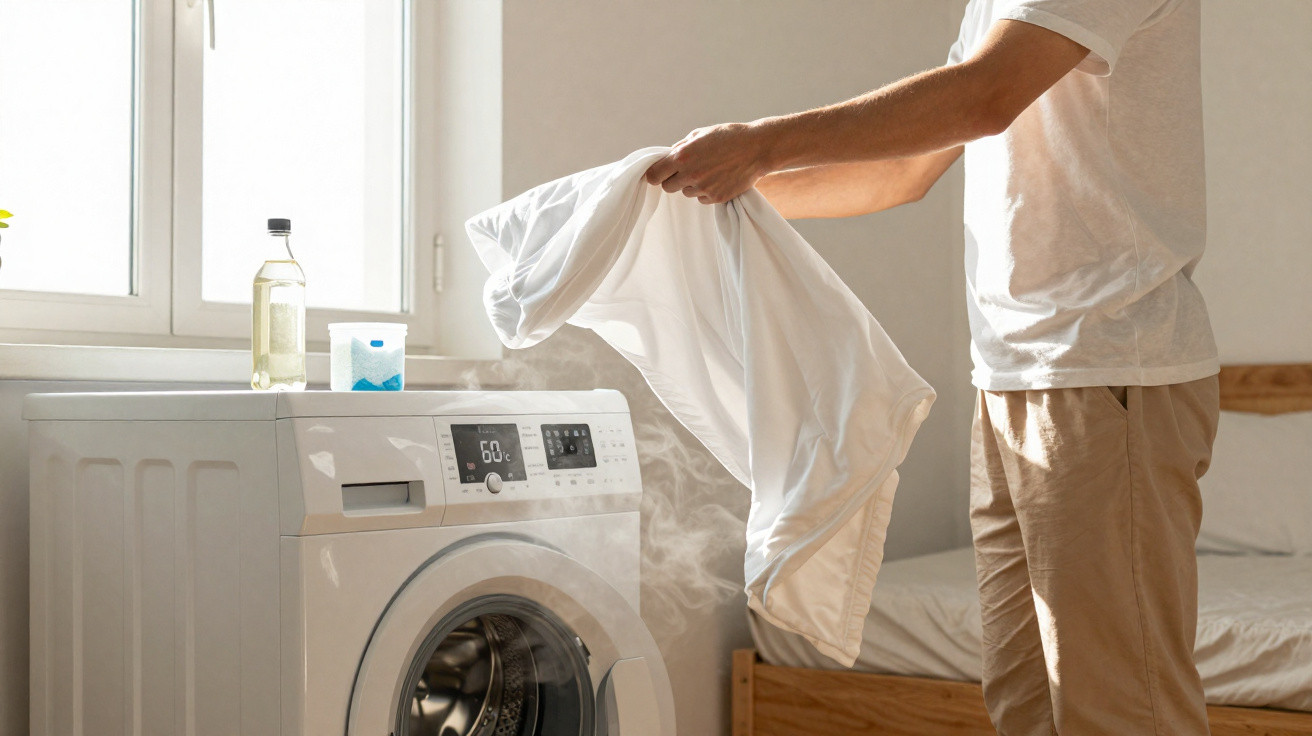
The cover needs occasional care too - and the good news is that you can just wash it.
- Wash it once a year, ideally at 40°C.
- Shake it out before washing to remove dust.
- Let it dry thoroughly so no damp remains.
- Mend small tears quickly before they spread.
If you like, add a small amount of scented detergent or a few drops of essential oil in the rinse cycle. The light fragrance later transfers very subtly to the clothes.
What works well alongside it: protection from moths and poor storage
Fabric covers won’t solve every wardrobe issue on their own. For moths, the key is the right extra protection:
- Hang cedarwood rings or lavender sachets between hangers.
- Wash worn clothes - or have them dry-cleaned - before storing them.
- Don’t cram too many items onto one hanger, so nothing gets misshapen.
- Air the wardrobe regularly, especially in older buildings and damp rooms.
If you own lots of heavy coats or suits, it can help to get into the habit of swapping the covers over deliberately at each seasonal change.




Comments
No comments yet. Be the first to comment!
Leave a Comment