
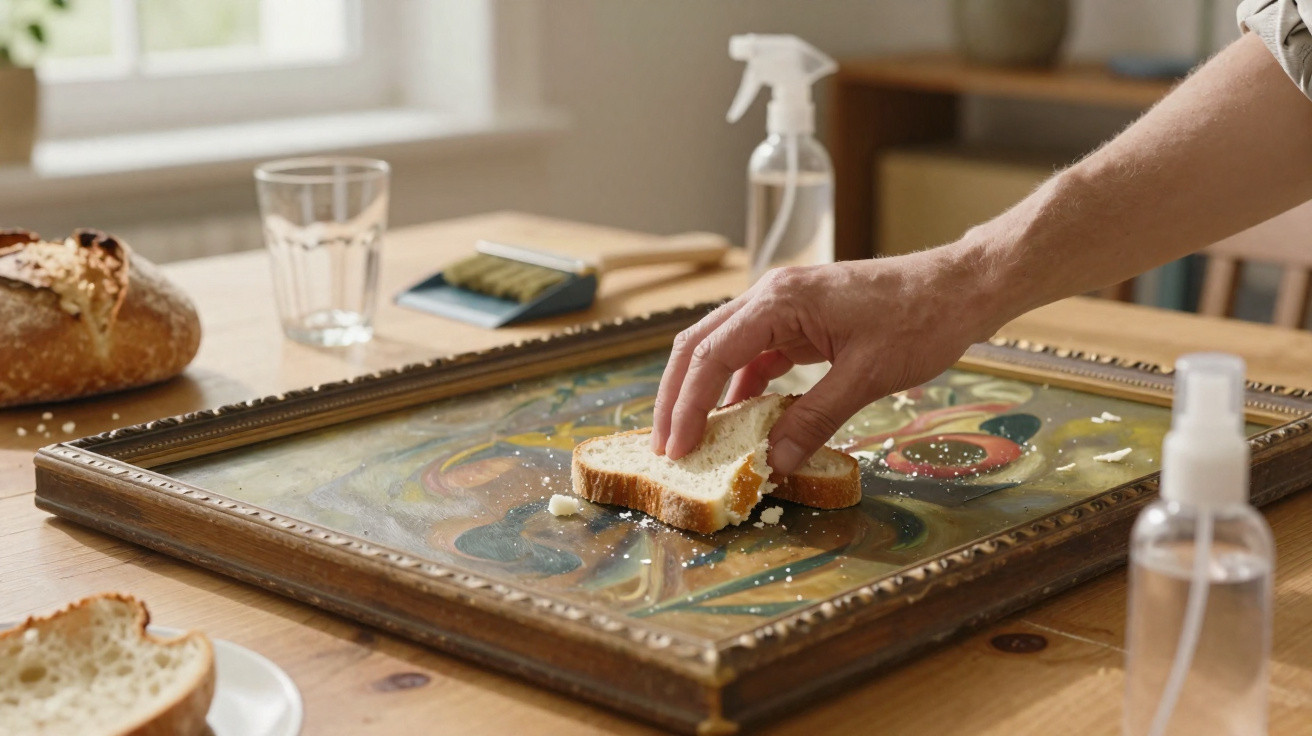
Anyone wanting to clean glass, framed pictures or light-coloured walls often reaches for specialist cleaners. They are pricey, chemical-heavy and frequently quite harsh. Yet the answer is, quite literally, in the lunchbox: fresh, soft bread crumb. This age-old household hack is making a comeback - and it’s surprisingly well suited to modern homes full of delicate finishes.
Why bread crumb cleans so effectively
The hero of this trick isn’t the crunchy crust, but the soft, springy crumb from light toast or white bread. In practice it works like a natural, ultra-fine sponge - only without chemicals, without alcohol and without microplastics.
Soft bread crumb traps dirt and tiny particles inside itself rather than simply spreading them around - while protecting even very delicate surfaces.
The principle is straightforward: the crumb contains countless tiny air pockets. That porous structure captures dust, graphite, pigments and even glass shards too small to see. Instead of scrubbing, the crumb moulds to the surface, pulls the grime into itself - and is then simply thrown away.
How bread crumb even picks up invisible glass splinters
When a glass breaks: the quiet safety helper
Anyone who has ever smashed a drinking glass knows the problem: the larger pieces are easy to gather up, but microscopic splinters remain behind. They lodge in carpet fibres, sit in grout lines or sparkle invisibly on the floor - a real hazard for bare feet, pets and children.
This is where bread crumb shows its biggest advantage. Rather than just sweeping, you press a piece of fresh, soft crumb down onto the affected area several times. The elastic texture acts like a sticky pad without any adhesive: the tiny shards catch in the crumb, are bound up and are far less likely to be carried elsewhere.
- First, carefully remove the large shards while wearing gloves
- Give the area a rough clean with a dustpan brush or vacuum cleaner
- Shape fresh bread crumb in your hand into a flat “puck”
- Press it down section by section; do not drag it across the floor
- Replace the crumb when it looks dirty, and dispose of it in the general waste at the end
The benefit is that the splinters stay embedded in the soft mass rather than being flicked away by a broom. That reduces the chance of stepping on a tiny piece of glass days later.
Elasticity instead of friction: why it avoids scratching
Unlike a stiff sponge or a rough cloth, crumb creates very little friction. It stretches slightly, conforms to the surface and effectively “wraps around” dust or pigments. That means you can lift grime away without scuffing the sensitive layer underneath.
This is a major plus with matt paint finishes, thin varnish layers or older wallpaper: the surface remains intact and neither texture nor paint layer is disturbed.
Delicate surfaces where bread crumb really shines
Gently dusting old paintings and oil paintings
Dust on artwork looks harmless, but over time it dulls a picture and robs it of brightness. Many art lovers hesitate to go near their paintings for fear of damaging them with liquid cleaners or even a cloth.
For light dust on stable, dry oil paintings, bread crumb can be a practical stopgap when a professional isn’t available. Take a small piece of fresh crumb and dab it lightly onto the surface. The dust transfers into the crumb without attacking the paint layer.
Do not wipe, do not rub - only dab gently. The aim is to lift the dust, not to work the paint.
Important: badly damaged, cracked or very valuable works still belong in the hands of conservators. The bread trick is only suitable for stable, dry surfaces and light everyday dirt.
Removing pencil marks from light-coloured walls
In family homes, walls rarely stay flawless for long. Children quickly test whether wallpaper can double as a sketchpad. Pencil on a pale wall is often difficult to remove cleanly with an eraser; it can leave grey shadows or smudged streaks.
Bread crumb is much gentler. The method is similar to the one used for paintings:
- Tear off a soft piece of white bread with no crust
- Roll it into a small ball
- Dab the mark carefully; do not rub
- Turn the crumb often so a clean side is always working on the wall
The graphite particles migrate into the crumb little by little. The wall stays even, without pale abrasion patches or rough areas. This does not always work as well for coloured pencils, but with standard graphite pencil it often works remarkably well.
Cleaning glass and mirrors without micro-scratches
Thin glass, older mirrors or treated glass surfaces can be sensitive to friction. Paper towels, newspaper and rough cloths can cause very fine scratches over the years, making reflections look dull.
For dust and dry, light marks, bread crumb is usually enough. Press it on gently and lift it away again. The particles end up in the crumb without any scouring effect. Greasy smears may still require a glass cleaner afterwards, but bread crumb works well as a first, especially gentle step.
Choosing the right bread and using the best technique
Which bread works - and which doesn’t
Not every loaf performs the same. Texture and structure are what matter:
| Bread type | Suitability for cleaning | Reason |
|---|---|---|
| Fresh white bread / toast without crust | Very good | Soft, elastic crumb, fine pores, no hard pieces |
| Day-old bread (slightly stale) | Limited | Less elastic, crumbles faster, absorbs less effectively |
| Wholemeal or seeded bread | Poor | Seeds and coarse structure can scratch surfaces |
| Very dry bread | Unsuitable | Crumbles heavily, doesn’t cling, lacks elasticity |
A fresh, soft toast or light sandwich loaf is ideal. Remove the crust, as it is too firm and can leave marks.
The key movement: dab, don’t rub
The result depends on how you move your hand. If you instinctively scrub back and forth, you lose the benefit. The correct approach:
- Shape the crumb into a compact but soft ball or disc
- Work in small sections
- Apply it with light pressure straight down, then lift it off
- For heavier marks, use several fresh pieces one after another
Repeated pressing allows the dirt to collect inside the crumb rather than smearing. If the crumb starts to feel greasy or becomes firm, swap it for a fresh piece.
Eco bonus: fewer chemicals, less waste, lower cost
Bread crumb won’t replace a full cleaning cupboard. For grease, limescale or bathroom cleaning you will still need other products. Even so, it can help you avoid several specialist cleaners for delicate surfaces. That saves money and reduces the use of bottles, spray heads and chemicals.
A piece of bread that nobody wants to eat becomes a useful tool - instead of simply ending up in the bin.
Households with young children or pets can especially benefit from not solving every problem with aggressive substances. Bread crumb contains no solvents, no fragrances and no dyes - so for families dealing with allergies, it can be a safer option for targeted jobs.
When you should avoid using bread crumb
Clever as it is, this trick has clear limits. Some situations are a definite no:
- Fresh paint on walls or paintings that has not fully dried
- Damp surfaces - the crumb will simply gum up
- Deep-pile carpets where crumbs can get trapped
- High-value artwork with fragile surfaces or cracking
Bread also isn’t the right choice for heavy soiling or greasy build-up. In those cases, you need appropriate cleaners and, if necessary, professional help. Bread crumb’s strength is in the fine work: light dust, graphite, dry particles and tiny splinters.
Practical add-on: combining it with other cleaning methods
In day-to-day use, a sensible sequence works best: start with a vacuum cleaner or dustpan brush to remove most of the dirt. Then use bread crumb for the awkward remaining particles. For glass or mirrors, you can follow with a normal polishing cloth if any streaks remain.
If you look after sensitive surfaces this way on a regular basis, thick layers of dust and grime are less likely to build up in the first place. Bread crumb remains a small but surprisingly effective part of a household-friendly, lower-chemical cleaning routine - quietly waiting in the lunchbox.
Comments
No comments yet. Be the first to comment!
Leave a Comment