
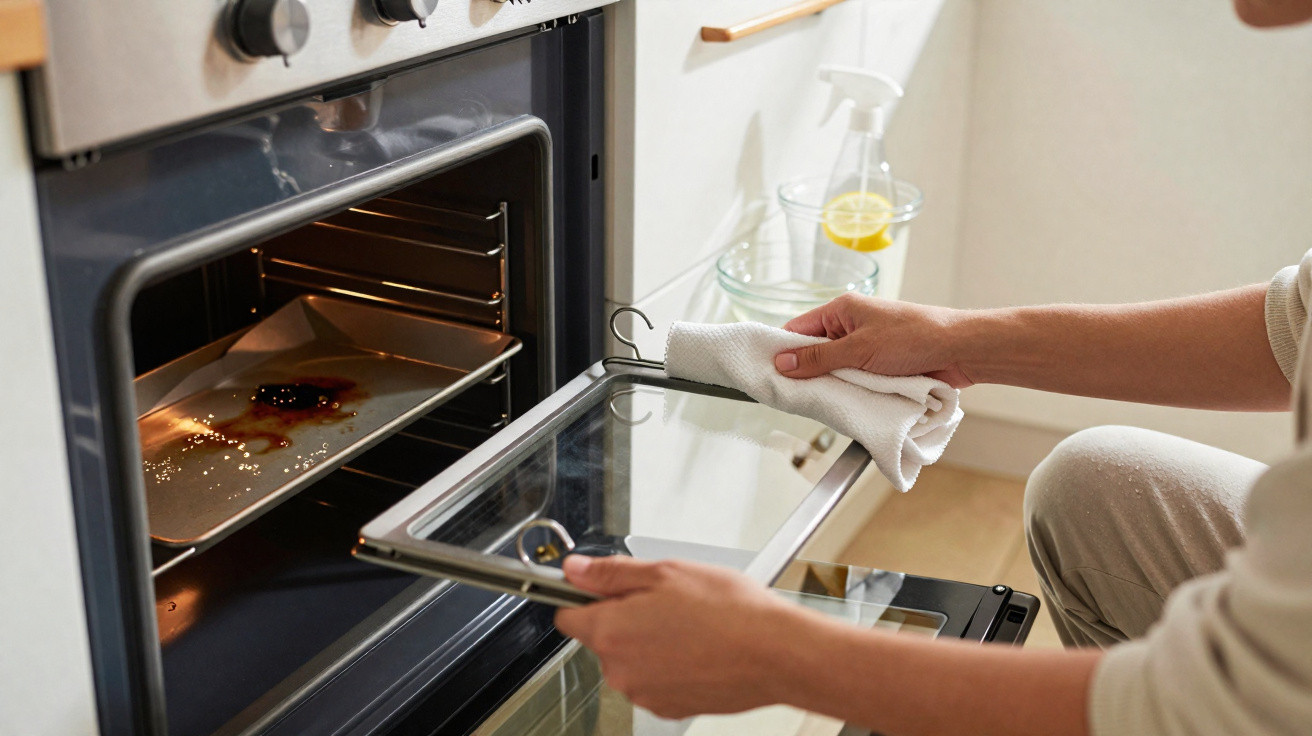
A kitchen professional has now shared a surprisingly straightforward method.
Greasy build-up, crumbs, brown streaks: anyone who bakes or grills regularly will know the scene. The outside gets a quick wipe, the inside gets tackled with oven cleaner if it has to. But the grime trapped between the glass panes in the oven door? That tends to cling on - clearly visible, yet almost impossible to reach. This is exactly where a simple professional trick comes in, working without specialist tools or pricey chemicals.
Why dirt between the oven door glass panes is so irritating
Most modern ovens have a door made up of two or more glass panes. The gap between them acts like insulation, helping to keep the outer surface from getting too hot. Handy - until it’s time to clean.
Every time the door opens and closes, crumbs and dust can drop down into that narrow gap. While cooking, fat splatters and steam rise, condense on the glass, and gradually leave unattractive marks. You can see them from the outside, but you can barely get your hand anywhere near them.
Although many appliances technically allow you to remove the door completely or take out individual panes, in reality plenty of people don’t want to attempt it. The risk of damaging something - or making a mistake when refitting - feels too high. So the dirt stays put, and it’s annoying every time the oven light comes on.
This is exactly what a kitchen professional’s trick solves: the gap gets cleaned without having to unscrew or dismantle the oven door.
The simple cleaning mix: water and vinegar instead of harsh chemicals
Before tackling the hard-to-reach areas, you’ll need a suitable cleaning liquid. A professional swears by a mixture most households already have: water and clear white vinegar.
How to mix the cleaning solution
- 1 spray bottle (or an empty bottle with a spray nozzle)
- 1 part water
- 1 part clear white vinegar
- 1 microfibre cloth (or another highly absorbent cloth)
Pour equal parts water and vinegar into the spray bottle and give it a quick shake. Vinegar acts as a natural degreaser, helps loosen baked-on splashes, and neutralises odours. It’s far gentler than typical oven cleaners and won’t attack the glass.
If your oven model allows the glass panes to be removed easily, you can spray the mixture directly on to the surfaces, leave it briefly, then wipe with a damp cloth. Visible dirt comes off quickly that way. The real challenge is ovens where removal isn’t intended - and that’s where the coat hanger trick earns its place.
Reaching the narrow gap with a coat hanger and cloth
The core idea is simple: a basic metal coat hanger from the wardrobe becomes a slim cleaning wand that can be guided into the slit between the glass panes.
Step-by-step guide to the coat hanger trick
- Pull the lower drawer beneath the oven fully out. On many models, this reveals small openings at the bottom of the door.
- Take a thin metal coat hanger and straighten it as much as possible until you have a long rod.
- Wrap a small microfibre cloth tightly around one end of the rod.
- Secure the cloth firmly with a strong elastic band or sturdy tape so it won’t slip when you move it back and forth.
- Moisten the cloth with the prepared vinegar-and-water solution - damp enough to clean well, but not dripping.
- Carefully feed the rod through the openings under the door and into the space between the glass panes.
You can now move this improvised tool like an extended cleaning finger. Work slowly from left to right, then top to bottom - diagonal passes can help too. As soon as the cloth is visibly dirty, pull the hanger out, rinse the cloth, dampen it again, and repeat.
With a little patience, even old, stubborn baked-on marks disappear. The view into the oven looks noticeably fresher again - almost like the first day.
How often should you clean the oven door glass?
If you bake frequently, cook au gratin dishes, or roast meat, it’s worth checking both the front pane and the gap inside the door regularly. The longer fat and food residue are left to bake on, the more effort the cleaning takes.
As a rough guide:
- heavy use (several times a week): check every 4–6 weeks
- normal use (1–2 times a week): check every 2–3 months
- occasional use: at least twice a year
A quick visual check is enough: as soon as you notice streaks or dark patches between the panes, it’s time to reach for the metal hanger and the vinegar solution. If you don’t leave it until months of build-up have accumulated, you’ll save a lot of time in the long run.
What to watch out for with this trick
Even though the method is straightforward, a few details matter to avoid damaging the appliance or the glass.
| Aspect | What to watch for |
|---|---|
| Temperature | The oven must be completely cold before you start cleaning. |
| Amount of liquid | Only dampen the cloth; don’t soak it, so liquid can’t run into technical components. |
| Pressure | Don’t force anything - clean the glass with light pressure only. |
| Securing the cloth | Tighten the elastic band or tape very firmly so the cloth can’t get stuck in the gap. |
| Metal edge | Make sure only the cloth touches the glass, not the bare wire. |
If you’re unsure, check the appliance manual first. Some manufacturers caution against sharp objects near the door; others describe their own method for releasing the panes. The coat hanger approach is particularly useful when the manufacturer hasn’t provided an easy way to dismantle anything.
Alternative household remedies - and what should not go between the panes
In many cases, vinegar and water are all you need. For very stubborn greasy deposits, some people use bicarbonate of soda or baking powder. A thin paste made from bicarbonate of soda with a little water on the cloth can help loosen sticky spots further. It’s sensible to test first on an inconspicuous corner to ensure the glass doesn’t scratch.
Less suitable are:
- aggressive oven-cleaner sprays applied directly into the gap
- wire wool or abrasive scouring pads
- knives, scrapers, or any bare metal edge without a cloth
These can damage coatings, leave streaks, or in the worst case cause scratches and stress cracks. The appeal of the professional trick is that it relies on gentle materials and doesn’t interfere with the oven’s mechanics.
How professionals keep an oven cleaner for longer
Chefs in professional kitchens rarely have time for hours of scrubbing, so they focus more on prevention. A few of their habits are easy to adopt at home:
- Don’t fill trays or oven dishes right to the brim, to prevent spillovers.
- For very fatty foods (e.g. goose, pork roasting joint), place a deep tray under the shelf.
- Once the door has cooled, wipe away splashes promptly with a damp cloth - before they bake on.
- Now and then, use steam only: put a heatproof bowl of water in the hot oven, then wipe out afterwards.
If you stick to these simple steps, you’ll need to pull the coat hanger out of the wardrobe less often and you’ll avoid long cleaning sessions.
If the trick doesn’t work: where the limits are
With very old appliances or doors that are already in poor condition, the gap can be so dirty that even an improvised cleaning rod won’t be enough. In those cases, professional servicing or replacing the door is often the only realistic option. And if you can already see cracks, chips, or loose hinges, it’s best to avoid any experimentation.
Even so, the kitchen tip makes one thing clear: many supposedly awkward problem areas around the home can be cleaned surprisingly effectively with a bit of ingenuity, an everyday item, and a simple household remedy. With energy prices high, it’s worth taking a look at the condition of your oven - clean glass and a well-kept interior not only improve hygiene, they also make it easier to keep an eye on cooking times.


Comments
No comments yet. Be the first to comment!
Leave a Comment