
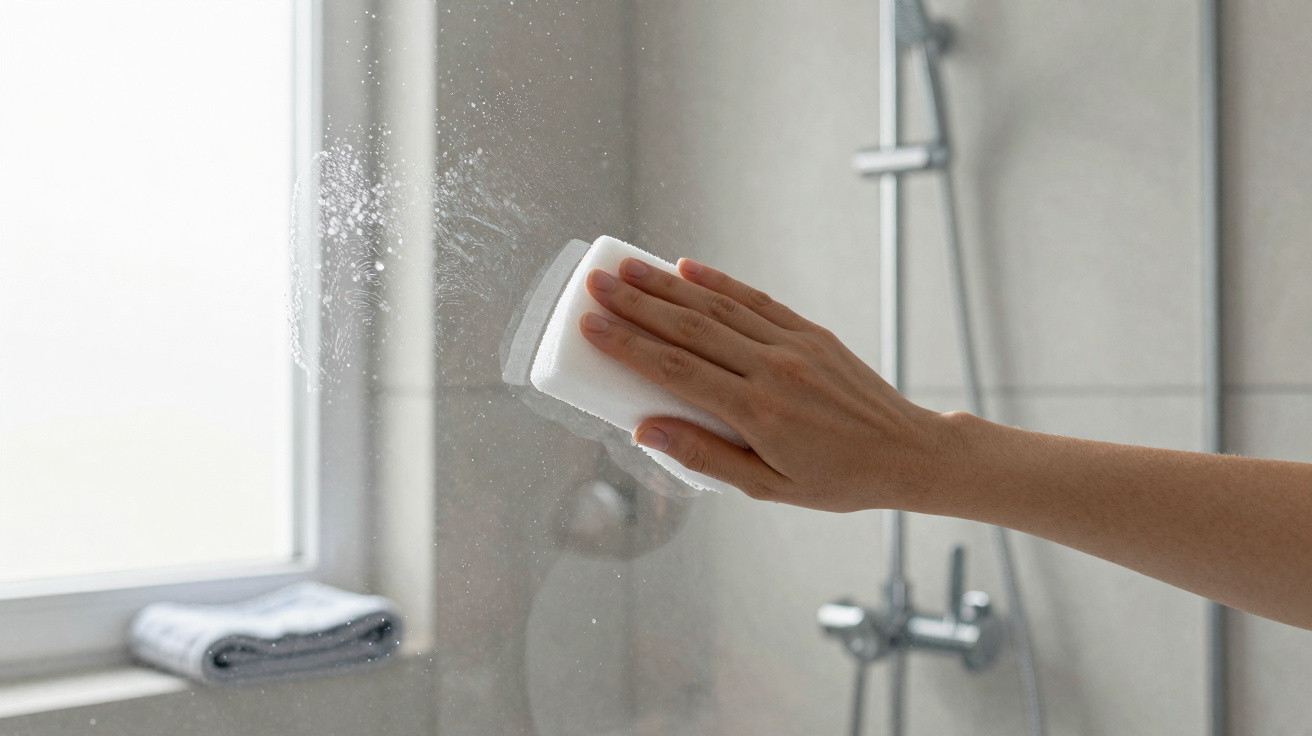
That gap has sparked a fresh wave of “hotel hacks” across social media, with people searching for straightforward, low‑fume ways to keep shower glass clear-without making the bathroom feel like a chemistry lab.
Why shower glass turns cloudy in the first place
Cloudy shower screens usually come down to a familiar combination of everyday chemistry and routine. Mains water contains minerals such as calcium and magnesium, and when water droplets dry they can leave behind a chalky trace. Mix that with shampoo residue, body wash, hair conditioner and tiny flakes of skin, and a tenacious film forms that clings to glass like clingfilm.
With every shower, another whisper‑thin layer settles. Early on, the dullness can look like innocent misting. Given enough time, it turns into a pale, milky veil that won’t shift-even when you attack it with a strong bathroom cleaner. Many people respond by buying harsher, more pungent products, using them more frequently and with more effort, only to end up frustrated by smears and streaking.
Cloudy shower glass rarely comes from “dirt” alone. It mainly comes from mineral build‑up welded together with soap and product residue.
Hotel cleaning teams tend to tackle the same issue from a different angle. Rather than piling on more chemicals, they prioritise breaking the bond between the deposit layer and the glass. The idea is to remove the build‑up carefully and evenly, while keeping the clear pane underneath intact.
The quiet hotel trick: a foam that behaves like ultra‑fine sandpaper
In many busy city hotels, housekeepers increasingly rely on an unassuming white block: the melamine foam sponge, often sold as a “magic eraser”. It looks much like an ordinary washing‑up sponge, but the material is what makes it work. Melamine resin is formed into a stiff, micro‑porous foam. Viewed under magnification, it looks like a mesh of hard, fine strands-behaving like extremely fine sandpaper.
When you glide this foam over glass with a little water, those tiny strands abrade away an incredibly thin layer of the surface film. There’s no need to depend on acids, bleach or heavily scented solvents. Instead, the cleaning power comes from controlled mechanical abrasion, governed by how much pressure you apply. Used properly, it can lift limescale rings, dull soap shadows and oily fingerprints that seem to cling on forever.
The melamine sponge does not “dissolve” grime. It shaves it off in tiny amounts, like an eraser taking graphite off paper.
This method fits hotel routines for practical reasons. It’s quick, works in bathrooms with limited ventilation and reduces staff exposure to strong chemicals. There’s also less need for multiple bottles tailored to different surfaces. Because the glass is left genuinely bare-rather than coated with fragrance and surfactants-it reflects light more cleanly, creating that crisp, “newly installed” look guests notice as soon as they step in.
Step‑by‑step: how to use a melamine sponge on your shower doors
The technique that circulates quietly among professional cleaners transfers well to a home bathroom. It can seem almost too simple, which is part of why it has caught on.
1. Prepare the surface and your tools
- Open a window or switch on the extractor fan to keep air moving.
- Rinse the shower glass with warm water to shift loose dust and hair.
- Slice the melamine sponge into halves or quarters so it’s easier to hold and you don’t waste a full block.
- Keep a soft, lint‑free cloth or microfibre towel nearby for drying.
2. Activate the sponge
Hold the sponge under the tap, then squeeze out as much water as possible. You want it damp rather than dripping. If it’s too wet, the abrasive action is reduced and you’re more likely to leave residue behind; if it’s too dry, the foam can drag across the surface.
3. Work in small, controlled sections
Begin at a top corner of the panel. Move in overlapping circles or short horizontal passes, using light to medium pressure. Let the foam’s micro‑structure do the work.
A common mistake is pressing hard on the assumption that more force equals more cleaning. That can leave micro‑scratches on delicate coatings such as “easy clean” or lotus‑effect finishes. With standard, untreated glass, gentle pressure is usually enough to remove the haze.
Test a discreet lower corner first, particularly if you suspect the panel has a special water‑repellent coating or is made of plastic rather than glass.
4. Rinse and wipe before the residue dries
As the sponge abrades the film, it creates a fine, almost invisible powder. If that dries on the glass, it can turn into fresh streaks. After completing each section, rinse with clean, warm water and then dry with your lint‑free cloth, using long, straight strokes.
Continue section by section until the full panel is clear. Many people find the glass looks noticeably sharper afterwards, with crisper reflections than they ever achieved using strong cleaners.
5. Know when to stop and when to replace
Melamine sponges break down in normal use. Edges wear away, the block shrinks and it may start to crumble. That’s expected. Once the foam feels soft, mushy or heavily stained, dispose of it in the general waste. Don’t wash it down the drain, because the fragments behave like plastic.
Common mistakes that leave streaks or damage
Even a straightforward method can go wrong if it’s done in a hurry. Cleaners repeatedly see the same errors in domestic bathrooms:
- Combining melamine sponges with strong acidic or chlorine‑based cleaners, which can create hazardous fumes and cause unnecessary surface wear.
- Scrubbing over dry, dusty glass, which drags grit around and increases the risk of scratching sensitive coatings.
- Missing the rinse step, allowing sponge residue and loosened scale to dry into new marks.
- Using the same sponge on stainless steel, glossy lacquered units and TV screens, where the abrasion can permanently dull the finish.
Hotel teams are often given firm guidance: no melamine on shiny black taps, no melamine on televisions, always rinse, always test a corner first. Bringing those habits into your own routine helps protect expensive fixtures while still taking advantage of the sponge’s glass‑cleaning effect.
Why this method fits a lower‑chemical bathroom routine
Beyond how it looks, the move towards melamine sponges reflects a wider shift in what people want from cleaning. Surveys in Europe and North America indicate growing concern about strong fragrances and irritants in enclosed spaces. Many households now try to reduce aerosol sprays and multi‑purpose cleaners packed with dyes and perfume.
| Traditional approach | Melamine‑based approach |
|---|---|
| Multiple specialised cleaners for glass, limescale, soap scum | One sponge plus water for most mineral and product film |
| Heavier chemical footprint and strong odours | Low odour, relies mainly on mechanical action |
| More bottles, more plastic packaging | Fewer products, but sponge itself is plastic waste |
| Fast results, but may leave surfactant film on glass | Removes film entirely, often sharper visual finish |
The environmental balance sheet still has drawbacks. Melamine foam is plastic and it isn’t recyclable. Even so, a small block can take the place of repeated applications of several bottled cleaners, as well as the water needed to rinse them away. When used carefully and not excessively, it suits the “less but better” approach that many sustainability experts advocate.
From hotel ritual to weekly habit
The real strength of this trick isn’t only the initial deep clean-it’s the routine that comes after. Once the glass has been restored, simple maintenance can slow the return of the haze.
A workable pattern for many homes is:
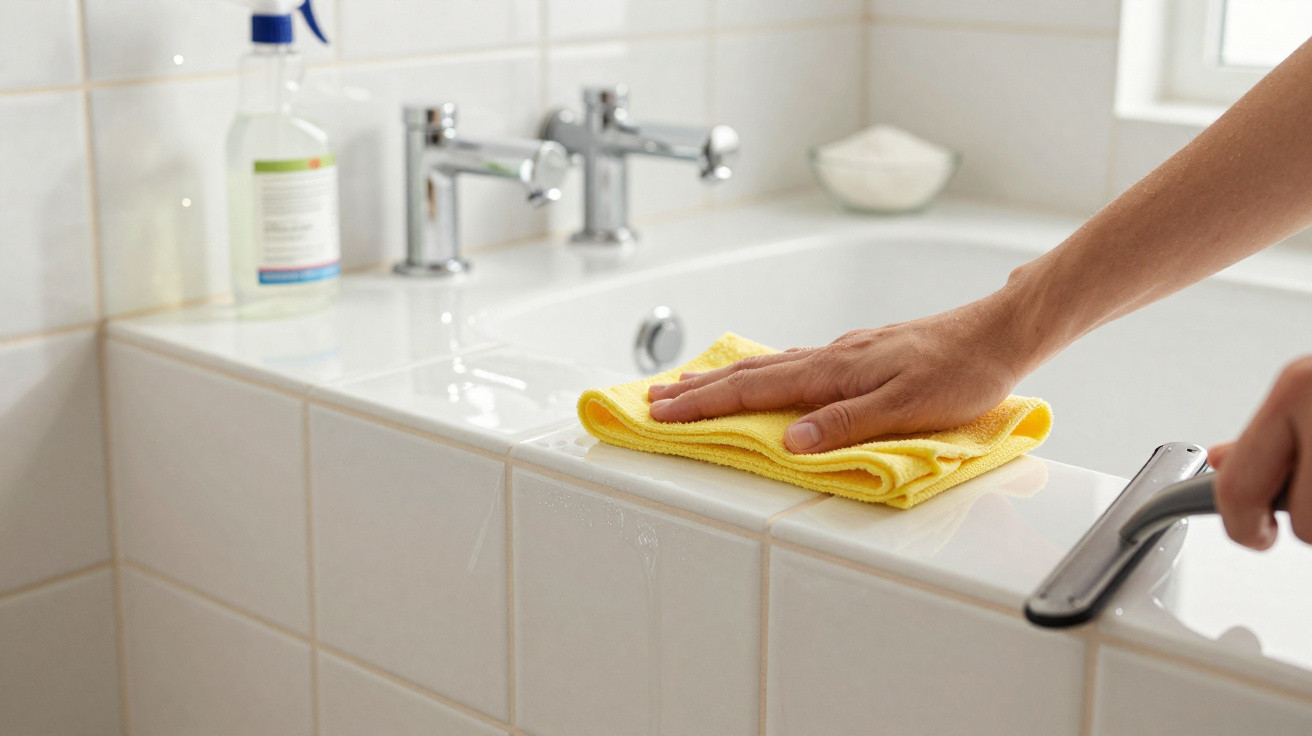
- Use a squeegee or soft cloth to pull water off the glass after showering when you have 30 spare seconds.
- Use the melamine sponge once a week for a quick pass, concentrating on the areas that get the most spray.
- Keep strong limescale removers for metal fittings or for deposits that don’t shift with light abrasion.
By turning the job into small, frequent actions rather than monthly marathons, you avoid the dread that often comes with bathroom cleaning. The glass stays closer to its “hotel” look, and each session feels manageable rather than heroic.
When this hack is not enough – and what to try then
Not all shower screens respond in the same way. In areas with very hard water, mineral deposits can etch the glass over years, leaving tiny pits rather than a removable layer sitting on top. A sponge can’t reverse that kind of structural damage. In these situations, even once the surface film is removed, the panel may still appear slightly cloudy in certain lighting.
Some people also combine the melamine routine with a protective product, such as a silicone‑based water‑repellent coating sold for shower glass. The aim is to shorten the time water sits on the surface, giving minerals fewer chances to bond. These treatments typically need reapplying every few months and must be used with care, as incorrect application can make the floor dangerously slippery.
Why small cleaning hacks shape how a bathroom feels
Changes like this don’t often make headlines, but they affect everyday life. Looking at a clear shower wall can alter how the whole room feels, even if the tiles and fittings haven’t changed. That can influence habits elsewhere at home: using less product, relying on less scent, and paying more attention to simple tools that work quietly and well.
For anyone who reacts badly to strong cleaning fumes, a combination of water, a melamine sponge and a cotton cloth can also be genuinely helpful. It allows effective cleaning without triggering headaches or irritation. Some parents adopt the method to reduce the number of chemical products stored under the sink, leaning instead on timing and a bit of physical effort.
The wider takeaway goes beyond the bathroom. Plenty of household issues that seem to demand a powerful bottle can be solved with more targeted, physical methods: a blade on the hob rather than endless degreaser, a microfibre cloth for dusty screens instead of spray polishes. The hotel‑style shower hack is simply a clear, visible example of that shift-one steamy panel at a time.

Comments
No comments yet. Be the first to comment!
Leave a Comment