
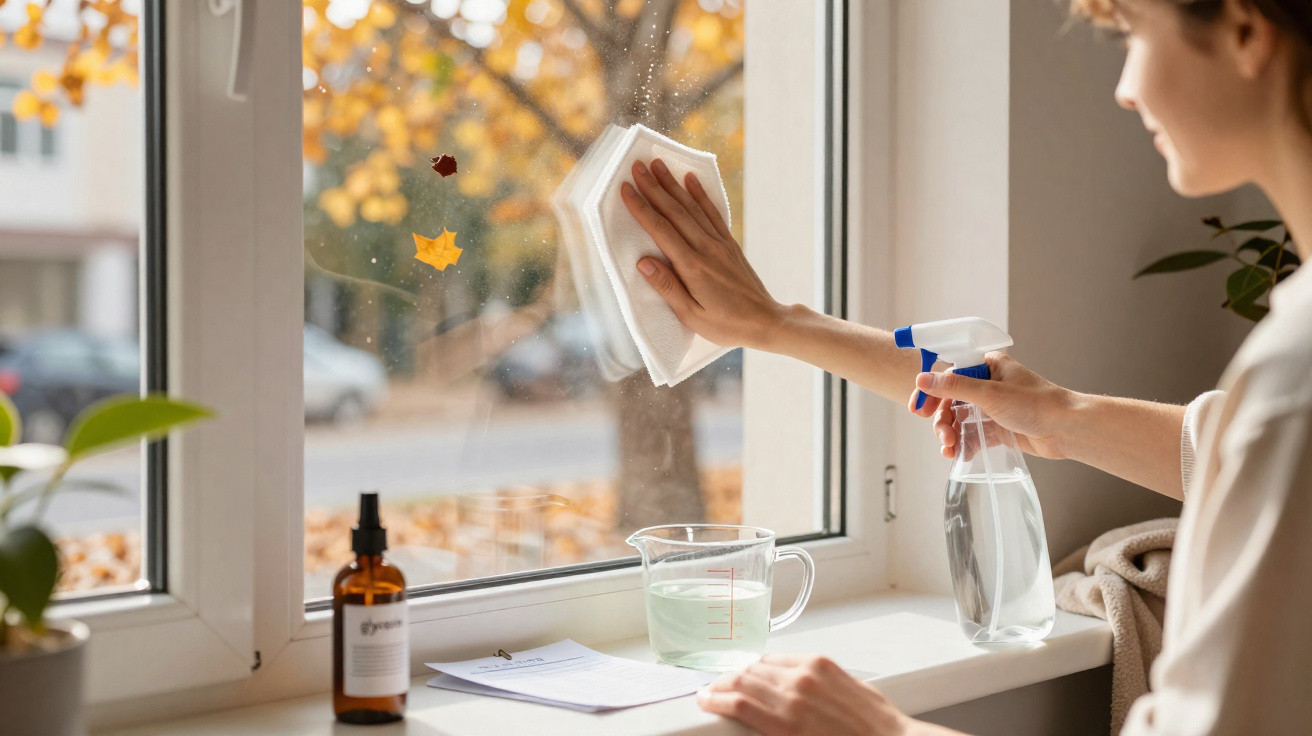
Plenty of people give their windows a half-hearted wipe in autumn, only to be annoyed a few weeks later by fresh streaks and grime. Yet there’s a simple addition you can put into your cleaning water that helps the glass stay noticeably cleaner for longer - often right through to the following spring. No pricey specialist sprays, and no hours of scrubbing.
Why a little glycerin keeps windows surprisingly clean for longer
Glycerin is best known from hand creams and soaps. When added to water for cleaning glass, it behaves like an invisible protective layer. It settles on the pane as an ultra-thin film and smooths out tiny irregularities in the surface.
"This fine film means dust, rain marks and dirt don’t cling as easily - the window stays clearer for much longer."
A standard glass cleaner will lift dirt, but it doesn’t change the surface itself. Microscopic grooves in the glass remain exposed and can act like small traps for dust particles. Glycerin partially smooths these areas, which slows down how quickly new deposits build up.
Rain tends to bead and run off more readily, droplets slide away faster, and fewer water spots are left behind. That’s particularly useful for panes that take the brunt of the weather - such as balcony doors or patio doors.
A quick cost example: why the trick is worth it
A bottle of vegetable glycerin (250 millilitres) usually costs only a few pounds from a pharmacy or chemist. For window cleaning you only need two to three drops per litre of water, so one bottle lasts for many cleaning sessions across the whole home.
- Far lower use than glass-cleaner sprays
- Long-lasting effect - in normal conditions up to two months
- Less cleaning effort in winter because the panes soil more slowly
- Works alongside your usual cleaner as an add-in to the cleaning water
In coastal areas with salty air, or in big cities with lots of fine particulate pollution, the effect doesn’t last quite as long. In those locations it can be sensible to repeat the treatment more frequently. If you know what your local conditions are like, it’s easy to adjust the schedule.
How to mix the glycerin solution correctly
For this method you only need a few everyday items that most households already have:
- 1 bucket or measuring jug with lukewarm water (1 litre)
- vegetable glycerin
- a spray bottle or a soft sponge
- two microfibre cloths - one slightly damp, one completely dry
"The right dosage is two to three drops of glycerin per litre of water - more is more likely to cause problems than help."
Add the drops to the lukewarm water and stir briefly until the glycerin is evenly dispersed. Too much can leave the pane feeling greasy; too little provides hardly any protective effect. The benefit comes from getting that balance right.
Step by step: how to apply the solution
- Remove heavy dirt, cobwebs and old residues in the usual way first, for example with washing-up liquid and water.
- Pour the glycerin solution into a spray bottle, or pick it up with a clean sponge.
- Apply evenly across the glass - not dripping wet, but covering the whole surface.
- Work from top to bottom, ideally in overlapping passes.
- Leave it for a maximum of 30 seconds, then buff firmly with the dry microfibre cloth.
- Finally, check the finish in daylight from both inside and outside.
The short dwell time is deliberate. Around half a minute is enough for the film to bond with the glass surface without turning tacky. If you leave it much longer, the solution is harder to polish off and streaks can appear.
A clean base: why a pre-clean matters
If you start using glycerin straight onto heavily soiled windows, you’ll likely be disappointed. Grease, soot and old product residues prevent proper contact with the glass, which makes the protective effect noticeably weaker.
"Clean thoroughly once first, then use glycerin - that’s how the effect lasts longest."
For this initial clean, lukewarm water with a little washing-up liquid is sufficient in most cases. Only once the pane is free of any visible greasy film is it worth applying the special mix.
Common mistakes and how to avoid them
- Too much glycerin: the glass looks greasy and may attract dust more readily.
- Not enough buffing: a dull haze remains, especially obvious in sunshine.
- Direct sun: the solution dries too quickly, leaving streaks.
- Dirty cloths: old residues get spread back over the glass, so it never looks properly clear.
Why autumn is the best time to check your windows
Cleaning windows in midsummer is awkward: the liquid evaporates too fast, the sun is dazzling, and streaks often only show up later. Autumn offers much better conditions for the glycerin method.
With cooler air, the solution stays on the glass a little longer rather than drying immediately. That gives you time to work steadily. At the same time, the sun sits lower, harsh glare is reduced, and under overcast skies you can spot marks and streaks especially well.
"Treating your panes in autumn means you get maximum daylight in your home during the darkest months."
Clean windows let more light into the house - a noticeable benefit on short winter days. You also stop grime from setting in for months and gradually attacking the surface over time.
How long does one treatment last?
With average exposure - meaning not right beside a busy road and not by the sea - many households find a single autumn treatment lasts into early spring. An occasional light wipe with a damp microfibre cloth is usually enough, as the protective film remains largely intact.
In higher-exposure locations, it’s worth checking the panes every few weeks. If you then do a quick touch-up when dirt is visible, you can keep windows under control through the whole winter half of the year with minimal effort.
How safe is glycerin at home?
Vegetable glycerin is generally considered harmless in small quantities. It’s used in many cosmetic products and also appears in foods. For window cleaning, only tiny amounts are needed, spread thinly over a large area.
Even so, basic precautions still apply:
- Store the bottle safely out of children’s reach
- Don’t let it drip neat onto wood or fabrics to avoid staining
- Avoid splashes into your eyes while mixing
- Don’t pour litres of leftovers down the drain; simply use it up
If you have very sensitive skin, you can wear gloves while cleaning. In its diluted form in cleaning water, glycerin often feels kinder on the skin than some harsher glass cleaners.
Practical add-ons for an easier winter routine
The glycerin method is a good example of how small habits can make day-to-day life simpler. Planning a proper cleaning session in autumn can save time and frustration for months. It’s just as sensible to adopt a few other “winter routines”: dust radiators, check the seals on doors and windows, and place houseplants strategically to bring in more greenery and improve the air indoors.
Ultimately, it’s about getting more comfort during the darker season without a huge amount of effort. A couple of drops in the cleaning water and a structured check of your home - and winter feels that bit easier.




Comments
No comments yet. Be the first to comment!
Leave a Comment