
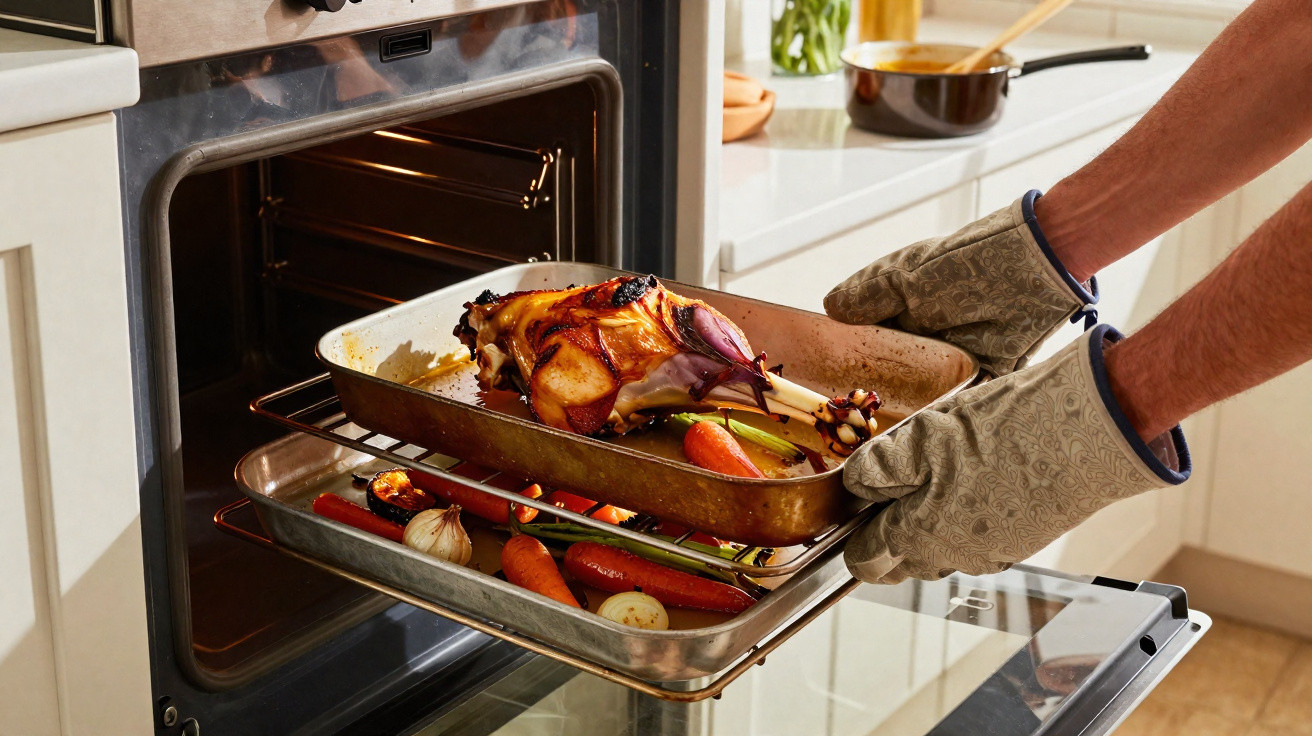
Roast lamb is a favourite for many home cooks, yet the aftermath can be off-putting: greasy splatters on the oven walls, the shelves and the door glass. The fix is often already sitting in the cupboard unused: a simple tray that catches fat and roasting juices and keeps the oven cleaner-without harsh chemicals or an infuriating deep scrub.
Why lamb matters so much at Easter
When people host guests at Easter, lamb surprisingly often ends up as the main course. In plenty of households, a substantial roast has become a set tradition-much like goose at Christmas. It is not only about custom, either: a whole leg or a saddle can be prepped ahead, tends to cook reliably, and tastes just as good warm as it does slightly warm.
At the same time, lamb carries strong symbolism in church traditions, standing for purity, willingness to sacrifice and new beginnings. That fits neatly with spring, when everything starts growing again and many people fancy food that feels fresh yet celebratory. Still, one detail spoils the mood year after year: what the oven looks (and smells) like after roasting.
"What many people underestimate: with lamb, it is not the cooking time that causes stress-it is the film of fat inside the oven, and that is exactly where the forgotten trick comes in."
The real issue: lamb fat in the oven
Lamb naturally contains more fat than, say, chicken or turkey. At high heat, that fat renders and drips down in heavy bursts. Some of it vaporises, then settles as a fine coating on the oven interior-later turning into stubborn baked-on patches and unpleasant odours the next time you heat the oven.
Common results of roasting lamb without proper protection include:
- Greasy splashes along the side panels
- Burnt-on spots on the oven floor
- A sharp smell every time the oven is preheated afterwards
- Multiple rounds of cleaning with sponge, scraper or aggressive cleaners
Many people try to catch the mess with aluminium foil or shallow baking sheets. In practice, they can slide out of position, warp in the heat, or fail to collect all the juices. This is where a familiar oven accessory-one most people already own, but rarely use-becomes invaluable.
The overlooked hero: the oven drip tray
Most ovens come (or came) with a deep tray, often enamelled. Many think of it as the tray for chips or traybakes. In truth, it was made for roasting: a deep drip tray designed to collect fat and meat juices.
Typical features of this tray:
- Sturdy build with a slightly raised rim
- Often a dark enamel finish or stainless steel
- Fits precisely into the oven runners
- Handles high temperatures with ease
Placed on a lower shelf position, it reliably catches any fat that falls. Nothing lands directly on the oven floor where it can burn on. And the tray effectively becomes a flavour reservoir that can later be turned into a rich gravy.
How to position the lamb and drip tray correctly
A clean oven and juicy lamb come down to a straightforward setup:
- Slide the grill rack into the middle of the oven.
- Put the drip tray one shelf level beneath it.
- Place the lamb roast directly on the rack-not in the tray.
With this arrangement, heat circulates around the meat from all sides, while the fat drops into the tray without smearing the oven. Keep enough space between the meat and the tray so hot air and steam can move freely.
"The key point: always roast on the rack with the drip tray underneath-never the other way round."
Trick 2: vegetables and water keep things even cleaner
A second tweak solves two problems at once. Rather than leaving the drip tray empty, use it like a mini roasting tin. A little water in the bottom helps stop the fat from baking on. At the same time, the moisture creates steam that helps keep the meat succulent.
If you like, add roughly chopped vegetables. These work particularly well:
- Carrots in chunks
- Onions or shallots, halved
- Garlic cloves, left in their skins
- Pieces of celeriac or leek
- Sprigs of rosemary and thyme
This combination acts as a natural flavour catcher. The vegetables soak up juices and fat, brown slightly, and later-along with a splash of stock or wine-form the foundation of a robust gravy. In the end, everything goes into a saucepan, while the oven is largely spared.
| Add to the drip tray | Effect |
|---|---|
| 1 glass of water | Prevents burning on, creates steam |
| Mixed vegetables (carrots, onions, celeriac) | Absorbs fat, adds roasted flavour |
| Herb sprigs | Gives the roasting juices a savoury aroma |
How to turn the collected juices into a quick gravy
Once the lamb is done, the most satisfying part begins: turning the tray contents into gravy in just a few minutes. Carefully remove the tray from the oven, let it sit briefly, then skim off the fat with a spoon or pour it off using a fat separator.
Next, tip the remaining juices into a saucepan, deglaze with a little red wine or stock if you wish, and simmer briefly to reduce. For a thicker texture, whisk in a small knob of cold butter or a tiny amount of cornflour. With no extra fuss, you get a deep, full-flavoured gravy that suits roast lamb perfectly.
Cleaning: easier than the oven-if you do it the right way
Instead of scrubbing the entire oven cavity, you only need to clean the drip tray. That job is far simpler if you keep a few points in mind:
- Never shock a stone-cold tray with water, as it can warp.
- Add a little water with washing-up liquid to the still-warm tray and leave it to soak.
- Lift off any crusted bits with a wooden scraper, not metal.
If you roast often, you can also line the tray with baking parchment. It catches some of the mess without affecting performance. Just make sure the paper does not stick up over the rim, so it cannot touch the heating element.
More practical tips for oven-roasted lamb
To make sure the roast is not only tidy but also delicious, it pays to think briefly about temperature and prep. Lamb benefits from a blast of high heat at the start to build a good crust, followed by gentler heat to finish cooking through. Many professionals begin at 220°C (conventional heat) for 15 to 20 minutes, then reduce to 160 to 170°C.
Before it goes into the oven, the meat should sit out for at least 30 minutes to come up to room temperature. A simple marinade of olive oil, garlic, lemon zest and herbs is often more than enough. Very strong acidity or excessively long marinating can make the surface soft while the centre is still raw.
When the trick is worth using-not only at Easter
The rack-and-drip-tray method is not limited to lamb. It works for any dish that releases lots of fat and would otherwise leave the oven suffering. Typical candidates include:
- Pork roast with crackling
- Roast goose or duck
- Tray-baked chicken with plenty of skin
- Meatloaf stuffed with cheese
Once you get used to this simple setup, you will reach for oven cleaner far less often. You also end up with flavourful gravies from the captured juices, while the meat cooks evenly from all sides. That turns the oven from a greasy battleground into a dependable helper-especially on holidays when nobody wants to scrub.

Comments
No comments yet. Be the first to comment!
Leave a Comment