
Wooden spoons, spatulas and chopping boards are found in almost every kitchen. They have a reputation for being sturdy, natural and hygienic - as long as you look after them properly. That’s where things often go wrong: a supposedly “thorough” cleaning trick currently going viral on social media is, according to specialists, counterproductive and can even ruin the wood faster. A TV expert has now clearly dismissed the method and explained what really keeps wooden utensils clean and long-lasting.
Why boiling wooden utensils is a serious mistake
The trend sounds plausible: drop wooden spoons and boards into a pan of boiling water, let them bubble away briefly, and they’re “disinfected” - at least that’s what countless clips and posts claim. Many people then point to the brown-tinted water as proof of how much “dirt” is supposedly being drawn out of the wood.
"If you boil your wooden utensils, you’re not just washing out colour - you’re damaging the structure and shortening their lifespan."
An expert speaking on a morning TV programme firmly challenged that idea. When wood is boiled, what mainly leaches out are its natural tannins. They can discolour the water, but that is not automatically evidence of bacteria - it is simply part of the material itself.
More importantly, a long soak in near-boiling water drives moisture deep into the wood. The spoon or board swells, may warp, can develop cracks, or can feel soft and spongy once dry. Those tiny splits then become perfect hiding places for microorganisms later on.
So the outcome is the reverse of what people intend: rather than reducing germs, you can end up creating more long-term surface area for grime and bacteria - while also damaging the smooth, attractive finish.
The better approach: how to clean wooden utensils day to day
Keeping wooden utensils hygienic in everyday use doesn’t require much at all. The expert recommends a simple, consistent routine straight after cooking:
- Don’t leave wood sitting in washing-up water for hours
- Wash with warm water and mild washing-up liquid or traditional household soap
- Optionally wipe with a little household vinegar to reduce odours and germs
- Rinse immediately and thoroughly with clean water
- Dry with a cloth, then allow to air-dry upright or hanging
As a rule, the dishwasher is not suitable for wood. Harsh detergents, high temperatures and prolonged soaking are extremely tough on the material, often leaving spoons and boards distorted or split.
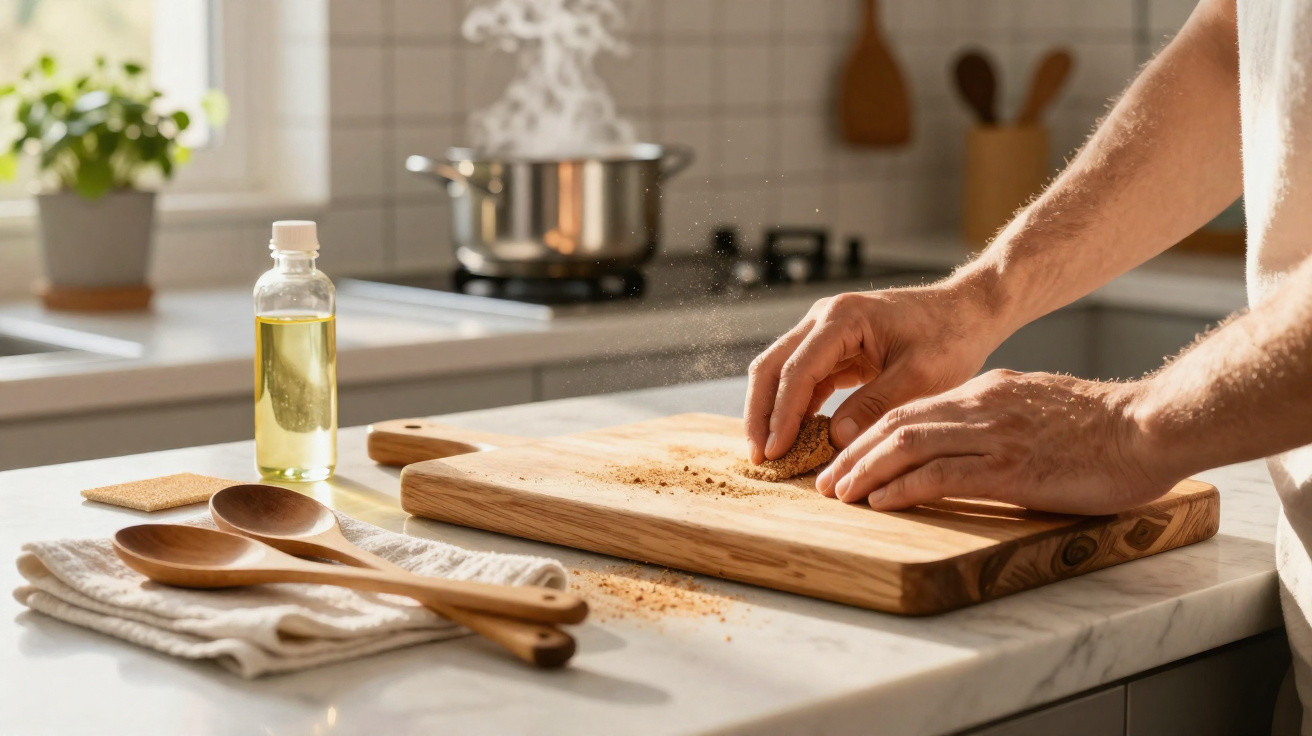
Deep cleaning: use sandpaper instead of a saucepan
If a wooden board starts smelling of onions or garlic, if a chopping surface has turned grey, or if a wooden spoon has built up a sticky film, standard washing will eventually stop being enough. For exactly this situation, the specialist recommends a method many people overlook: fine sandpaper.
The process is easy to replicate:
- Let the utensil dry completely.
- Use fine sandpaper (for example, 180 grit).
- Sand along the grain until the surface feels smooth again.
- Carefully wipe away sanding dust with a slightly damp cloth.
This removes the top layer where staining, raised fibres and some of the germs have collected. Afterwards the utensil can look almost new: smooth, firm, and without the unpleasant “floppy” feel many people associate with old wooden tools.
Protective treatment: oil restores the wood’s resistance
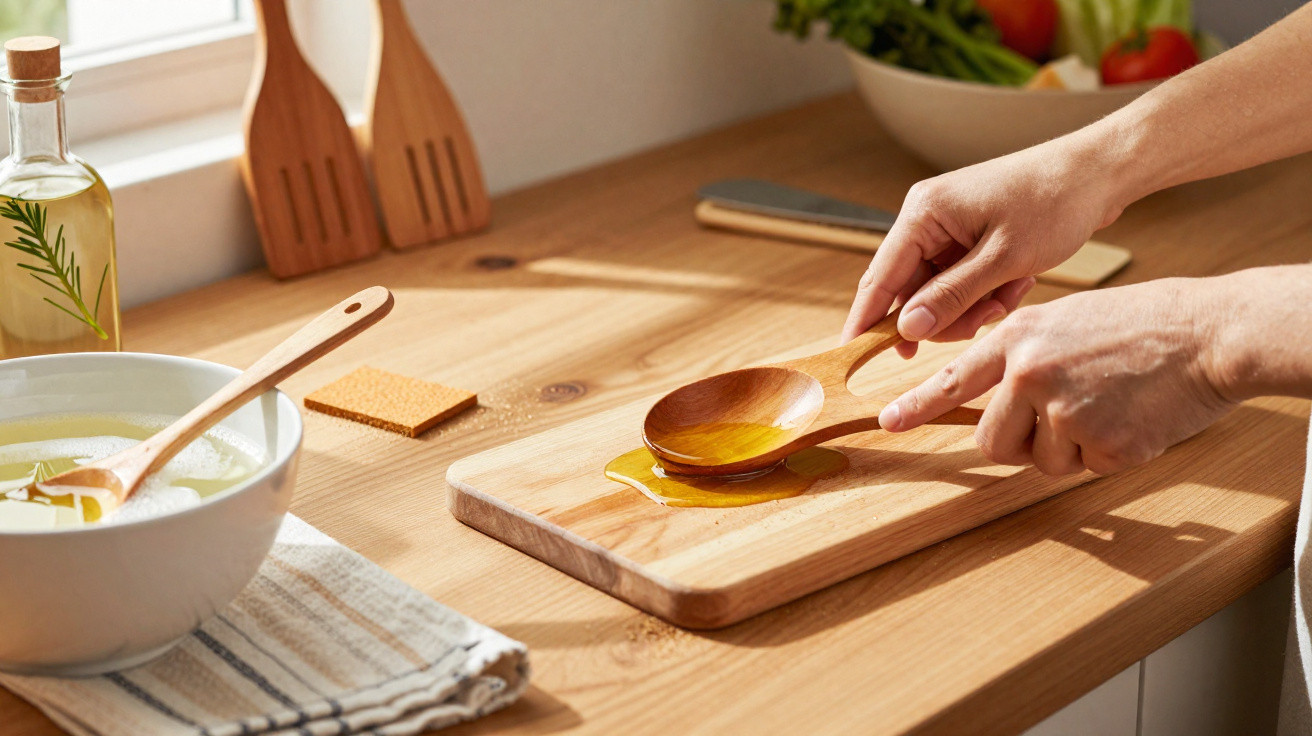
After this kind of deep clean, a small “spa” treatment is worth doing. The expert suggests applying a thin layer of food-safe vegetable oil. Popular options include:
- rapeseed oil
- sunflower oil
- a neutral wood or chopping-board oil made for kitchen use
Apply the oil sparingly with a cloth, allow it to soak in, then wipe off any excess. This helps seal the surface pores so the wood absorbs less water and fewer odours, and it stays supple. For frequently used boards and spoons, once or twice a month is entirely sufficient.
Why many doctors choose wood over plastic
While some people are still debating the best cleaning method, medical professionals are asking a more fundamental question: what material should utensils be made from in the first place? A well-known doctor who regularly appears on TV has taken a clear stance against plastic.
He points to components found in many plastic products, such as plasticisers and other chemical additives. Under heat, these substances can migrate out of the material - precisely when spatulas and scrapers are sitting in a hot pan. Studies have linked some of these compounds with hormone-like effects.
"Plastic in the kitchen can involve chemical substances the body doesn’t need - wood has a clear advantage here."
Among the concerns mentioned are a higher risk of disrupted sexual development in boys, earlier-onset puberty in girls, and certain hormone-related cancers. Not every plastic utensil is automatically dangerous, but the concern is significant enough that more specialists are drawing a firm line: if you want to play it safe, substantially reduce plastic that comes into direct contact with hot food.
The advantages of wood in the kitchen at a glance
| Aspect | Wood | Plastic |
|---|---|---|
| Contact with heat | heat-resistant, won’t melt | can melt, may release substances |
| Protecting pans | barely scratches non-stick coatings | hard edges can damage coatings |
| Feel and appearance | warm, natural, rustic | often hard, sometimes brittle, more artificial look |
| Sustainability | renewable material, easy to recycle | usually petroleum-based, disposal can be problematic |
| Care | needs proper cleaning and occasional oiling | easy-care, but with potential chemical risks |
Common mistakes with wooden utensils - and how to avoid them
Besides boiling, there are other habits that can slowly destroy wood or turn it into a germ trap. The most common include:
- soaking for hours in the sink
- storing in closed containers without air circulation
- ignoring cracks and deep cuts
- trying to tackle strong odours with water alone
Large cracks in a chopping board are a warning sign: food residue and bacteria can collect there and are difficult to remove with normal washing. In cases like this, even sanding will eventually stop helping. Consumers should then replace the board - especially small boards that have been used for raw meat.
Practical everyday tips: keeping wood hygienic for longer
If you want wooden utensils to last, a few straightforward rules go a long way:
- Clean wooden spoons and boards as soon as possible after cooking.
- Use separate boards for raw meat and treat them particularly carefully.
- Check wooden items regularly: are there deep cuts, cracks or unpleasant smells?
- If wear is heavy, replace rather than take a risk.
- Build oil care into your kitchen routine.
If you’re buying new, look for untreated wood or wood that is clearly labelled as food-safe. Lacquered decorative boards may look attractive, but they’re often not suitable as chopping surfaces because coatings can lift or flake.
Why a small cleaning “hack” can have big consequences
The debate around boiling wooden utensils shows just how persistent supposed kitchen “wisdom” can be. One viral video is enough for thousands of people to start boiling their spoons, because the brown water looks “so impressive”. Specialists take a more matter-of-fact view: something dramatic-looking is rarely the same as something useful.
In the kitchen, it pays to look closely - not only at materials, but at every care method too. If you use wooden spoons and boards as a long-term, healthier alternative to plastic, you’re protecting yourself in two ways: fewer chemicals at the hob and fewer germs on the tools. The rule is simple enough to remember: clean, maintain, sand, oil - but never boil.
Comments
No comments yet. Be the first to comment!
Leave a Comment