
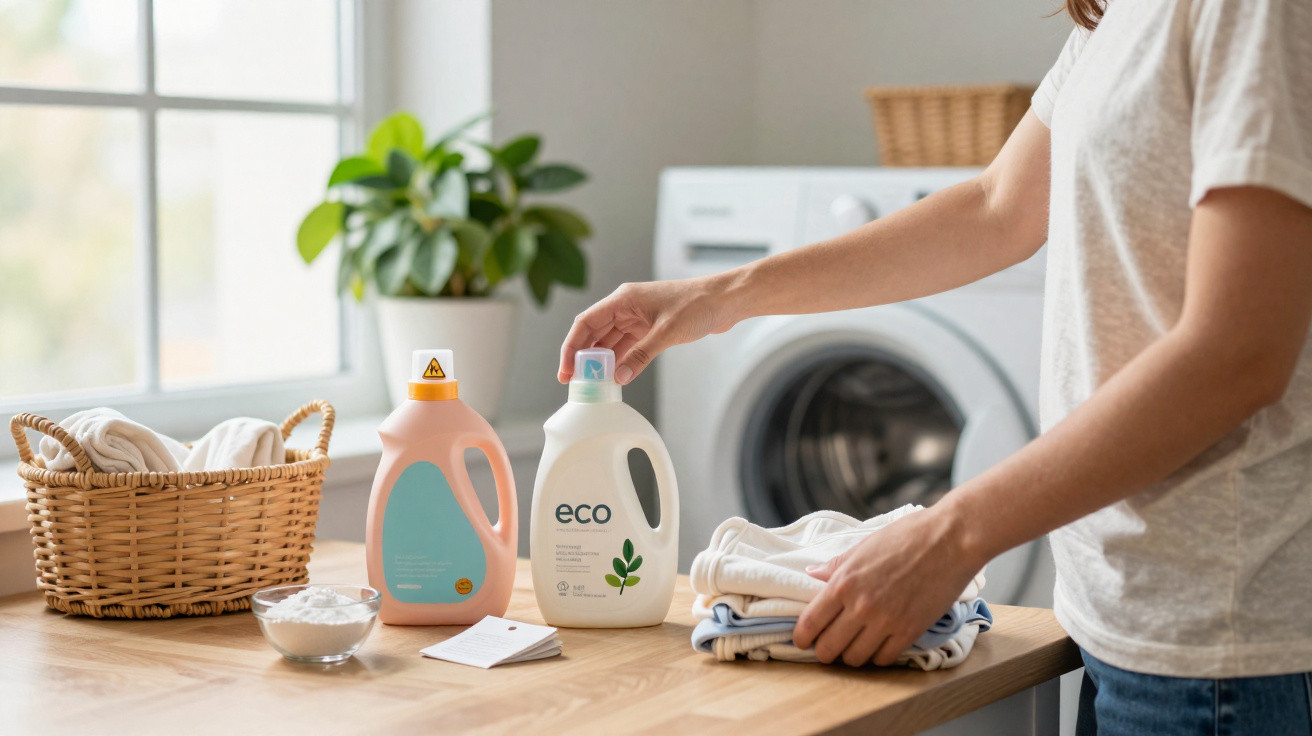
Bright caps, crisp blues and a waft of artificial lavender. But consumer organisations in Europe and the US are sounding a shared alarm: many widely used laundry products repeatedly contain substances associated with rashes, wheezing and longer-term health concerns. Their packaging is reassuring; the lab reports are not.
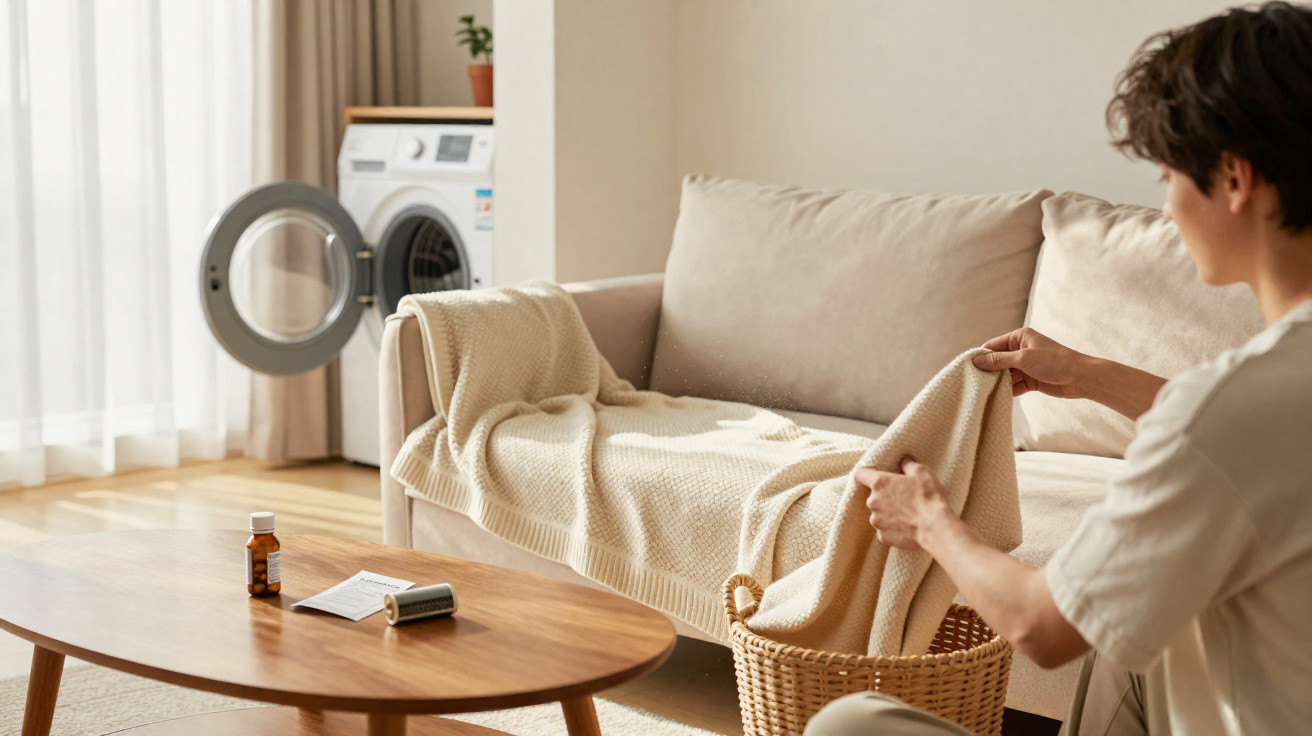
The laundry basket whirs, the washing machine clicks into action and the room takes on that sharp, nostalgic aroma we link with “clean”. I saw a mother folding miniature babygrows, looking at her baby’s reddened wrists with confusion and a touch of guilt, as though she had overlooked an important warning. Most of us know the comfort of a newly washed T-shirt. Then our skin reacts differently. The tension is as soft as cotton. Something in this fragrance is more than merely fragrance. It is a gentle-sounding promise with a harsh side.
What is really found in “clean” clothes
Consumer organisations have examined everyday detergents, fabric softeners, pods and scent boosters, repeatedly identifying similar ingredients. Preservatives including methylisothiazolinone (MI) and methylchloroisothiazolinone (MCI), recognised skin sensitizers, occur in liquid products requiring protection from microbes. Fragrance blends appear as “parfum”, concealing scores of possible allergens, including limonene and linalool. Optical brighteners remain on textile fibres to create the appearance of brighter whites, while microencapsulated fragrances may burst against the skin with every rub. Clean does not automatically mean harmless.
Testers often encounter a telling example: a “sensitive” detergent showing a cuddly baby on its bottle may list “parfum” without revealing the allergens it could contain. A number of fabric conditioners now rely on fragrance microcapsules produced from melamine-formaldehyde resins; these may emit trace amounts of formaldehyde and cause contact dermatitis in certain people. Laboratories have also identified residual 1,4-dioxane in some detergents, a by-product linked with long-term health risks. Some places, including New York, have introduced limits on it in household cleaners. European spot checks after the ban have likewise found remaining stock containing Lilial (butylphenyl methylpropional), which is now banned because of reproductive toxicity concerns. This is an uneven pattern, but not an uncommon one.
So why do these substances reach your clothes? Liquid detergents require preservatives to prevent microbial growth, whereas powders frequently avoid MI/MCI for this reason. Since fragrance drives sales, manufacturers make extensive use of long-lasting scent systems, including encapsulation that sticks to fabric before rupturing through friction as you go about your day. Optical brighteners shine in daylight and make whites appear to “pop”, but can remain on the skin. Rinsing reduces this exposure without eliminating it. Your T-shirt can become a vehicle, holding small doses against your arms, neck and stomach for hours. One wash is a murmur; weekly loads become a chorus.
How to choose, dose and wash laundry products without fuss
Begin with a focused, practical check. Choose fragrance-free or lightly fragranced products, then look past the claims on the front. Check the reverse for isothiazolinones (MI/MCI), benzisothiazolinone and extensive fragrance lists containing recognised allergens. If “optical brighteners” appear, you may prefer an alternative without them. Certifications such as the EU Ecolabel, Nordic Swan, Allergy UK Seal or Asthma-Allergy Denmark can make the choice clearer. Where possible, select powder or solid detergents to avoid preservatives needed in water-based formulas. Wash on cold or warm settings rather than very hot ones, and add an extra rinse if your skin is prone to irritation.
Several common habits cause problems quietly, but can be changed easily. Using too much detergent leaves residue clinging to fabrics and brushing against the skin, particularly with close-fitting gym clothing. Scent boosters may feel luxurious, but they commonly contain microcapsules that persist like glitter. Keep softener for towels and bedding rather than technical fabrics designed to stay breathable. We may enjoy the idea of “fresh meadow” fragrance after a tiring day. In reality, hardly anyone needs that every day.
Treat this as a gradual adjustment rather than a reason to panic. Change a single product at a time and watch how your skin responds over two weeks. If you have previously had eczema or a fragrance allergy, maintain a straightforward laundry routine and choose products with brief ingredient lists.
“People assume rashes come from skincare,” a dermatologist told me. “Laundry chemistry is the invisible roommate. It lives in your sheets, hugs your clothes, and follows you all day.”
- Choose powder or fragrance-free liquid detergent and avoid scent boosters.
- Use the lowest dose that works; modern washing machines require less.
- Add an extra rinse for baby clothes and underwear.
- Prefer certified products with transparent INCI ingredient lists.
- Record changes in a notes app so you can see what genuinely makes a difference.
What laundry products mean for families, brands and your next wash
The contents of your laundry basket reach beyond washing clothes. They concern the way comfort is sold and how marketing can soften the distinction between “smells safe” and “tests safe”. Families need useful action rather than fear, while an increasing number of people are urging brands to improve formulas quietly. Regulators take action, watchdogs conduct tests and shoppers replace products with better alternatives. It is not a glamorous change; it is the understated rhythm of new habits.
Certain adjustments are free: use a smaller amount, rinse more thoroughly and avoid softeners on garments worn close to the skin. Other choices require finding a different favourite product, perhaps a plain bottle making fewer claims. A straightforward routine can be an effective filter. Neighbours exchange advice, groups compare ingredients and the belief that “more scent equals more clean” begins to weaken. The aim is not clinical perfection, but comfort that does not turn against you.
| Key point | Detail | Why it matters to the reader |
|---|---|---|
| Preservatives in liquids | MI/MCI and related isothiazolinones contribute to many contact allergies | Identify them on labels and choose safer formats |
| Fragrance microcapsules | Long-lasting fragrance technology can release allergens throughout the day | Consider whether that “fresh burst” is worth the itch |
| Low-dose, simple routine | Powders, fragrance-free products and an extra rinse for sensitive items | Reduce risk without changing your entire life |
FAQ:
- Which laundry ingredients cause the most skin reactions? Dermatologists frequently identify isothiazolinones (MI/MCI), fragrance allergens such as limonene and linalool, and some resin-based scent capsules.
- Are powders genuinely safer than liquids? Powders generally do not require the same preservatives as water-based liquids, so they may be kinder to sensitive skin.
- Do “hypoallergenic” and “sensitive” labels have any value? They may be useful, but they offer no guarantee. Read the ingredients and seek independent certifications.
- Can an extra rinse genuinely help? Yes. It cuts down residue left on fabric, which is especially useful for underwear, baby clothes and gym kit.
- How quickly can my skin improve after I switch? Allow one to two wash cycles for items worn often. Monitor changes for two weeks to identify a clear pattern.

Comments
No comments yet. Be the first to comment!
Leave a Comment