
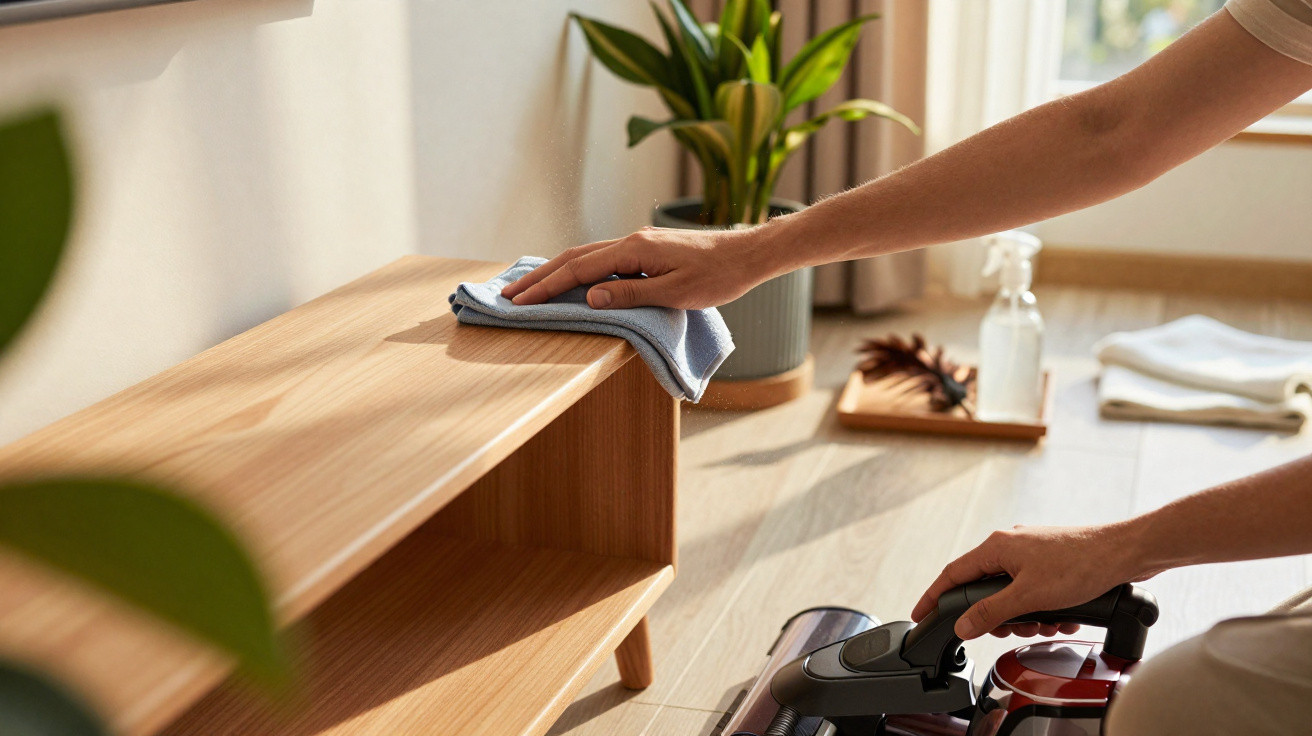
The hum of the vacuum takes over the living room, masking every other sound.
The cushions sit neatly in place, the rug has that freshly brushed look, and for a brief moment there is the satisfying feeling of “job done”. Then the sunlight moves. A beam stretches over the coffee table, revealing it at once: a fine grey film of dust settling… everywhere. It is on the television screen, across the shelves and drifting once more through the air you believed you had just “cleaned”. You look at the vacuum standing proudly by the wall and feel mildly deceived. How can a room sound so clean yet look like this only ten minutes later? The routine you have repeated for years starts to feel slightly flawed. Perhaps dust is not the issue. Perhaps it is the sequence in which you tackle it.
Why vacuuming first quietly sabotages your cleaning
Vacuuming before dusting seems sensible. Floors collect crumbs, fallen leaves and rolling clumps of pet hair. So you take out the vacuum, make your way around the room, perhaps use the brush attachment on the sofa, and leave feeling that the most demanding task is over. But dust does not follow that reasoning. It sticks to lampshades, settles along bookcase shelves and gathers in the narrow ledge above door frames. By vacuuming first, you clean what is visible closer to the floor while leaving dust above you ready to drop.
Picture a sunny Saturday morning. You vacuum the hall, stairs and living room, even putting in extra effort by moving the coffee table. Everything appears immaculate. Later, you take a cloth to the shelves. As you wipe them, minute clouds of particles float down and catch the light. They do not disappear; they settle on the very floor you cleaned an hour earlier. At a microscopic level, this happens every time. Gravity simply carries out its silent work. Each pass of a duster sends another delicate layer onto the rug and hard flooring, meaning your “clean” is already a stage behind.
Airflow creates another problem. Many vacuum cleaners release a gentle stream of air from the rear or sides. When dusting has not yet been done, that airflow can dislodge light particles from surfaces and push them around the room. You remove the heavier debris while fine dust starts floating upwards towards shelves and screens. Then, when you eventually dust, you disturb everything again. Logically, cleaning from top to bottom is more effective. Dust should fall onto a floor that is still dirty, rather than onto one you have freshly vacuumed and are about to spoil without noticing.
The simple change to your dusting and vacuuming order
Changing the sequence is almost frustratingly easy: begin at the highest area of the room, then work downwards. Start with ceiling fans, upper shelves, curtain poles and wardrobe tops. Move next to mid-height areas such as desks, televisions and radiators. Only after that should you clean the floors with a vacuum or mop. Treat it like controlling a small avalanche. You intentionally direct the dust one way-downwards-so the final task genuinely removes it from the room rather than merely redistributing it.
Most people do not clean as though they are posting on Instagram. You get home with twenty minutes available, limited energy and a cordless vacuum that is only half charged. On a hectic weekday, this often leads to picking up the loudest tool first, because noise feels like progress. You vacuum, feel productive and promise yourself that dusting can wait. Let’s be honest: nobody really does all of it every day. Over time, however, that pattern creates layers of grime. Dust lingers along skirting boards, gathers behind the television and clings to the rear of furniture. Every session of vacuuming first makes the obvious areas appear tidy while the rest quietly builds up in the background.
This is not solely a matter of appearance. Dust is more than harmless-looking fluff: it contains skin cells, fabric fibres, pollen, pet dander and sometimes particles of outdoor pollution. If you keep moving it rather than capturing it, you inhale more of it. Those small sneezes when you lie on the carpet or stretch out on the sofa after “cleaning”? They can often be caused by this unseen cycle. Purely from a practical perspective, the last stage should collect the greatest amount of dust at once. That is rarely a feather duster; it is the vacuum, which belongs at the end.
How to create a smarter, calmer cleaning routine
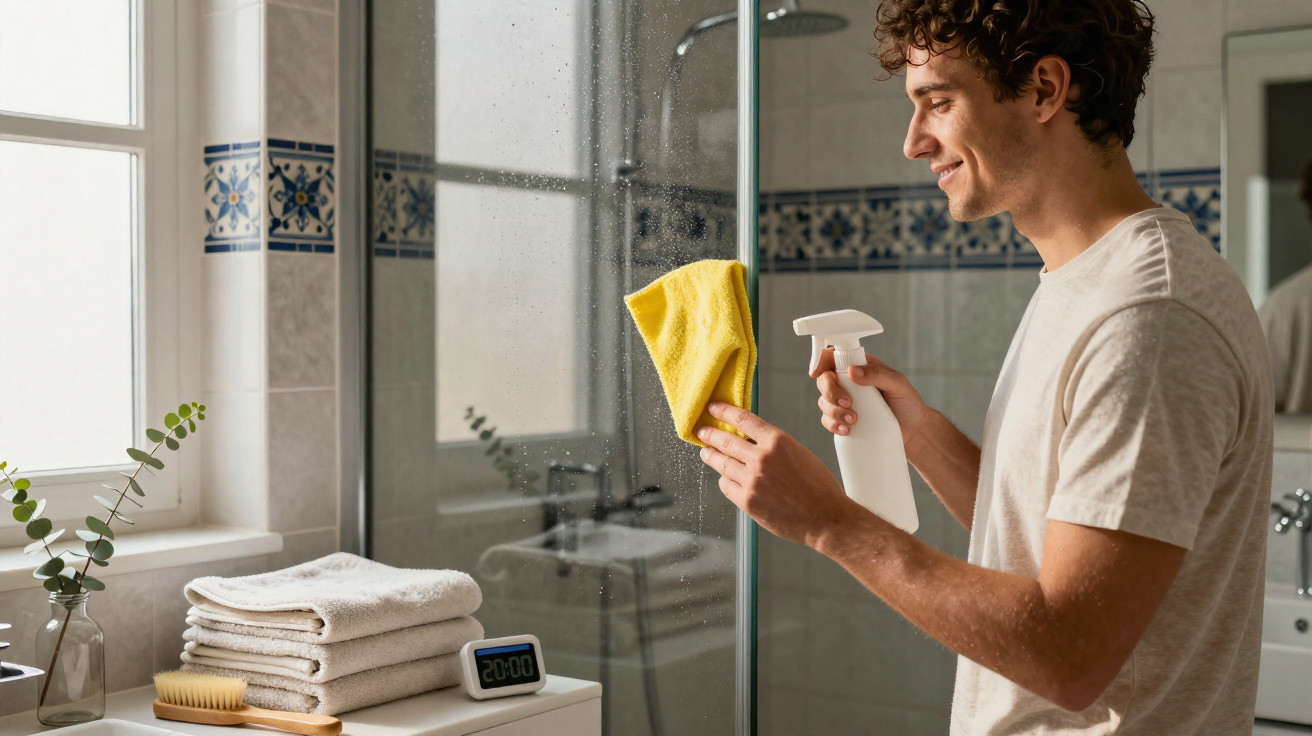
Approach cleaning in layers rather than by room. When you enter a space, first look upwards at the light fittings, vents and ceiling corners. Use a slightly damp microfibre cloth on an extendable pole, or your vacuum’s soft brush attachment, to disturb this upper layer. Then lower your focus to bookcases, picture frames, cabinet tops and window sills. Every area you wipe releases a little more dust below. Allow it to settle instead of rushing to collect it immediately. Once the dust has finished falling, bring in the vacuum to remove the evidence from rugs, corners and beneath furniture.
People often make this far more complicated than necessary. They assume a proper “deep clean” requires five cleaning products, three gadgets and an entire afternoon. That thought alone can make them delay it. During a difficult week, you may vacuum one room but avoid dusting altogether because it feels less defined and more tiring. Realistically, you only need a short ritual that you can repeat. Use one cloth that captures dust rather than shifting it about, follow one sensible route around the room so you do not keep doubling back, and finish with one rewarding vacuum pass after every other surface has released its dust.
There is an emotional element too. Cleaning can bring guilt about tasks you “should” have tackled days earlier or how your home “should” look. Reversing the order offers a straightforward success: the same effort produces a better outcome. It is a small but surprisingly empowering way to regain control of an everyday chore that often seems never-ending.
“The smartest cleaning isn’t about working harder,” confides a professional cleaner from London who’s spent 15 years in other people’s living rooms, “it’s about letting gravity do half the job for you.”
- Dust from high to low, moving from ceiling fans down to skirting boards.
- Choose microfibre instead of dry paper, which merely pushes dust around.
- Keep vacuuming and mopping for the final stage, rather than doing them first.
Rethinking what a “clean” room really means
After seeing how much dust reaches the floor once you have cleaned the shelves, returning to your old method becomes difficult. You begin to spot the subtle choreography: every wipe of a cloth releases a light grey fall of dust, while each vibration from a closing door loosens more particles from frames and blinds. A genuinely clean room is not simply one that looks orderly at first glance. It is one that still feels fresh when the light changes, without exposing a dusty outline around the television or causing a stale tickle when you sit on the carpet to play with a child or pet.
That is why this modest change in order matters more than it first appears. You are not creating additional work; you are arranging the work so that it delivers results. Dust first, allow gravity and time to do their quiet part, then vacuum once. The result is less repetition, fewer sneezes and a greater sense of control. Over the weeks, the benefit builds. You may find that your home remains “clean enough” for longer. You may pass the tip on to a friend who says their house never seems properly fresh, however often they clean. Or you may simply enjoy the rare, uncomplicated pleasure of walking barefoot across a floor that is finally as clean as it appears.
| Key point | Detail | Benefit for the reader |
|---|---|---|
| Cleaning order | Work from top to bottom, leaving the vacuum until last | Less dust settles back onto an already clean floor |
| Tools used | Slightly damp microfibre cloths, soft attachments and an effective vacuum cleaner | Captures dust instead of simply moving it around |
| Realistic ritual | Short, focused sessions instead of an occasional “deep clean” | A more manageable routine and a healthier home day to day |
FAQ:
- Should I always dust before vacuuming, even for quick cleans? Yes. Even for a five-minute tidy, wipe the key surfaces first and finish with a quick vacuum pass.
- What kind of cloth is best for dusting so it doesn’t just fly away? A slightly damp microfibre cloth is best, as it traps dust rather than sending it back into the air.
- Does vacuuming stir up dust into the air? Older vacuum cleaners, or those with poor filtration, can do so. Selecting a model with effective filtration and using it last reduces this effect.
- How often should I dust and vacuum realistically? Once a week is a good target for most homes, with more frequent cleaning in busy areas or where pets and allergies are involved.
- Is it worth investing in a vacuum with a HEPA filter? For people with allergies or homes with pets, a HEPA or high-efficiency filter can make the air feel noticeably cleaner.
Comments
No comments yet. Be the first to comment!
Leave a Comment