
Not the vacuum cleaner, not the mop gliding over the floor, but that faint crunch beneath your socks that tells you, “Yep, the floor’s already dirty again.” You cleaned yesterday, or perhaps the day before. It makes no difference. There are pale shoe marks in the hallway, a dull coating on the kitchen tiles, and the living room appears clean only when you avoid inspecting it too closely.
With a sigh, you pick up the broom as though it is the third round of an endless contest and wonder how certain people manage to keep spotless floors all week. There is no magic involved, nor a live-in cleaner - simply cleanliness. They rely on one small, almost imperceptible practice. It is a practice most of us miss without realising.
Once you notice it, though, you cannot stop noticing it.
The real reason your floors never stay clean
Watch a busy family arrive home at 6 p.m. and the same routine plays out. The door opens, bags are dropped, children run inside, shoes cross the threshold, somebody goes straight to the fridge, and the dog skids along the hallway. Within ten seconds, the outside world has made its way into the living room. Dirt does not arrive in large, dramatic clumps; it slips in grain by grain.
We tend to blame the weather, the dog, the children or the partner who “doesn’t wipe their feet right.” But the real issue lies in the first two metres beyond the front door. This is where the day’s dust, sand, pollen and crumbs determine whether they remain contained or make their way through every room you have just mopped.
It may seem like bad luck, but it is actually a repeated pattern.
A cleaning brand surveyed homeowners and uncovered something revealing: most people greatly underestimate the amount of dirt that shoes bring indoors. What seems like “a bit of dust” can amount to several grams per person each day. Add a family, a pet and a hectic week, and your floors have little chance of staying clean.
Consider the friend whose home always feels surprisingly tidy, even on a Wednesday evening. They do not necessarily spend longer scrubbing. Instead, they manage the first point of contact. There may be an obvious landing area, a discreet entrance routine, or both. The disorder ends at the door, before the mess has an opportunity to spread.
We often concentrate on mopping methods, cleaning products and gleaming new vacuum cleaners. That is understandable. However, if dirt continues entering without any barrier, you are merely moving the same problem around the home. The floor looks fresh for a day, and then the cycle begins again.
The understated reality is this: floors remain clean for longer not because you clean them better, but because you allow less dirt inside and contain it where it first lands.
The transition zone habit that changes everything
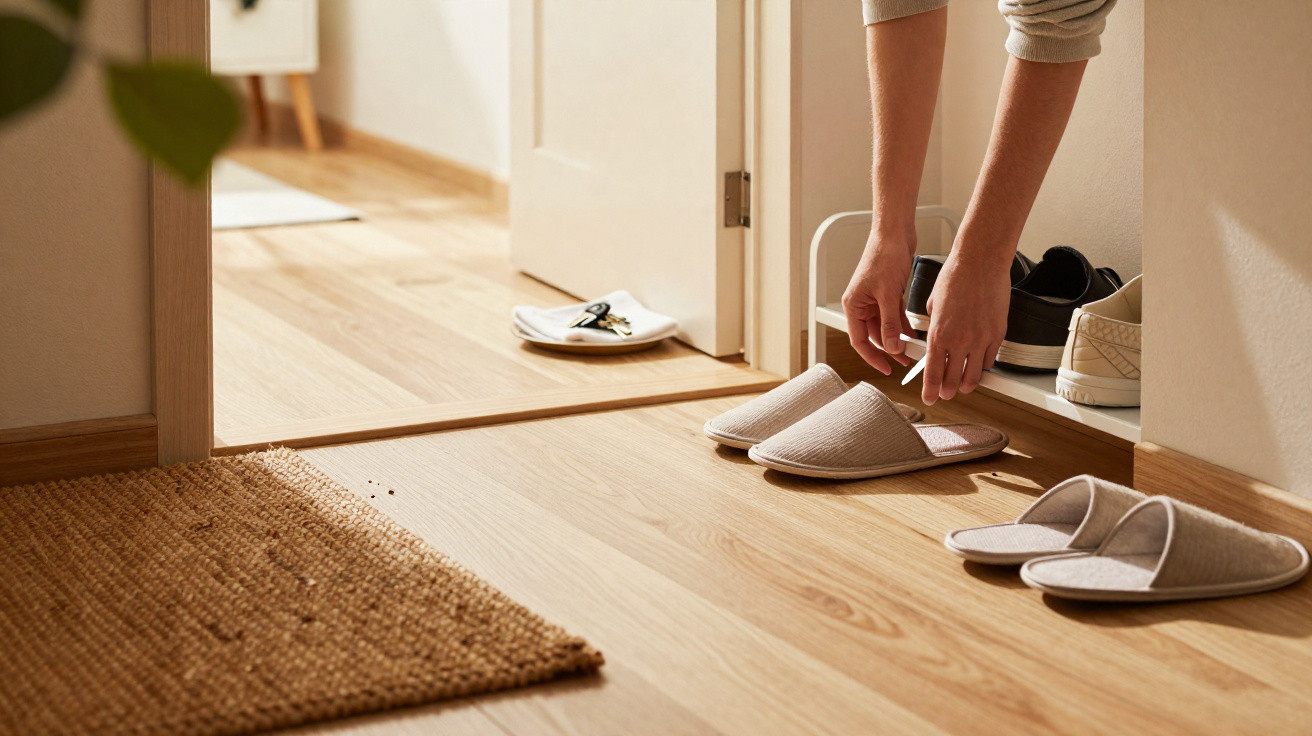
The habit itself is almost dull in its simplicity: establish a firm “transition zone” at the entrance and use it every time. This is not an attractive rug that everyone ignores. It is a genuine boundary that catches outdoor dirt before it reaches the living room floor.
In most cases, a transition zone has three parts: a coarse doormat outdoors, a highly absorbent mat or small rug immediately inside, and a dedicated spot for taking off shoes. Do not walk further in to “take them off in the bedroom”. The boundary is at the door. Step inside, remove your shoes, stand on the indoor mat, then continue. It takes two additional seconds and causes very little fuss.
It may sound too straightforward, but it can quietly halve the amount of floor cleaning you need to do.
This is where emotions come into play. On a hectic evening, children do not want to pause at the entrance. You may not want to manage bags, keys and shoes in a narrow hallway. When it is raining, the dog rushes straight indoors. On an easier day, you tell yourself, “It’s not that bad, I’ll mop tomorrow.” We have all done it.
Yet habits are not interested in excuses; they depend on repetition. Families who find their floors stay clean for longer are not naturally more disciplined. They have simply made the entrance routine automatic: sit down, shoes off, bag down, move on. In time, it becomes as instinctive as fastening a seatbelt.
That is when the magic appears: consistency without effort.
This is what is actually happening behind that small habit. Dirt moves in stages. The rough mat outside removes gravel, dried mud and sand before they cross the threshold. The indoor mat captures moisture, fine dust and smaller particles. Taking off shoes prevents the remainder from travelling further. Rather than spreading dirt across 60 or 80 square metres, you stop it within two.
The benefit is not merely visual. The whole household rhythm of floor cleaning becomes slower. A weekly mop can suddenly last four or five days rather than two. The “crunch underfoot” moment takes longer to return. Psychologically, that matters more than we often acknowledge.
How to make the habit work in real life
Begin with the entrance rather than the mop bucket. Look carefully at the area around your front door and ask one straightforward question: where does outdoors end and indoors begin? That unseen boundary needs to be made visible. Put a robust scraper mat outside and a thick, washable mat inside. Position a shoe rack, a bench or even a crate directly beside the door.
Next, establish one simple rule: shoes are removed immediately, not “later.” That is the foundation of the habit. There is no need to become strict or lecture everyone in the household each day. Simply use the same calm phrase every time: “Shoes off at the door.” When the arrangement is clear and convenient, people adjust more quickly than you might expect.
There are several familiar pitfalls. If a mat slips or curls at the edges, people will avoid using it. If the shoe rack is two metres away, shoes will cover that distance across your clean floor. If a wet dog is the first to enter, your mats must be big enough to handle those first enthusiastic leaps.
Let us be honest: nobody genuinely manages this every single day.
For that reason, the system needs to cope with a little disorder. Select mats that can withstand proper dirt and regular washing. Keep a small towel or old cloth close by for unexpected spills. Accept that the routine will occasionally be forgotten, then resume it the following day without guilt. Guilt destroys habits; simplicity keeps them going.
“The floor stopped feeling like a losing battle the moment I stopped thinking about cleaning, and started thinking about the first five steps inside the door,” confided a young dad who swapped evening mopping for a strict entrance routine.
The emotional change is slight, but genuinely noticeable. Once you trust your transition zone to do its job, you can walk barefoot with less anxiety. You can invite friends over without checking the floor every ten minutes. You can allow children to play on the ground without the nagging thought, “I should mop again.”
- Pick one outdoor mat that scrapes and one indoor mat that absorbs.
- Keep shoe storage at the door rather than somewhere “more aesthetic.”
- Use the same brief instruction: “Shoes off as soon as you’re in.”
- Wash the mats regularly instead of repeatedly mopping the entire home.
- Protect 2 metres of the entrance and you protect the whole home.
When your floor starts telling a different story
The first indication that this subtle habit is effective is not a magazine-perfect floor. It is quiet. There is less sweeping, less vacuuming and fewer sighs as you bend down to collect unexplained crumbs. One evening, you may realise that you have not used the mop for four days and the tiles still look… acceptable. Not flawless, simply peacefully lived-in.
You may also find that tensions around housework begin to ease. There are fewer accusations over “who dragged dirt in” and fewer defensive remarks about shoes. The rule is straightforward, visible and shared. The mental load moves away from constant cleaning towards gentle prevention. It may seem minor until you have experienced both approaches.
We all recognise the moment when we look around and think, “Didn’t I just clean this place?” That irritation is not caused by dirt alone. It comes from feeling that your effort does not last. This modest entrance ritual extends the life of that effort. Each mop, vacuum and quick sweep reaches further into the week.
Some readers may turn it into a small project, adding a smarter bench, hooks at children’s height or an attractive woven mat that makes the routine feel stylish rather than strict. Others may keep it practical: two inexpensive mats and a plastic crate. The form is not important. The boundary is.
The next time you hear that slight crunch under your socks, you may stop at the door rather than reaching for the broom. Two metres. One small habit. A completely different outcome for your floors.
| Key point | Detail | Benefit for the reader |
|---|---|---|
| Transition zone | Create a clearly defined entrance space with two mats | Dramatically reduces the amount of dirt travelling through the home |
| Shoe routine | Remove shoes at the threshold, always in the same place | Less intensive cleaning and greater everyday comfort |
| Targeted maintenance | Wash mats often instead of cleaning the entire home | Saves time and keeps floors clean for longer |
FAQ:
- Do I really need both an outdoor and indoor mat? Yes, because they serve different purposes: the outdoor mat scrapes, while the indoor mat absorbs and catches finer dust.
- What if my entrance is tiny? Choose narrower mats and use a vertical shoe rack or wall hooks for bags; even 1 metre of managed space is better than none.
- Is going fully “no shoes” at home necessary? No, but every pair left by the door noticeably reduces how often you need to vacuum and mop.
- How often should I wash the mats? Once a week in busy homes and every two weeks in quieter ones; they hold most of the dirt that you are no longer spreading around.
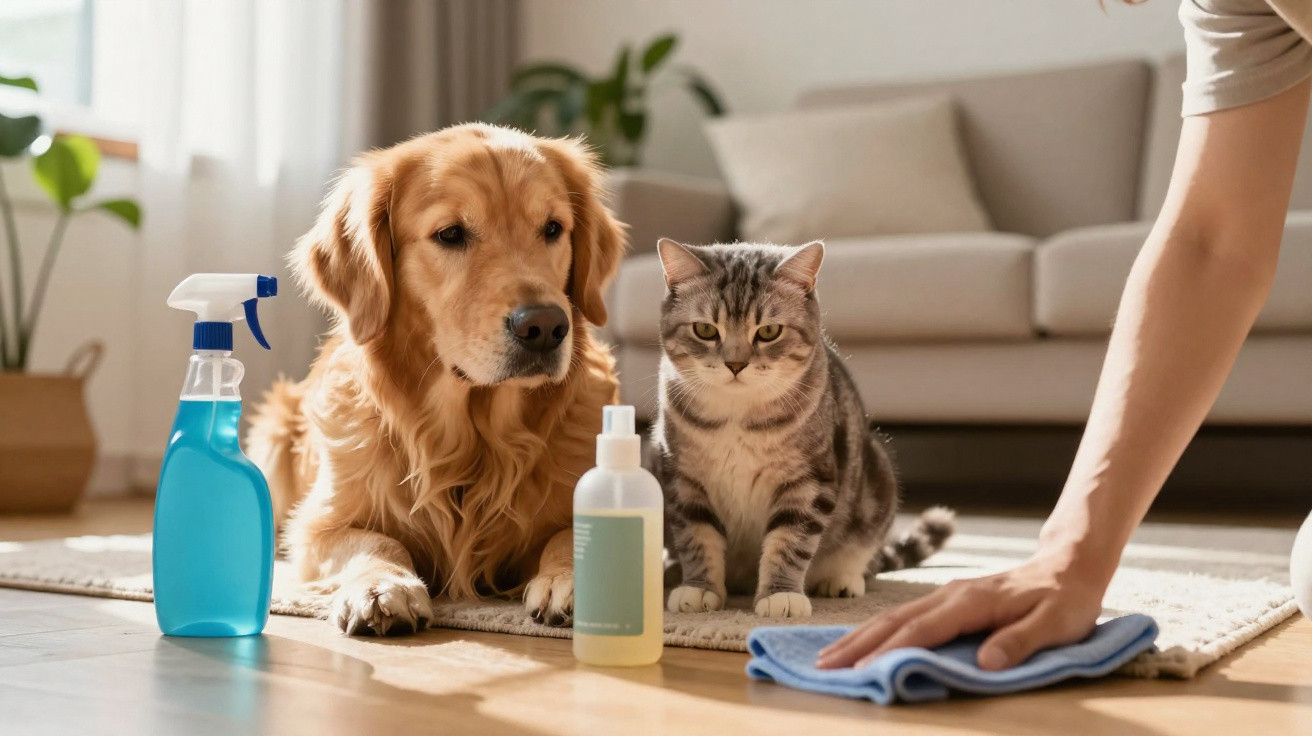
- What about pets that can’t take their “shoes” off? Opt for larger absorbent mats and keep a small towel by the door to wipe paws quickly on wet or muddy days.
Comments
No comments yet. Be the first to comment!
Leave a Comment