
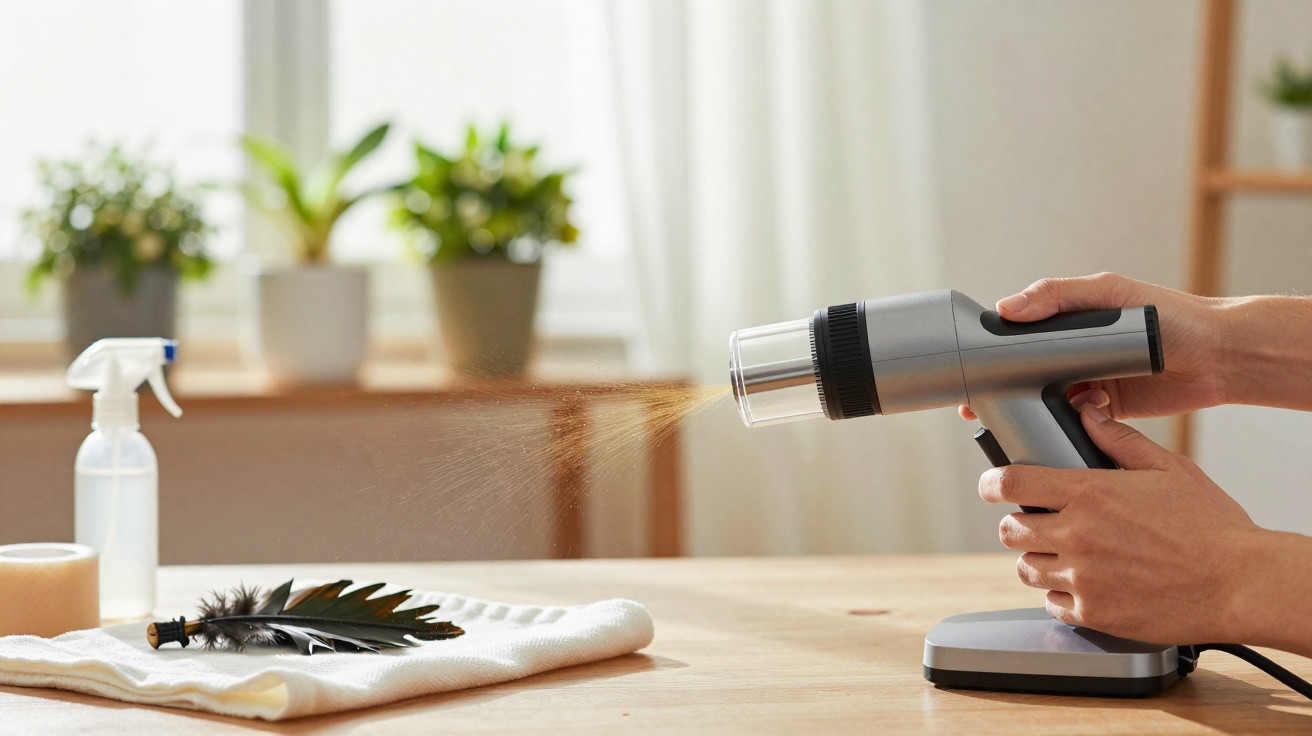
The cloth glides over the sideboard, catching the early light.
A soft plume of dust rises and glints… then vanishes into the air, just high enough for the vacuum cleaner never to reach it. Five minutes afterwards, the vacuum rumbles across the rug, the room appears “done”, and you shut the door with a quietly pleased sigh.
By the following day, though, the dust has returned: on the TV unit, the black shelving and the picture frame you were certain you had only just cleaned. The more you dust, the more it seems to reproduce, like an especially irritating joke.
But perhaps dust is not the real issue… perhaps it is the sequence in which you tackle it. Your well-intentioned routine of “wipe first, vacuum after” may be making the situation worse without you noticing.
Why wiping first sends dust straight back into the room
You take a dry cloth, run it over the coffee table and feel as though you are making progress. The surface looks tidier, your hand moves quickly, and it seems efficient. However, much of the material you have shifted has not ended up in the cloth; it has become airborne.
Dust consists of light, minute particles of skin, textile fibres, pollen, soot and pet dander. Wiping before vacuuming throws these particles into the air, where they may remain suspended for several minutes. While you vacuum the floor beneath them, they swirl overhead before gradually settling again on every surface you have “cleaned”. It is a subtle boomerang effect.
In one London flat, a family monitored living-room dust over a week with basic sticky slides placed on shelves. On days when they began with dry dusting, the slides captured almost twice as many particles as on days when they vacuumed first and wiped afterwards. Nothing else changed: the same household, the same cat and the same open window.
The results were stark. On “wipe first” days, the air monitor rose sharply as soon as the cloth touched the furniture, particularly near bookcases and TV units. The dust had not disappeared; it had simply moved to the sofa, into the cushions and back onto the freshly wiped shelf. By evening, a light grey coating could already be seen on the black speakers. Anyone with allergies in that room could feel it in their throat.
The explanation is almost painfully straightforward. A cloth can only capture particles that adhere to its fibres, because its contact area is limited. Everything else is pushed ahead or flicked away. Dust grips poorly to smooth wood and glass, meaning that more of it turns into a tiny airborne storm. Vacuuming after that is rather like mopping during a rain shower: you collect what has reached the floor while the actual issue hovers just above the nozzle, ready to settle once more.
Vacuum first, then wipe: the better dust-cleaning order
A more effective routine reverses the usual habit: vacuum first and wipe second. Begin with floors, carpets and soft furnishings, where considerable amounts of dust collect and are released whenever someone walks, sits down or moves about. Allow the vacuum cleaner to deal with the bulk of the work at floor level.
Fit the brush attachment for skirting boards, vents and the lower parts of furniture. Make a few additional passes wherever the light reveals that delicate sparkle of particles. You’re not just cleaning what you see; you’re reducing what will float up next time you move around. When the vacuum is switched off and the air has settled, pick up the cloth.
On a hectic weekday, this can sound excessive, but it helps to work by zones. Complete one small room at a time: vacuum, wait a couple of minutes, then wipe. During that pause, many disturbed particles fall onto surfaces, where a lightly dampened microfibre cloth can capture them rather than fling them back into the air. There is less dust rebound, and the cleaner appearance can last for more than 24 hours.
The material and the tool make a real difference here. A dry cotton rag works like a small broom: it picks up some dust but pushes a great deal onwards. A quality microfibre cloth that is lightly damp works more like Velcro for particles, catching and retaining them rather than scattering them.
Apply cleaner to the cloth rather than spraying it directly onto the surface. This prevents loose dust from becoming a sticky, streaky slurry that can drip. Treat the cloth as a low-speed vacuum bag operated by hand. Use brief, gentle movements towards yourself instead of broad circular motions that send dust sideways.
There is another factor that is seldom discussed. Products containing silicone or oily residues may leave behind a coating that dust readily clings to, making the next clean more difficult. A neutral cleaner, or simply water with a microfibre cloth, often works better over time. There may be less shine on the first day, but there will be fewer grey halos by the third.
The human side of these mistakes is entirely understandable. You are rushing to tidy before visitors arrive, seize whichever cloth is closest and go at every visible surface. The slight drag beneath your hand feels like evidence that you are lifting dirt, rather than sending it into orbit.
Let us be honest: no one really does this every day. Most homes occupy a practical middle ground, with cleaning done in short bursts between emails, homework and late dinners. That is precisely why sequence matters more than perfection. When you only have ten minutes, you do not want a method that quietly increases the very problem you are trying to solve.
Several common errors continue the dust cycle. Feather dusters may look appealing in photographs, but they act like pistons for allergens. Paper towels break down and leave fine fibres behind. Cleaning high bookcases last means each wipe showers particles over the room you have already vacuumed. Once you notice these habits, they are difficult to ignore.
“The goal isn’t a showroom,” says one professional cleaner who works mostly in small city apartments. “It’s a home where your nose doesn’t itch two hours after you’ve cleaned.”
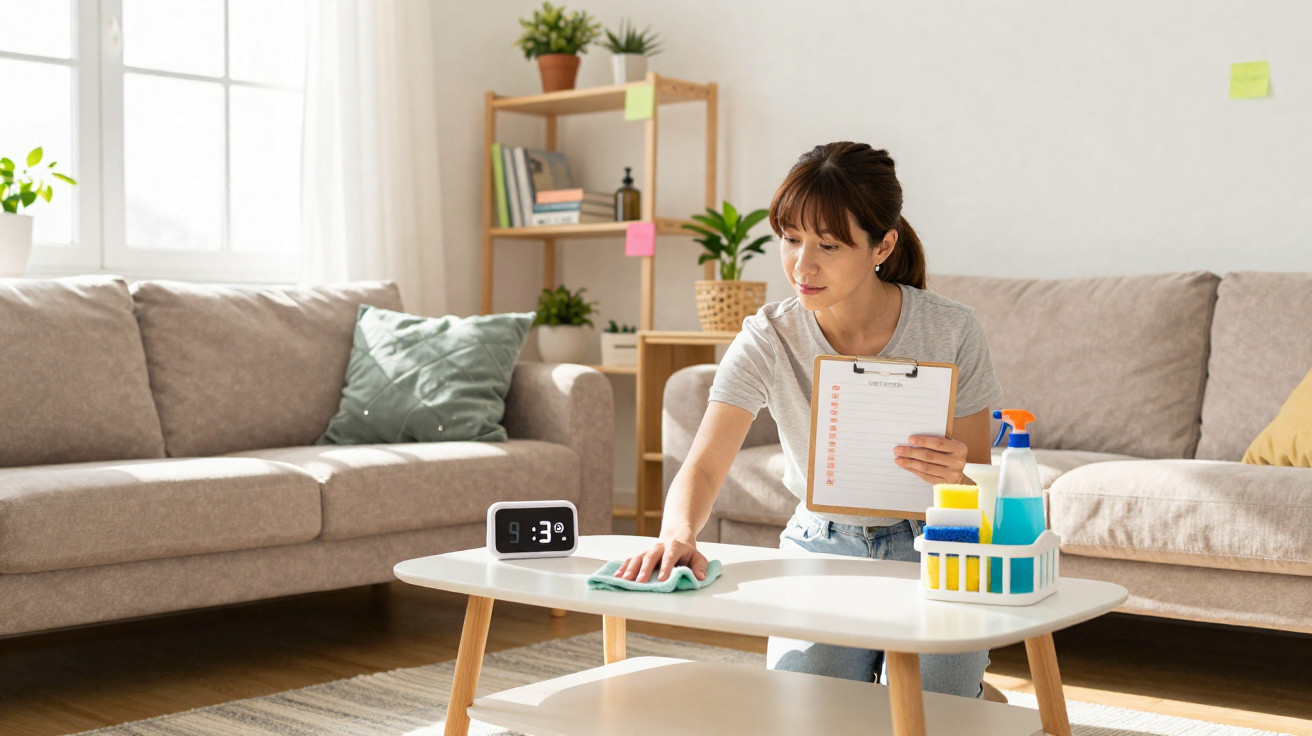
A simple mental checklist can help.
- Step 1: Vacuum floors, rugs and upholstery with a HEPA-grade vacuum if possible.
- Step 2: Use a brush attachment on skirting boards, vents and lower shelves.
- Step 3: Wait for a couple of minutes, then wipe from top to bottom with a slightly damp microfibre cloth.
Rethinking dust: less effort, more strategy
Once you understand that wiping first redistributes dust, it becomes difficult not to reassess the entire task. Dust is no longer a vague enemy that appears without warning; it becomes a moving population that can be followed. It gathers in textiles, escapes when you sit down, floats when you wipe and settles when the room is still.
The question becomes not “How do I get rid of it?” but “At what moment do I catch it so it can’t escape again?” That is a different approach. It encourages slower, more intentional actions: vacuum before wiping, use a slightly damp cloth, and clean calmly rather than frantically. These are small adjustments, yet over a week they make a cumulative difference.
There is psychological relief, too, in knowing why the dust kept returning. You were not bad at cleaning; your routine was simply arranged in reverse. Change the order and the improvement can feel almost unfairly dramatic. The same 20 minutes of effort suddenly delivers longer spells of visual calm. In a world where our eyes are already exhausted by screens, a quiet shelf softened by the absence of dust can feel like a small but persistent act of care.
| Key point | Details | Why it matters to readers |
|---|---|---|
| Vacuum before wiping | Begin with floors, rugs and sofas, using brush tools on skirting boards so that most loose dust is captured at ground level before it is thrown into the air. | Produces longer-lasting results and fewer dust “reappearances” the next day, using the same amount of effort. |
| Use damp microfibre, not dry rags | A slightly damp microfibre cloth holds particles in its fibres instead of flicking them upwards or pushing them across the surface. | Limits airborne dust and irritation for people with asthma, allergies or simply sensitive noses. |
| Clean top to bottom, room by room | Tackle one room at a time, wiping upper surfaces first, then mid-level furniture and finally lower shelves once vacuuming is complete. | Stops freshly cleaned areas from being contaminated again by dust falling from shelves, frames and cupboards above. |
FAQ
- Does wiping really spread that much dust? Yes, particularly when using dry cloths, feather dusters or paper towels. These tools often push and flick particles into the air, where they can remain suspended for minutes before settling on nearby surfaces again.
- What kind of vacuum should I use to reduce dust? A vacuum with a sealed body and a HEPA filter is ideal, including in small flats. It traps fine particles rather than expelling them through the exhaust, resulting in fewer sneezes after cleaning.
- Is it bad to spray cleaner directly on furniture? It is not always “bad”, but applying it to the cloth provides more control. It avoids misting dust into the air and reduces the chance of a sticky coating that attracts more dust later.
- How often should I vacuum and wipe to keep dust down? For most homes, cleaning each lived-in room once a week is already a major improvement. High-traffic spaces and homes with pets may benefit from a quick vacuum midway through the week, even without wiping.
- Are air purifiers a substitute for better cleaning order? They can be useful, particularly for fine particles and pollen, but they do not replace cleaning floors and surfaces. Altering the sequence-vacuum first, then wipe-still has a visible effect, with or without a purifier.
Comments
No comments yet. Be the first to comment!
Leave a Comment