
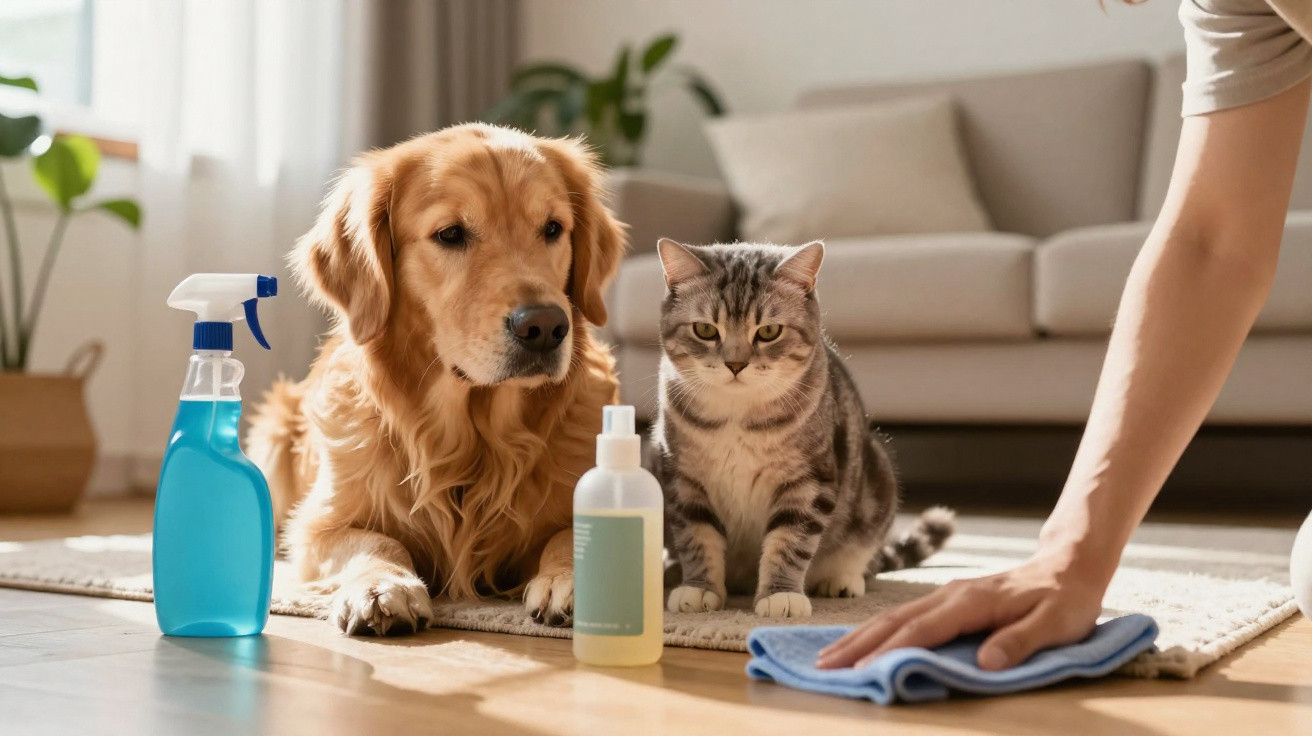
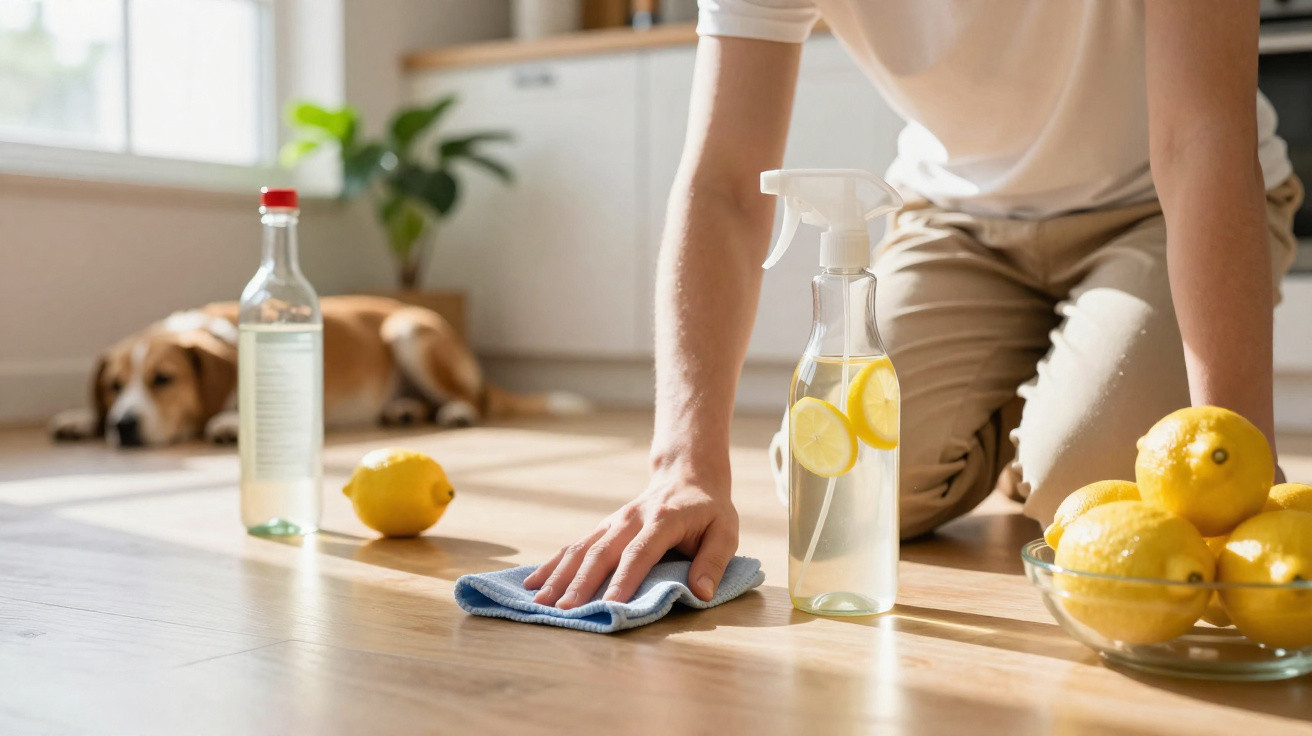
You spray the floor, a lemon-fresh fragrance fills the room and the tiles shine. Ten minutes later, your dog comes in, freezes, drops his head and begins sniffing as though he has wandered into a stranger’s home. His tail stiffens. He circles the same patch repeatedly, then suddenly… wees exactly where you have just cleaned.
Cats can follow the same pattern: a swift mop, a sharp clean smell, and the previously litter-trained diva is clawing at the hall carpet or compulsively rubbing her face along the skirting boards.
You may think you have removed the mess. In your pet’s eyes, you have removed the map.
The “clean” smell that changes your pet’s world
Most households have one: a multipurpose cleaner that smells “fresh”, tackles grease, disinfects surfaces and leaves them glossy. We tend to reach for it without thinking, particularly after accidents or when dealing with that unexplained mark behind the sofa.
For us, the outcome is straightforward: sparkling, scented, finished. Yet for dogs and cats, the same cleaner can act like a loudspeaker drowning out their own personal signals. Instead of the scent that said “this is my bed” or “this is my route”, they are faced with a haze of artificial citrus or pine.
Speak to any veterinary nurse who has covered an emergency Saturday shift. They will have stories of dogs that began weeing indoors after a thorough clean, or cats that started spraying the hallway when the floors were washed with a new cleaning brand.
One veterinary technician I spoke with described a surge every spring. Owners carry out a major clean using powerful disinfectants, often bleach-based, then ring a few days later asking: “He’s never done this before, what’s wrong with him?” The timing is seldom accidental.
To a pet, the story of their territory has been deleted and replaced by a smell with no meaning. Their response is to create that story again. With wee.
Dogs and cats exist in a thick cloud of information that people hardly register. Their noses interpret traces of their own smell, yours, visitors’, other animals’, and even the scent left on the delivery driver’s shoes. This chemical mix helps them navigate, feel safe and establish their space.
When a strong cleaning product is applied to the floor, especially one containing ammonia, chlorine or intense perfume, it does more than conceal odours. It alters the chemistry and may imitate or conflict with compounds found in urine and territorial markings. To a cat, some ammonia-based products can smell suspiciously like a stranger has peed in the middle of the living room.
This is often where unfamiliar behaviour begins: anxiety, excessive grooming, scratching and supposedly “random” accidents that make perfect sense from the animal’s perspective.
How to clean without disrupting your pet’s sense of home
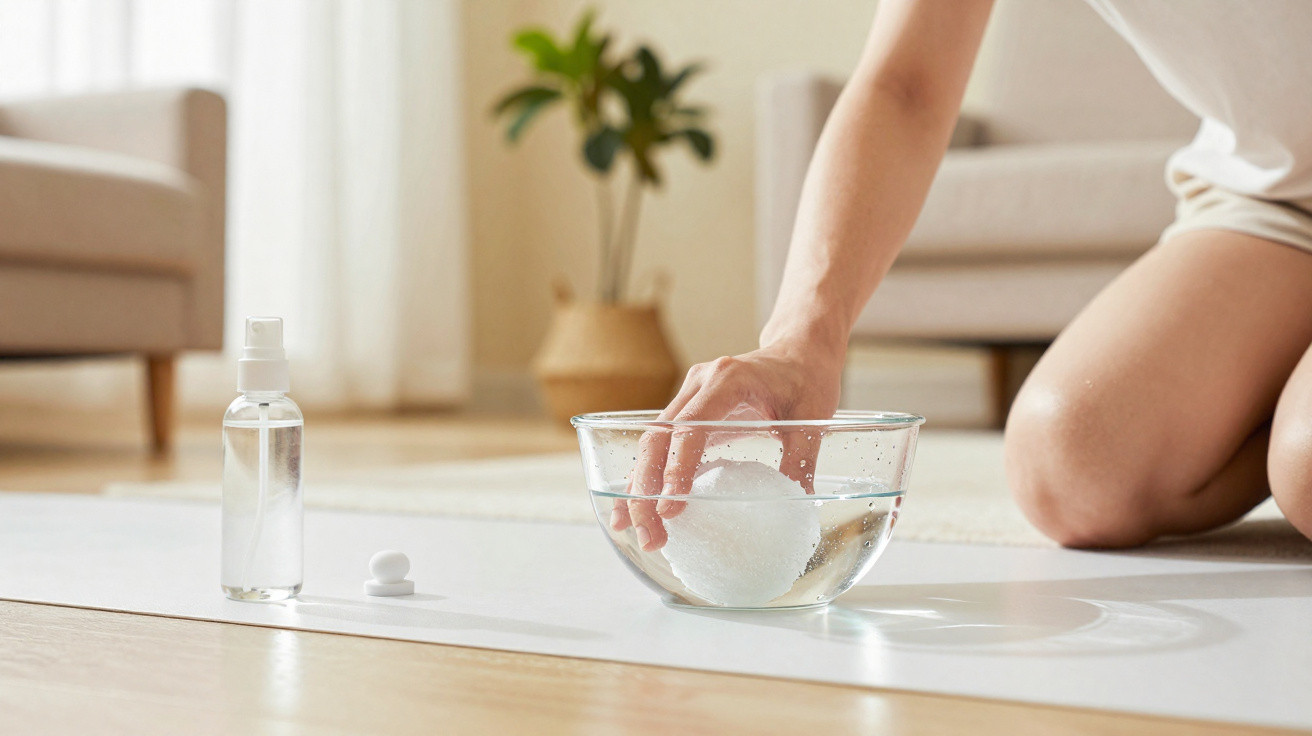
The first change is easy: replace your regular all-purpose cleaner with an enzymatic product in places your pet uses frequently, particularly their sleeping, eating and everyday walking areas. Enzymatic cleaners are formulated to break down urine, vomit and organic stains at a molecular level, rather than masking them with perfume.
Apply them generously to previous accident areas, allow sufficient contact time, and blot instead of vigorously scrubbing. This removes the biological message without substituting it for an aggressive, unfamiliar odour. For routine mopping, a gentle fragrance-free detergent or diluted white vinegar, if your pet accepts its smell, is usually less unsettling.
We have all had that moment: guests are due and you clean the entire flat in one intense session because every stain and paw print suddenly stands out. The difficulty is that giving the whole home a “scent reset” in a single afternoon can feel like moving house to your pet.
Spread the task out instead. Tackle one area at a time, allowing your dog or cat to investigate again gradually. Let them stay nearby to sniff the bucket, walk over the drying floor and understand what has changed. Territory, for them, is not just walls and furniture. It’s the smell of last week mixed with yesterday and a bit of you. If all of that disappears overnight beneath a wave of chemicals, anxiety is a rational response, not bad behaviour.
“Every time I switched floor cleaners, my cat started peeing in the hallway,” Sarah, a 34‑year‑old graphic designer, told me. “At first I thought she was protesting the new baby. Turned out she was protesting the new lavender disinfectant.”
- Opt for fragrance-free or lightly scented products on floors and fabrics your pet comes into contact with daily.
- Reserve ammonia- and chlorine-based cleaners for restricted, targeted jobs away from litter trays, beds and food areas.
- Try any new product in a small spot first, then monitor your pet’s response over the following day or two.
- Keep familiar-smelling belongings, such as a blanket or toy, in every room during a deep clean so their scent can “anchor” the area.
- If accidents begin after you change cleaning products, record the date and what you used: the pattern may reveal more than the stain itself.
Living with a nose that never gets a break
Once you notice these patterns, they become impossible to miss: your dog always investigates a particular corner before lying down, while your cat rubs her cheek against the same table leg on the way to the kitchen. These small habits are how they reinforce what is familiar.
When we later enter with a powerful disinfectant, we are doing more than cleaning the floor; we are interrupting that conversation and speaking over it. Let’s be honest: nobody really follows the “use in a well-ventilated area and keep pets away until dry” rule every single day. Our animals then breathe near, lick and walk across a surface that suddenly smells like a laboratory, yet we describe them as “acting weird” when they attempt to manage it.
| Key point | Detail | Value for the reader |
|---|---|---|
| Cleaner scents = territory noise | Strong perfumes, ammonia and chlorine may copy or overwhelm territorial odours | Helps account for sudden marking, anxiety or clingy behaviour after cleaning |
| Enzymatic > perfumed | Enzymes break down odours without filling the room with artificial fragrance | Limits re-marking and supports litter or house training |
| Go slow, zone by zone | Clean gradually and leave familiar-smelling possessions in place | Makes intensive cleaning less stressful for sensitive pets |
FAQ: Cleaning products and pets
- Question 1: Which common cleaning product causes the most confusion for pets?
Ammonia-based floor and toilet cleaners are frequently the biggest culprits, particularly for cats, as the odour may resemble urine to them and prompt marking or avoidance.
- Question 2: Can bleach make my dog or cat behave strangely?
Yes. Powerful bleach can irritate the nose and eyes, overpower an animal’s own scent and, when inhaled at a high concentration in an enclosed room, may even lead to mild neurological signs. Unusual pacing or agitation after extensive bleach use is not uncommon.
- Question 3: Are “pet-safe” labels always reliable?
They are a useful starting point, but they do not mean “zero impact on scent.” Even pet-safe cleaners may smell overpowering. Look for fragrance-free or low-odour options and introduce them slowly.
- Question 4: What should I use to clean pet urine without encouraging re-marking?
An enzymatic cleaner made and labelled specifically for pet messes is your strongest option. It breaks down the uric acid and proteins that signal “this is a toilet spot” to your pet, instead of merely concealing them.
- Question 5: My pet started peeing indoors after we deep-cleaned. Is it behavioural or medical?
Always exclude medical causes first by visiting a vet, particularly if the change is sudden. When the health check shows no issue, consider any recent cleaning changes: unfamiliar products, stronger fragrances or a large one-day scrub can certainly unsettle your pet’s territorial bearings.
Comments
No comments yet. Be the first to comment!
Leave a Comment