
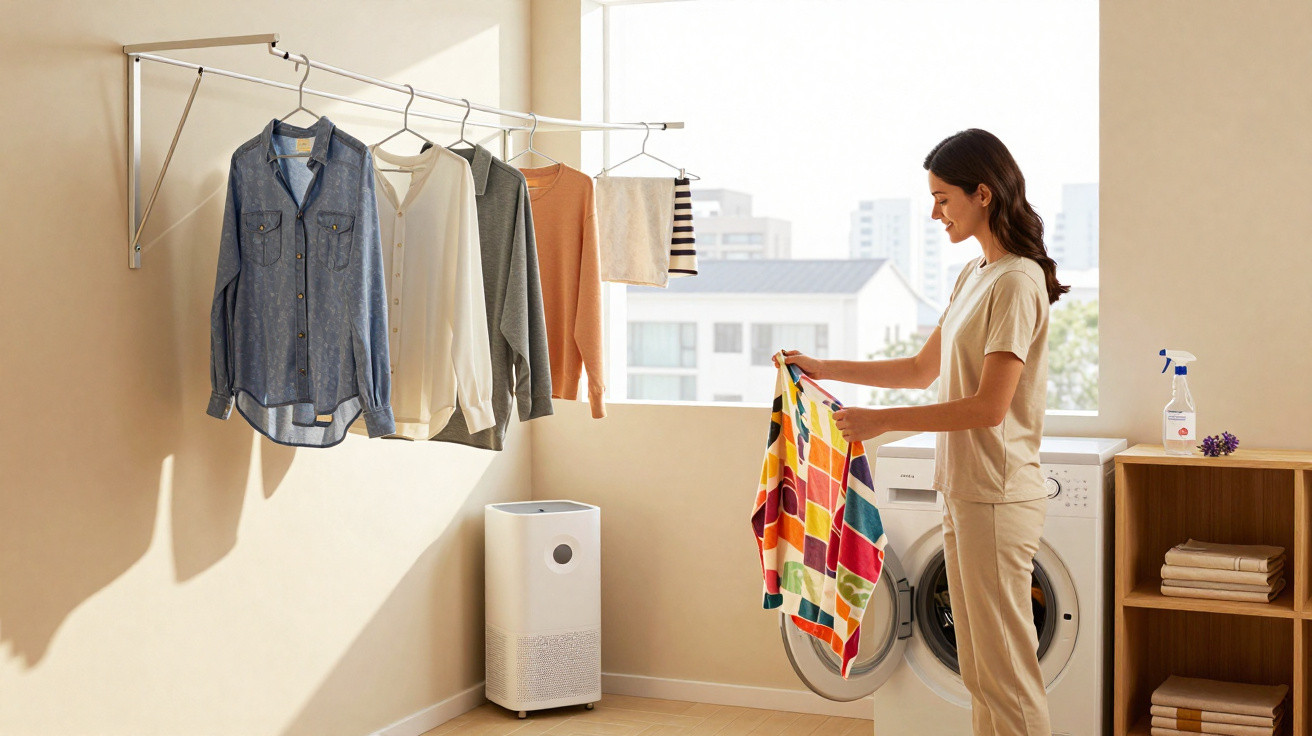
Living in a residential block often means dealing with the ongoing hassle of drying fabrics in a cramped laundry space. The good news is that a practical routine can completely change your utility area, helping you get dry clothes quickly and without fuss.
How can you optimise space in a compact laundry?
In small areas typical of modern flats, limited air movement is usually the biggest problem. That is why choosing the right position for your drying racks is so important: it boosts natural ventilation and speeds up evaporation from damp items.
When life is busy, making use of any free wall space can transform the family’s day-to-day routine. Putting up functional supports helps prevent things piling up, keeps the space organised, and leaves your items protected against mould.
- Japanese style: Maximum optimisation for small spaces.
- Ceiling-hung airer: A smart way to use clear wall areas.
- Constant airflow: Strategic placement that works with the breeze.
What is the secret to drying fabrics quickly?
Adding a few easy steps during the wash can reduce how much water cotton fibres hold, which in turn speeds up drying. Simple homemade mixes can cut water retention, delivering great results even on rainy days or when the relative humidity is high.
Another key factor is how you arrange clothes on the supports, so they do not end up bunched together. When everything is spread evenly, warmth can pass freely through the gaps in the metal frame fitted to your compact clothes airer inside the flat.
A well-known specialist explains, step by step, how to speed up everyday drying of heavy, thick fabrics in flats using reliable techniques on a ceiling airer, sharing useful ideas on the Casa de Verdade YouTube channel:
How can you use hangers to optimise space?
Hanging damp clothes cleverly can reduce light creasing and save time later when ironing. Putting coats and T-shirts on individual plastic hangers makes better use of the vertical space, delivering real space saving and supporting daily organisation.
Japanese efficiency method
Maximising small spaces
Compact homes in Japan inspire brilliant ways to make the most of limited room. The key is to let air reach each item separately.
Using airflow strategically can completely change how quickly everyday laundry dries.
To get the best possible results in your routine, it helps to follow a few straightforward guidelines that focus on placing items correctly. Below are the practical recommendations we have put together to significantly improve the efficiency of your modern clothes airer and achieve dry items fast.
- Hang shirts directly on shaped hangers.
- Leave a minimum gap between each plastic hanger.
- Place lighter items on the open ends.
Which appliances help with drying on damp days?
When the weather outside is not on your side, portable electrical appliances can be a very helpful household backup. Simple devices can greatly speed up the evaporation of water trapped in fibres, providing a genuine thermal solution for your damp clothes.
To avoid accidents or damage to more delicate fabrics, these devices should always be used within clear safety limits. Here are the main pieces of equipment recommended to increase a steady flow of warmth in your indoor area, while maintaining home safety:
- A desk fan set to the highest allowed setting.
- A hairdryer kept at a safe distance from fabrics.
- A dehumidifier to manage a closed environment.
How can you keep clothes smelling fresh in small spaces?
Slow drying often leads to that unwanted stale smell, especially in thicker family clothes. To tackle this common issue, using scented mixes and quick-evaporating finishing sprays helps keep fabrics fresh, leaving a lasting fragrance on every item cleaned in your weekly routine.
Avoid putting away anything that is still slightly damp, as this prevents unwanted microorganisms multiplying inside wooden wardrobes. Following these simple recommendations protects textile fibres and supports total practicality, lasting protection, and maximum comfort for your cosy home and your happy family.

Comments
No comments yet. Be the first to comment!
Leave a Comment