
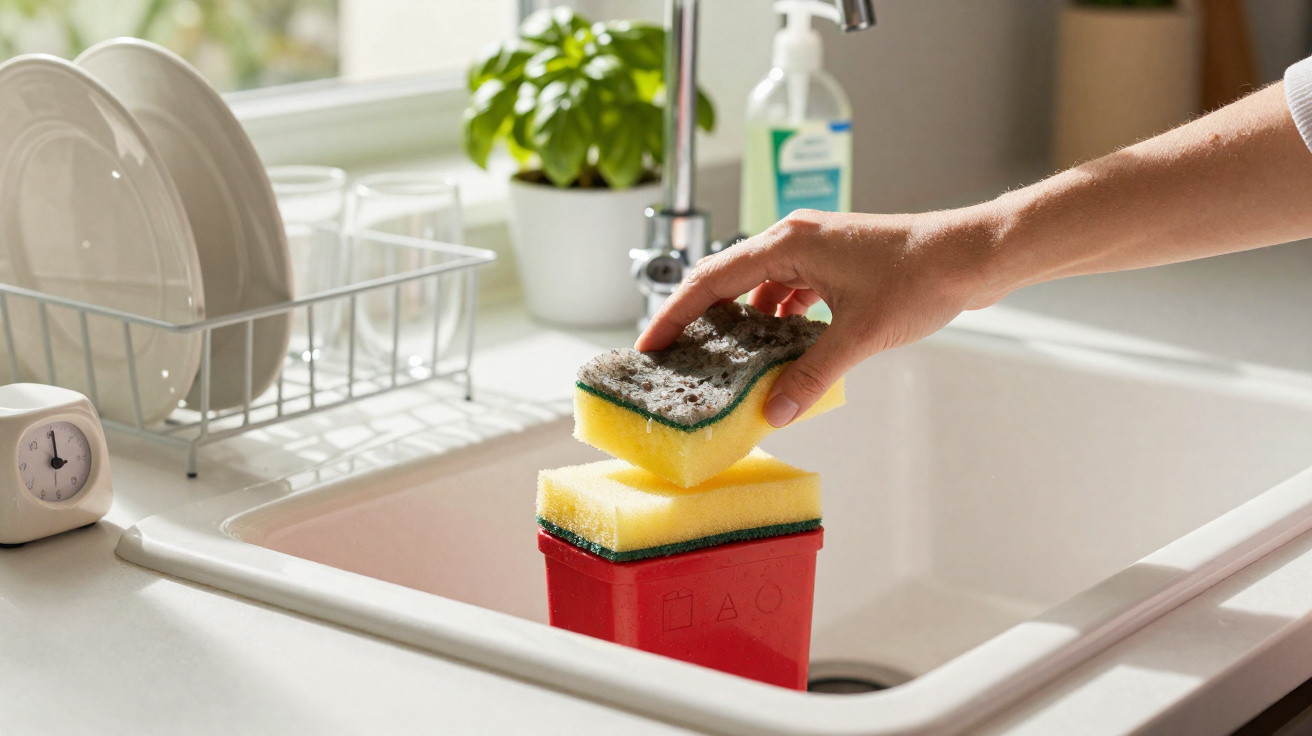
Using a sponge every day to wash dishes and wipe down surfaces calls for constant care in the kitchen. When it stays damp and regularly comes into contact with food leftovers, unseen risks can develop and directly affect the health of the whole family.
Why does a kitchen sponge build up so much bacteria?
The utensil’s porous structure traps water and tiny bits of food during washing up. Day after day, that mix creates ideal conditions for rapid growth of bacteria, which can then spread quickly across worktops and household utensils.
Many people assume the accessory only needs replacing once it looks worn out or develops unpleasant odours. However, invisible contaminants can already be present in large quantities long before there are obvious signs of dirt on the sponge.
What is the ideal time to replace the kitchen sponge?
Many people wait until it deteriorates, but specialists recommend replacement within a specific timeframe… Read more
When is the right time to replace the item?
Experts advise replacing it weekly, or at most every two weeks with continuous use. Sticking to that window supports household hygiene and helps stop accumulated micro-organisms from being transferred back on to clean dishes during washing.
Waiting until the sponge is completely torn or gives off a bad smell is a common mistake at home. Preventive disposal helps ensure that surfaces which appear clean are not actually teeming with harmful agents for the people living there.
Below is a video from the Le Huffington Post channel on YouTube that explores the points discussed in this topic:
How can you keep cleaning tools consistently hygienic?
Alongside a planned replacement, a few simple daily habits can reduce the bacterial load around the sink. Rinsing out all soap residue and wringing the material thoroughly after use are essential steps.
Storing the sponge somewhere dry and well ventilated prevents excessive moisture from building up throughout the day. Leaving it soaking in containers of water and washing-up liquid encourages harmful agents to develop faster within the sponge.
Essential Hygiene Kit
Sponge care Adopt these measures to ensure proper cleanliness in the kitchen:
- 1
Replace the sponge weekly to help prevent contamination; - 2
Rinse and wring the item out completely after use; - 3
Store it on a dry, ventilated holder.
Which habits prevent germs from multiplying around the sink?
Using the same item both to clean dishes and to scrub greasy surfaces greatly increases cross-contamination in the area. Keeping separate cleaning tools for specific tasks helps keep the home clean and protected against infectious agents.
Keeping cloths and sponges well organised also helps prevent unnecessary build-up of grime on the kitchen worktop. Setting a consistent replacement routine strengthens the safety and hygiene of anyone preparing meals there each day.
Here are a few simple actions to protect your kitchen from everyday contamination:
- Keep one sponge exclusively for plates and glasses;
- Avoid leaving the item wet inside the sink;
- Replace it every one to two weeks.
Why shouldn’t you wait for wear and tear before replacing it?
Visible wear in the foam does not reflect what is happening with bacterial growth inside the item. By the time the material shows clear deformation, stains, or has lost its firmness, contamination is already at very high levels-undermining cleanliness throughout the home.
Making periodic replacement part of your routine is a straightforward and effective way to protect the family’s health. With this preventive habit, dishes stay genuinely hygienic, and the household environment is kept free from unwanted day-to-day contamination.

Comments
No comments yet. Be the first to comment!
Leave a Comment