
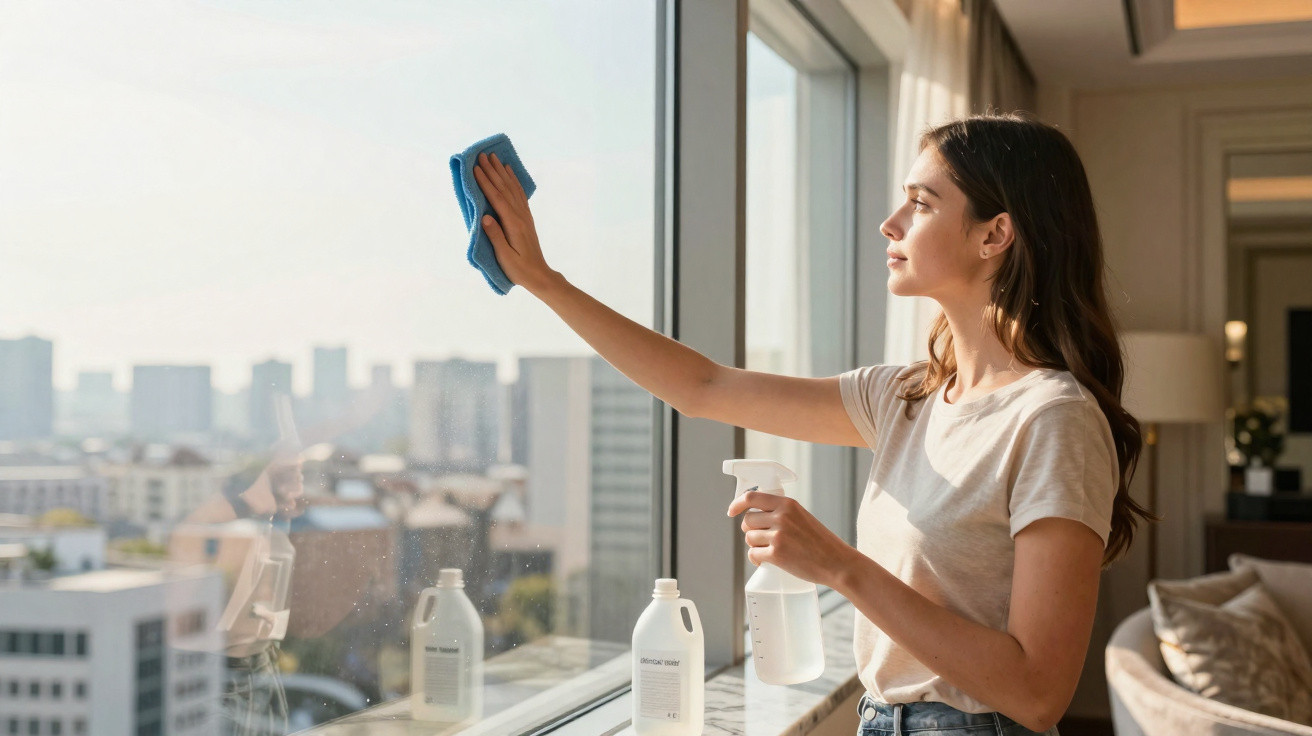
I watched a housekeeper mist a window, draw a squeegee across it once, then stand back. There was no rainbow-like haze or stray lint-only a spotless, silent pane that made the cityscape seem almost cinematic.
She smiled as though it were nothing remarkable. Then she shared the detail most people overlook: a modest mixture trusted by luxury hotels.
The secret is in the bottle.
The understated hotel secret in plain sight
Throughout five-star hotels, the same standard appears again and again. The glass is consistently clear-not showily glossy, but as transparent as fresh morning air. There is no magic involved; it is a formula designed for speed, a flawless finish and no room for error when guests arrive ahead of schedule.
Most households use whichever blue cleaner is stored beneath the sink. Hotels instead depend on deionised water, isopropyl alcohol and a drop of washing-up liquid. This combination excels at one task: drying cleanly without leaving anything behind to catch the light.
One Tuesday in Mayfair, I watched a team clean 34 floor-to-ceiling panels before lunch. One cleaner handled the interior and another the exterior, with each using the same solution poured into small labelled trigger bottles. There was no fuss and no pile of paper towels.
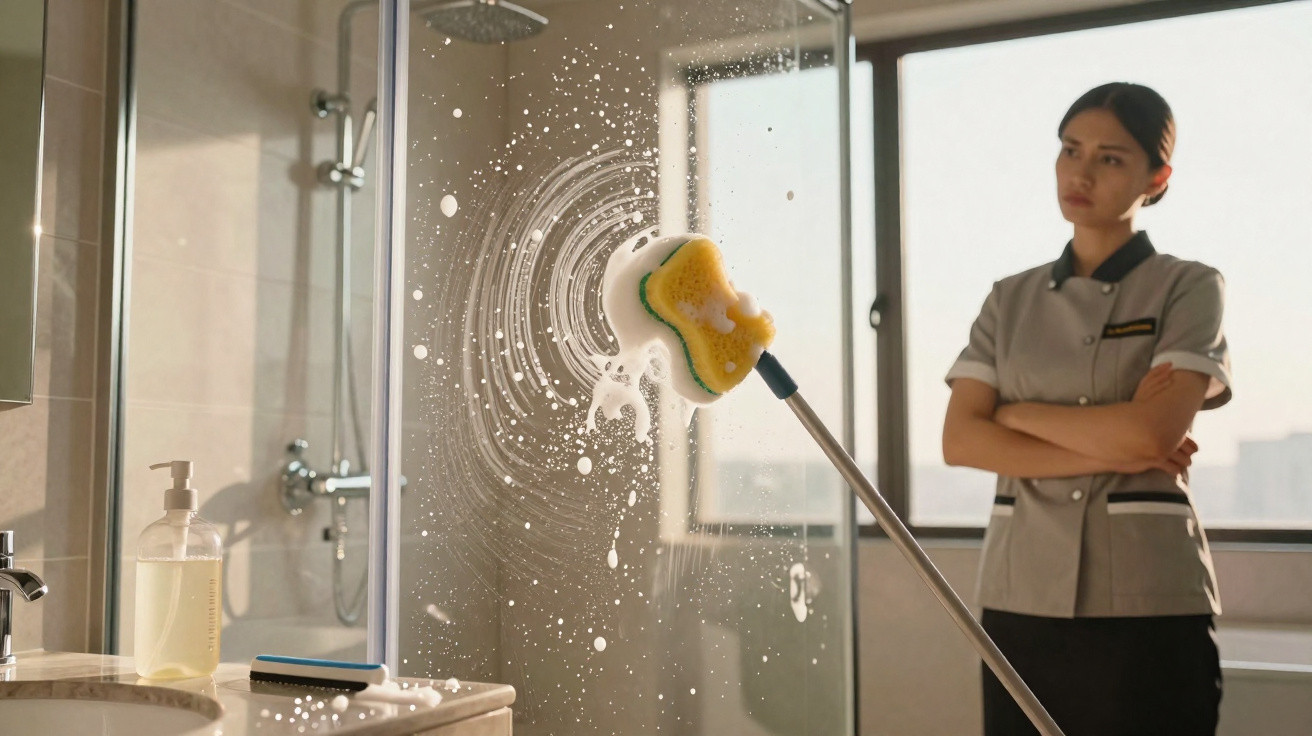
“It’s not about scrubbing,” one of them told me, “it’s about glide.” They used two sprays for each pane, followed by one fluid squeegee stroke and a brief polish around the edges. The view became sharper, as though a camera had found its focus. Guests see the skyline rather than the streaks.
Tap water causes streaks because its minerals dry into minute rings, while strong soaps leave residue that smears in sunlight. Alcohol removes skin oils and accelerates drying. Vinegar tackles alkaline haze. Deionised water eliminates the mineral issue before it starts.
Combined, these ingredients address glass’s two main enemies: slowly drying droplets and an unseen film. With no minerals, very little surfactant and quick evaporation, the result is not merely clean-looking glass. It can appear as if there is no glass there at all.
The hotel window-cleaning blend and professional method
For a 500 ml bottle, this is the straightforward mixture hotels rely on. Combine 300 ml deionised water, 150 ml isopropyl alcohol (around 70%), 50 ml white vinegar and only 1–2 small drops of a drop of washing-up liquid. Gently swirl rather than shake the bottle, so it does not foam.
You will need a fine-mist sprayer, a squeegee with a crisp rubber blade and a microfibre glass cloth. Apply a light mist rather than soaking the surface. Pull the squeegee evenly from top to bottom in one pass, then use the microfibre cloth on the edges and corners. Watching that final droplet disappear is strangely satisfying.
Wash glass in the shade rather than under direct sunlight. Sunshine sets streaks before you have completed the first stroke. Fold the cloth into sections and regularly use a fresh side. Every few panes, rinse the squeegee blade with warm water to prevent grit reaching the glass.
Work vertically indoors and horizontally outdoors. Should a line remain, this makes its origin clear. Realistically, nobody follows that rule daily. Yet during a Saturday cleaning blitz, these small routines prevent repeat work and frustration.
The biggest error is using excessive soap. Another is spraying dry, dusty glass before attempting to “polish” the dirt across it. Mist the surface first, loosen the dirt and then glide the squeegee over it. Never soak wooden frames or natural-stone sills either, as alcohol and vinegar are not kind to porous materials.
“We use the same mix on mirrors, chrome, even glass tables,” says Amina, a head housekeeper I met in Knightsbridge. “Light touch, fresh cloth, sharp blade. The glass rewards you for not trying too hard.”
- Bottle: 500 ml fine-mist trigger bottle.
- Blend: 300 ml deionised water, 150 ml 70% IPA, 50 ml white vinegar, 1–2 drops washing-up liquid.
- Tools: 30–35 cm squeegee, microfibre glass cloth, dry detailing cloth for edges.
- Safety: Ventilate the room. Keep the mixture away from naked flames. Patch-test window films and coated glass.
- Routine: Clean inside glass monthly and exterior glass seasonally. Wipe frames using plain deionised water.
A clear pane affects more than the view
There is a point after cleaning a window when the whole room seems to exhale. Colours appear slightly warmer and outlines gentler. Most of us have caught our reflection and realised that haze ignored for months had been quietly dimming the day.
This mixture deserves a place in the cupboard because it values your time. Two sprays, one pull and the job is complete. There is no need for heavy effort, no newspaper method leaving ink on your fingers and no guilty heap of wet paper towel on the floor. The glass fades into the background, allowing life to fill the frame.
Use it once on a bright morning, then leave it and return later that afternoon. Pay attention to the way light moves and shadows fall across the table. You may start cleaning the patio doors more carefully, imagining the dinners you will look through them to see.
| Key point | Detail | Benefit for the reader |
|---|---|---|
| The hotel blend | Deionised water + isopropyl alcohol (70%) + white vinegar + 1–2 drops washing-up liquid | Recreates luxury-hotel clarity at home at low cost |
| Streak-preventing method | Fine mist, top-to-bottom squeegee pass, microfibre buff around edges, shade rather than sun | Reliable, quick results without aching arms |
| Safety and surfaces | Ventilate, keep away from flames, avoid soaking wood or stone, test films and coated glass | Keeps windows spotless without damage or unpleasant odours |
FAQ:
- Can I replace isopropyl alcohol with something else? Yes. Surgical spirit is suitable, although its smell is stronger. Clear, unflavoured vodka will also evaporate cleanly if necessary, but it costs more.
- Will this harm tinted or coated glass? Most modern tints use film, so test an inconspicuous corner first. If you notice any cloudiness, leave out the vinegar and use deionised water with alcohol only.
- Is newspaper still best for polishing? It is old advice with inconsistent results. Modern ink can transfer or smudge. A tightly woven microfibre glass cloth produces a cleaner, lint-free finish.
- What can I use if I do not have deionised water? Boiled, cooled water works as a temporary alternative and slightly reduces mineral content. For genuinely streak-free glass, DI or distilled water is worthwhile.
- Why do my mirrors mist up or look cloudy after cleaning? The likely cause is too much soap or hard-water residue. Reduce the soap, change to DI water and give the surface one dry microfibre buff after using the squeegee.
Comments
No comments yet. Be the first to comment!
Leave a Comment