
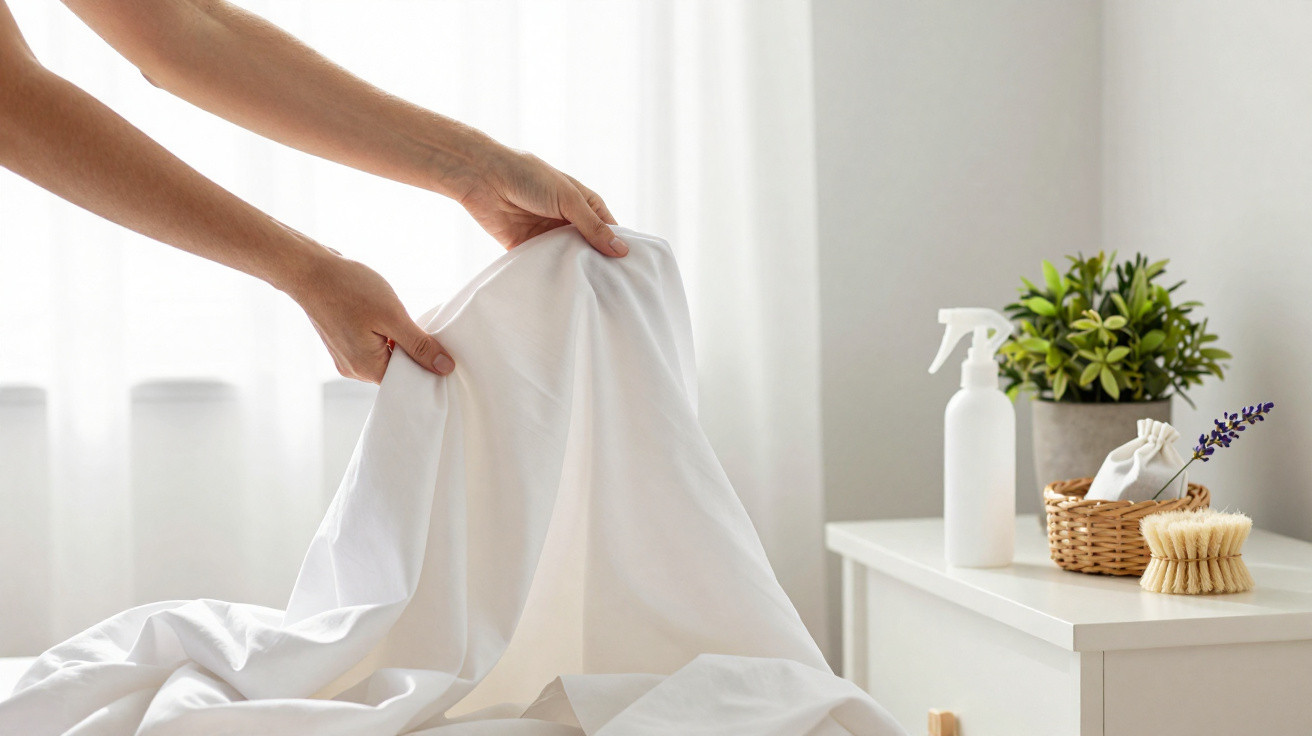
The debate begins in the laundry aisle.
Two friends are looking at the shelves: one reaches for an enormous bottle of detergent, while the other picks up a small pack and shrugs, saying, “I change my sheets every two weeks, they still smell clean.” It makes you pause. Your own sheets seem flat and faintly sour after only three nights, even when they have just been washed. You live in the same city, have the same weather and appear equally hygienic. Still, some beds seem to remain naturally fresh for longer, as though they have a setting you have missed.
At home, you pull back the duvet and take a breath. The bedding is clean, certainly, but not quite crisp. There is a light trace of skin, sleep and something impossible to identify. You begin mentally listing the unseen habits that end up in bed with you: midnight snacks, long laptop sessions, perhaps a sweaty post-gym nap.
Somewhere between those routines and that soft, well-worn cotton lies the real explanation.
Why some bedsheets magically stay fresh longer
Spend a Sunday morning in any shared house and the same quiet conflict will surface. One person hauls an overflowing laundry bag downstairs. Another insists they “did the sheets last week”, though they plainly did not. Bedsheets reveal plenty, but some tell a subtler story. The sets that stay fresh for longer tend to belong to people whose evenings work a little differently.
They do not necessarily appear obsessed with cleanliness. Their bedroom may not resemble a Pinterest board. But their bed has a neutral smell, their pillowcases do not become greasy after three nights, and their duvet does not feel weighed down by stale perspiration. That effortless freshness comes from a collection of small, half-conscious choices. None of them are dramatic, yet all make a difference.
That is where the real divide lies: not in the detergent, but in everyday life coming into contact with the fabric.
Take a particularly understated example: the friend who never eats in bed. They scroll, read and speak on the phone, but plates, crumbs and the occasional “just one biscuit” never reach the pillows. Their sheets do not have to contend with food odours, grease or minute sugar crystals that can attract bacteria.
Or consider the partner who showers at night rather than in the morning. It is the same shower and the same soap, but the effect on the mattress differs. Getting into bed with cool, clean skin means less sweat, less sebum and far fewer particles grinding into the fibres over hours of sleep. Add someone who does not wear the same T-shirt to bed for ten consecutive nights, and their sheets simply deteriorate more slowly between washes.
Those supposedly minor decisions build up like compound interest. You may not notice on the first day. By day seven, you can smell the result.
The science is less alarming than it sounds. Sheets do not become dirty overnight; they gradually gather dead skin cells, body oils, saliva, hair products and moisture from your breath. Bacteria and yeast thrive on this supply, particularly in a warm bedroom. The more that reaches the fabric each night, the quicker it shifts from neutral to musty.
People whose sheets stay fresh longer often lower those inputs without actively fixating on them. They replace sleepwear more regularly, keep the bedroom a little cooler and allow the bed to air before making it. Lower humidity means less nourishment for microbes and fewer trapped odours. Instead of constant accumulation, the fabric gets a brief daily break.
So there is no magic involved. It comes down to friction - or, more accurately, reducing the friction between your lifestyle and the cotton you sleep on.
Habits that secretly keep bedsheets fresher
One of the easiest habits for fresher sheets is something nobody sees: how you spend the 10 minutes after waking. Some people immediately pull up the duvet and smooth out every crease. Others throw the covers back, leave the mattress open to the air and head off for coffee. That latter group is, without realising it, giving heat and moisture a route out.
Allowing the bed to air - even for 15 to 20 minutes - affects how quickly it becomes stale. Heat and sweat that would otherwise remain trapped beneath the covers can cool down. The fabric dries, bacterial activity slows and odours do not intensify as quickly. It may seem like a small, unhurried action, but it works as a nightly reset for your sheets.
Add a brisk shake of the duvet and pillows, and the bed starts working with you rather than against you.
Night-time routines matter too. Some people create a full spa-style ritual before bed, while others discreetly do two practical things: wash their face and put on proper sleepwear. Not the T-shirt they wore for work, cooking and commuting. Clean fabric against clean skin means less make-up, pollution and daytime perspiration being pressed into the pillowcase night after night.
One US survey estimated that nearly half of people leave at least three weeks between washing their sheets. Whether that figure reflects your own routine or not, the pattern is familiar: long intervals and heavy use. People whose sheets feel fresh for longer often use a similar washing schedule, but their bedding receives less wear. There is no glass of red wine in bed, and they do not sleep with hair still wet with styling product.
They are not saints. They simply make it easier for their sheets to remain neutral rather than forcing them into a losing battle.
There is a less appealing factor, too: mattress and pillow hygiene. If the layer beneath your sheets already has a musty smell, even a newly washed set can absorb it within a few days. People with fresher beds often air or rotate their mattress from time to time, and use pillow protectors that they wash more often than the pillows themselves.
Let’s be honest: nobody genuinely does that every day. But every couple of months, opening the windows fully, vacuuming the mattress surface and turning it end-to-end reduces the background odour beneath your sheets. It is low-key maintenance rather than a major cleaning performance.
Viewed as a whole, the pattern is clear: less moisture, less build-up and more air. That is the formula behind sheets that mysteriously stay fresh.
How to get that “stays fresh longer” feeling at home
Begin with a single habit you can realistically maintain: an evening rinse. It does not need to be an elaborate routine - just a quick shower, or at minimum washing your face, armpits and feet before getting under the covers. That modest reset cleans the areas that sweat and smell first, so your sheets bring less of the day into the night.
Next, keep dedicated sleepwear and rotate it more often than your sheets. Fresh cotton or linen pyjamas create a buffer between your body and the bedding. You’re basically giving your sheets a partner in crime, instead of asking them to carry everything alone.
With those two habits alone, most people will notice a change by the second week.
Many people feel like “bad adults” when their sheets are no longer hotel-fresh after five nights. During a busy week, washing gets delayed, you collapse on top of the duvet, and wake up feeling slightly sticky. That does not mean you are unclean. It simply means life has overtaken routine. Emotionally, clean sheets are often tied up with guilt and perfectionism, making the subject far more loaded than it needs to be.
Rather than pursuing a rigid “wash every X days” target, consider what you can reduce. Perhaps stop eating in bed. Perhaps leave the window slightly open for 10 minutes before sleeping. Perhaps dry your hair more thoroughly, so your pillowcase is not left damp. Small improvements beat impossible standards every time.
And if your sheets do not smell like a mountain advert after ten days, that is not a moral failing. It is simply fabric doing what fabric does.
“Fresh sheets aren’t about being perfect,” says one London‑based laundry expert I spoke to. “They’re about giving the fabric a fighting chance, night after night.”
To give that “fighting chance” some practical support, focus on small upgrades rather than a complete overhaul. Wash sheets in warm rather than boiling water, so the fibres last longer and are less likely to retain odours. Opt for breathable natural materials, such as cotton or linen, rather than fully synthetic blends that hold in heat. Rotate two or three sets, allowing each one to rest fully dry in the cupboard before it goes back on the bed.
- Choose breathable materials (cotton, linen, bamboo) to limit sweat build-up.
- Air the bed for 15–20 minutes each morning before making it.
- Shower or freshen up before bed on most nights, rather than only at weekends.
- Fit pillow and mattress protectors, and wash them regularly.
- Keep food, heavy products and pets off the bed as much as possible.
The quiet psychology behind always-fresh sheets
There is a reason the “hotel bed” fantasy occupies so many people’s thoughts. Sliding between crisp, cool sheets can feel like entering a version of yourself with time, room and order. After a difficult week, arriving home to a calm-smelling bed can feel as though somebody prepared it earlier for you - even if that person was you, half-asleep the previous Sunday. That is when freshness has its real effect: not first on the nose, but on the nervous system.
People whose sheets remain fresh for longer often treat this as a small anchor. It is not a measure of their worth, but a quiet gesture of care for their future self. They may forget to water plants, leave washing-up in the sink or miss messages. Yet they will still strip the bed when the sun is out, or open the window before sleep, because they know how it feels to slide beneath the duvet. At a human level, it is less about cleanliness than comfort.
Sheets also carry intimacy in shared spaces. A fresher bed can change how you invite someone in, how relaxed you feel reading with a child on a Sunday morning, or how you feel about your own body when you are half-dressed beneath the covers. On a screen, it is merely laundry. In real life, it is one of those subtle details that can either deplete or restore you without saying anything.
| Key point | Detail | Benefit for the reader |
|---|---|---|
| Evening habits | Quick shower, clean pyjamas, no meals in bed | Extends the fresh feeling without increasing the amount of laundry |
| Air and humidity | Open the window, let the bed air, choose breathable fabrics | Reduces odours and bacterial growth |
| Quiet maintenance | Pillow/mattress protectors, sheet rotation, occasional cleaning | Builds a foundation of cleanliness that still feels noticeable when life is hectic |
FAQ:
- How often should I really wash my bedsheets? Most experts recommend every 1–2 weeks, but if you shower at night, wear clean sleepwear and air your bed, you can usually safely move towards the longer end without it feeling unpleasant.
- Why do my sheets smell bad after just a few nights? This is usually caused by a combination of sweat, body oils and moisture trapped in the fabric, especially when the bedroom is warm or you sleep in day clothes or with wet hair.
- Do expensive sheets stay fresh longer? Not necessarily. Breathable materials and good habits are more important than cost; a basic cotton set that is well cared for can outperform luxury sheets used in a stuffy, humid room.
- Is it okay to spray fabric refresher instead of washing? It may disguise mild odours briefly, but it does not remove sweat or bacteria. Treat it as a temporary cover rather than an alternative to proper washing.
- Can pets on the bed really make a big difference? Yes. Fur, dander and outdoor dirt all make sheets feel and smell used more quickly, so if your pet sleeps with you, you may need to wash bedding more often or add an extra blanket layer.
Comments
No comments yet. Be the first to comment!
Leave a Comment