
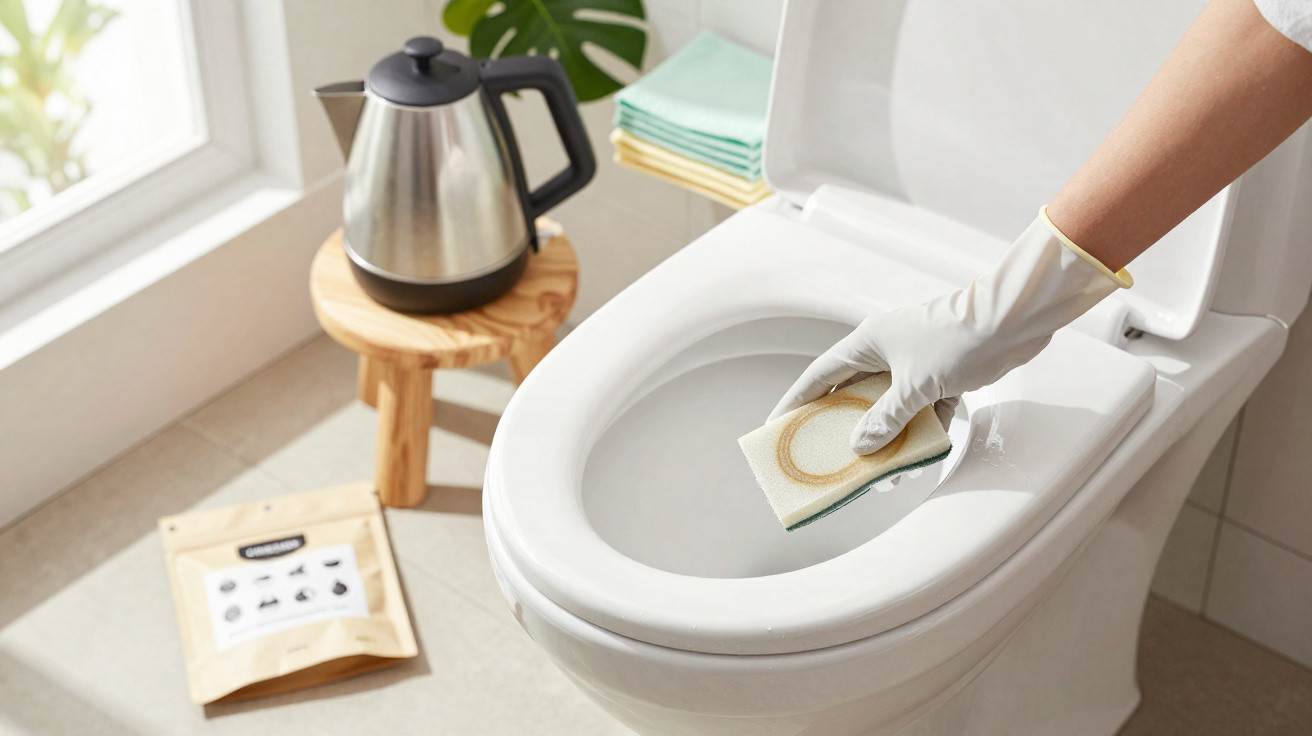
That chalky deposit at the base of the toilet can seem permanent, like an unwanted miniature rock pool. Hard water is what causes it. Bleach and vinegar can leave the whole house smelling unpleasant. Yet there is a quicker cleaning method that works without filling the bathroom with fumes or damaging the porcelain.
The toilet itself appeared clean, but the pale ring in its base announced “hard water” in bright capital letters. She had used bleach. She had used vinegar. She had even tried ignoring it. Every time, though, the crust came back like a bad habit.
So we put a different approach to the test. There were no fumes, no hour-long scrubbing session and no unidentified hardware-shop chemicals. Ten minutes later, she gave an entirely genuine: “Wait… did that actually work?”
It had - and quickly.
Why limescale laughs at bleach
Limescale is mineral rock rather than ordinary dirt. Picture microscopic limestone bonded to porcelain through heat, time and water repeatedly travelling along the same route. Bleach lightens stains and kills germs, but it cannot dissolve minerals. Vinegar may soften scale slightly, although it takes time and its smell lingers like a bad playlist.
In hard-water homes, it becomes most obvious in the shadow of the U-bend and in the small hollow at the bottom where water remains still. One UK water report estimates that more than 60% of households are in hard or very hard water areas. You notice it on drinking glasses, shower screens and kettle elements - while in toilets, the shape of the bowl makes it especially persistent. Its curve holds onto a ring, and the outlet edges create a gritty shelf in a spot that a brush cannot easily reach.
Bleach can therefore brighten the surface while leaving the crust behind. After flushing, it may look acceptable… for a day. Then the mineral edge collects fresh dirt and the ring reappears. The answer is not a more powerful whitener, but a more effective dissolving treatment paired with a porcelain-safe tool.
The express citric acid method: no bleach, no vinegar, no drama
This 10-minute approach that genuinely moves the hard deposit uses citric acid, warmth and a wet pumice finish. Boil a kettle, then leave it for one minute. Pump water down the trap with your toilet brush to lower the bowl level and reveal the crust. Pour in a mug of hot, but not boiling, water to warm the porcelain. Mix 3–4 tablespoons of citric acid powder into a jug of hot water, then pour it slowly into the bowl, directing the stream over the limescale edge. Leave it for 5–7 minutes to fizz and soften the deposit.
Next, keep a pumice stick thoroughly wet - this is essential - and move it gently over the scale in small circular motions. It creates a soft, chalky paste as it removes the mineral, and it will not scratch glazed porcelain when used wet. Flush the toilet. Should a faint trace of the ring remain, spend one more minute using the pumice with another splash of hot citric acid solution. The outlet hollow should become smooth and glassy again. No bleach. No vinegar. No drama.
What can go wrong? Adding boiling water directly to a cold bowl can cause a hairline crack, so always warm the porcelain with that mug first. Never mix cleaning products - citric acid is safe by itself, but it must never be followed with bleach. Realistically, nobody wants to do this every day. For an unscented option, add 3–4 denture tablets to hot water after lowering the water level, wait 10 minutes, then use the brush and pumice for the final pass. It is quick, quiet and strangely satisfying.
Real-world proof, with a tiny twist
On the morning of a rental inspection, a reader sent a photo of a “permanent” ring she had been scrubbing for months. She lowered the water level, added the warm citric mixture and looked at her phone while it got to work. After two minutes with a wet pumice stick, the ring came away in a milky ribbon. Her reply was: “I thought that grey shadow was the porcelain.” It was not. The mark was limescale lodged in microscopic pits, softened by the acid and smoothed away by the pumice.
In another example, a seaside flat had exceptionally high mineral content in its water. The occupants used dishwasher tablets in hot water as a temporary measure, before completing the job with a sweep of wet pumice. The tablet loosened the film and the pumice removed the edge. The result was a bowl that stayed looking new for weeks rather than days. It is not about force. The chemistry first releases the crust, then a “stone” softer than the glaze gently lifts it away.
The process works because citric acid binds to calcium, limescale’s main component, and warmth speeds this up. When wet, pumice is softer than porcelain glaze but tougher than the mineral deposit, allowing it to abrade the scale without marking the finish. Use it lightly and keep it wet. Treat it as an eraser, not sandpaper. The fast result comes from preparing the bowl by lowering its water level, placing the acid exactly where the scale is sitting so that every second matters.
Make it a habit without making it a chore
Store a small tub of citric acid beneath the sink and keep a pumice stick in a zip bag labelled “wet only”. Every second or third clean, lower the water level, add a hot citric rinse and glide over the outlet hollow for 45 seconds. That is all it takes. If your week is hectic, choose the more relaxed option: put in 3–4 denture tablets overnight, flush in the morning and make a brief pass with wet pumice. This is your “hard-water ring” insurance.
Avoid harsh products that etch surfaces or smell overpowering. Hydrochloric acid gels destroy limescale quickly, but they may dull metal components and leave an odour you do not want trapped in the room. Baking soda is excellent for odours but will not dissolve mineral rock; reserve it for the seat and rim. Where the toilet is new or has a specialist nano-glaze coating, test the pumice on an area behind the waterline first. Use short, gentle strokes. We have all experienced a speedy solution turning into a larger task - this method need not do that.
“The trick isn’t cleaning harder. It’s letting chemistry and five steady minutes do the heavy lift.”
- Lower the water level first to ensure direct contact.
- Use hot rather than boiling water to speed up the acid.
- Keep the pumice soaked to protect the glaze.
- Never use bleach after acids - flush between different products.
- Put on gloves, open the window slightly and switch on a playlist. A true 10-minute fix.
What changes when the ring is gone
A clean outlet hollow transforms the feel of the whole bathroom. The water looks glassy, and daily brushing starts working properly again because it is no longer battling a gritty ledge. Guests will not notice anything, which is exactly the idea. You will notice subtle changes: less odour, fewer shadows and a bowl that clears with the first flush. There is also a quiet sense of relief whenever you walk in.
This method can fit around your circumstances. In an area with very hard water, use a quick citric acid rinse every week and wet pumice every two weeks. If your water is less harsh, a monthly clean will keep the bowl shipshape. It is five minutes rather than sacrificing a Saturday to scrubbing.
Some routines are worth keeping because they return time, calm and a bathroom you do not feel the need to apologise for. The equipment is straightforward, the process is easy and the outcome arrives quickly. You may even end up passing the tip on to a neighbour - after sending that “before” photograph to the group chat you promised yourself you would never show.
| Key point | Detail | Benefit for the reader |
|---|---|---|
| Citric acid + warmth | Quickly dissolves calcium-based limescale without fumes | Fast, low-odour and budget-friendly |
| Wet pumice finish | Gently removes scale without scratching glazed porcelain | A smooth, “like-new” bowl within minutes |
| Lower the water level | Pump with the brush or turn off the supply to expose the crust | Every second of contact works where it counts |
FAQ:
- Can I use cola instead of citric acid? Yes, if necessary. Cola’s phosphoric acid can soften limescale, particularly when combined with warm water and time. It is stickier and slower than citric acid powder, so you will still need a final pass with wet pumice.
- Will a magic eraser work? Melamine foam removes surface marks but is not very effective on mineral deposits. Use it for scuffs near the waterline. Wet pumice works better for the outlet hollow and thick rings.
- Is borax a good alternative? Borax can help deodorise and provide mild cleaning, but it does not dissolve limescale quickly. Borax with hot water may freshen the bowl, although citric acid remains the faster mineral remover.
- How do I safely lower the water level? There are two methods: plunge the brush up and down to force water over the trap, or turn the shut-off valve a quarter turn, flush and work on an almost dry bowl. Restore the water supply before the final flush.
- Could pumice scratch my toilet? Yes, if it is used dry. When kept soaked, it is softer than glaze but harder than scale. Test a small area behind the waterline, use gentle strokes and retain a wet slurry as you work.

Comments
No comments yet. Be the first to comment!
Leave a Comment