
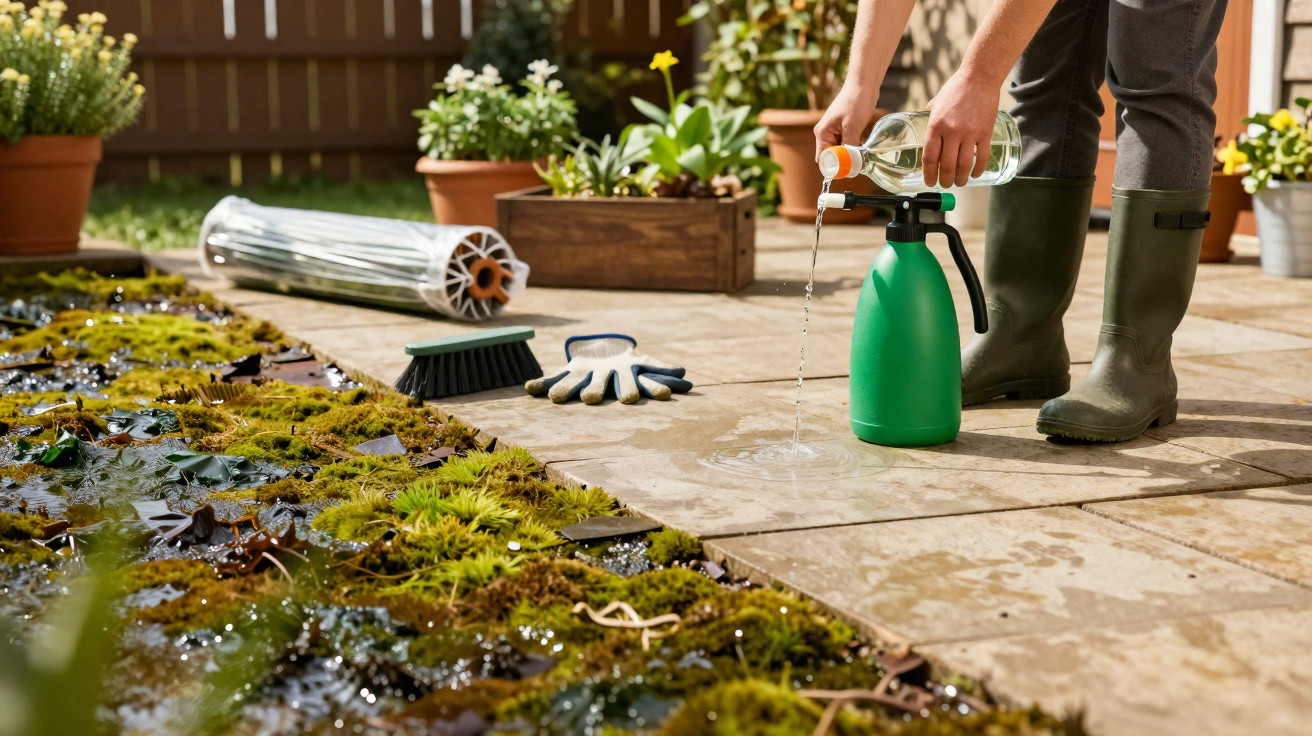
Many people only notice it when the first warm days arrive: the terrace slabs have turned green, feel greasy and are dangerously slippery. Instead of pricey specialist cleaners or hours of hard scrubbing, one everyday kitchen staple is often enough - and it costs only a few pence.
Why the terrace suddenly becomes so risky after winter
Rain, damp air, little sunshine and leaves left sitting on the paving for weeks: that combination creates ideal conditions in winter for moss and algae to spread. What looks like “just a bit of green” can quickly become a genuine skid hazard.
Shaded patios, north-facing areas and spaces beneath trees are particularly affected. These spots barely dry out, moisture lingers in the joints, and each damp spell helps the coating grow back.
"Moss and algae don’t just make terraces look unattractive - they significantly increase the risk of falls, especially for children and older people."
Plenty of people wait for it to “dry out on its own”. In reality, the opposite usually happens: the layer becomes thicker, darker and more stubborn. Spring - when temperatures rise but the ground is still damp - is the best time to tackle the surface properly, before the growth bonds more firmly to the slabs.
The 30p kitchen remedy: what household vinegar really does
At the heart of this method is ordinary household vinegar - more specifically, a clear spirit vinegar with a higher acidity than standard table vinegar. In shops, it’s often labelled “vinegar essence” or “clear household vinegar”.
The key active ingredient is acetic acid. It attacks the thin nutrient layer where moss, algae and other micro-organisms take hold. Once that layer is disrupted, the green coating loses its grip and is much easier to lift.
"Vinegar isn’t aimed at the terrace itself, but at the nutrient layer the green film clings to - that’s exactly what makes it so effective."
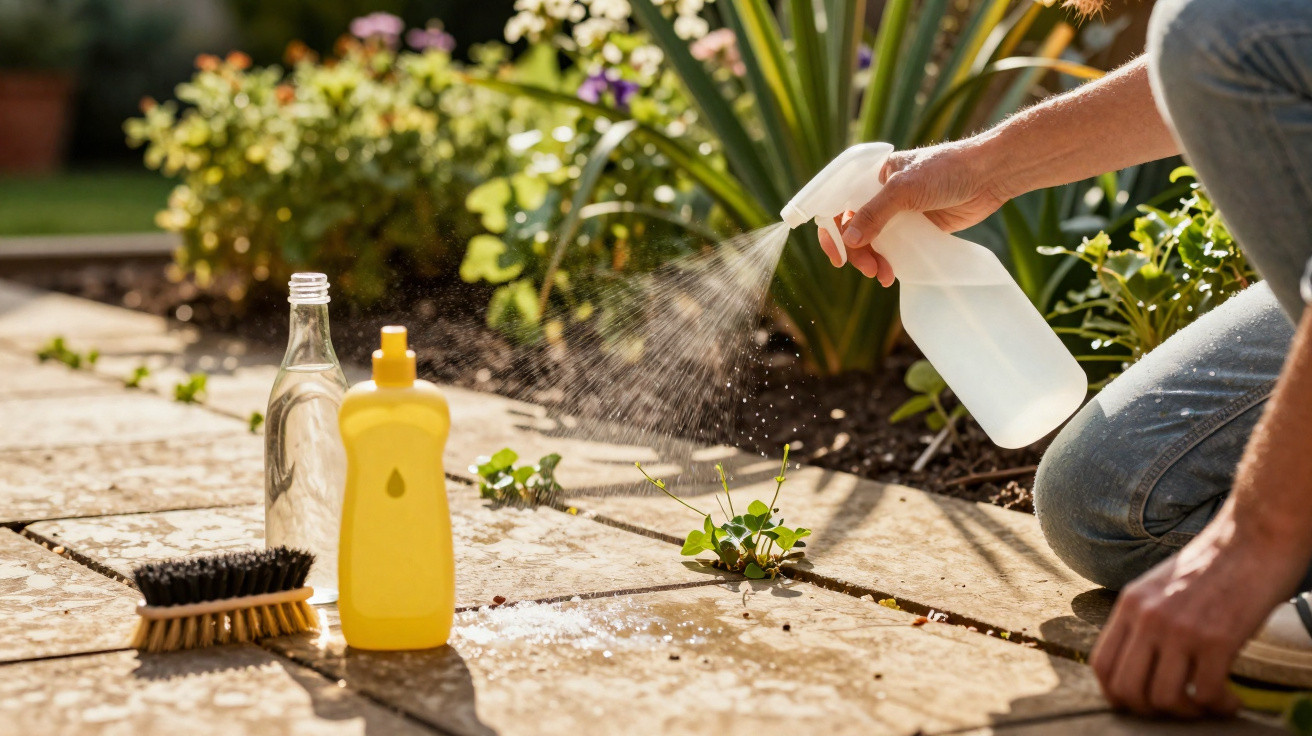
Because the vinegar-and-water mix stays fairly runny, it seeps into fine cracks and joints where green growth tends to hang on most stubbornly. After letting it work for a while, a standard scrubbing brush is usually enough to clear the surface again.
Step by step: a safer terrace in an hour
For a typical terrace made from concrete slabs, brick pavers, ceramic tiles or concrete block paving, one bottle of vinegar plus a bit of elbow grease is often sufficient. Here’s how to do it:
- Remove loose dirt: Sweep away leaves, twigs, soil and grit with a stiff broom or leaf broom. The cleaner the surface, the better the vinegar can work.
- Mix the solution: Pour roughly one part clear household vinegar and one part warm water into a bucket. Warm water can boost the effect slightly.
- Soak the area: Tip the solution generously over the green patches or distribute it with a watering can, making sure it also reaches the joints.
- Leave it to work: Keep off the area for around one hour so the vinegar can do its job. During this time, the film begins to loosen.
- Scrub and rinse: Work over the surface with a scrubbing brush, then rinse thoroughly with plenty of clean water.
If you like, you can use a pressure washer afterwards only in targeted spots - for example on very old, dark stains. In many cases, brushing is enough because the vinegar has already weakened how firmly the moss is attached.
Important warning: not every stone tolerates vinegar
As handy as vinegar is, it’s still an acid - and some materials react badly to it. Limestone is particularly problematic.
Sensitive surfaces include, among others:
- natural marble
- travertine
- many types of calcium silicate brick
- some reconstituted stones with a high lime content
- untreated or only oiled wood
"If you’re unsure, test the mixture first in an inconspicuous corner. If the stone develops dull patches or pale streaks, avoid using vinegar."
For wooden decking, gentler options are better, such as dedicated wood cleaners, a soft-soap solution, or water mixed with a small amount of soda powder. The same rule applies: try it on a small area before treating the whole surface.
How to protect plants and joints while cleaning
When you rinse the terrace, diluted vinegar solution can run into borders, joints and lawn edges. In small amounts this is usually not an issue, but concentrated contact can harm sensitive plants.
If you have beds and shrubs right next to the terrace, it’s safer to:
- lightly water the edges first so any vinegar is diluted more quickly later
- treat the area in a way that lets as little as possible flow towards the borders
- rinse the terrace thoroughly after scrubbing so the solution is spread out and diluted
A handy side effect: in the joints between slabs, vinegar can also weaken fine weeds and young self-seeded plants. It won’t fully remove thick, established roots, but it can make them easier to pull out.
How often should you clean - and how do you keep the terrace cleaner for longer?
In many gardens, one thorough clean in spring is enough. If the area is heavily shaded or very damp, green patches may reappear by autumn.
Small habits throughout the year help:
- Sweep off leaves and needles regularly.
- Move plant pots now and then so a permanently damp ring doesn’t build up underneath.
- Prevent puddles by keeping channels and drains clear.
- Give the area a proper sweep shortly before winter so there’s less organic material left sitting on the slabs.
"The less moisture and dead plant material sits on the slabs, the more slowly moss and algae return."
If you notice that certain corners keep developing a slippery coating, it may be worth improving airflow and light there - for instance by pruning back a shrub or repositioning screening.
Alternative household remedies - and where their limits are
Besides vinegar, you’ll see plenty of other suggestions online for green, slippery terraces. A quick overview:
- Washing soda (sodium carbonate): Cuts through grease and dirt and can work well on coatings, but it’s more alkaline and can also damage delicate stone.
- Green deposit removers from DIY stores: Usually effective, but often contain chemical agents that can end up in soil and groundwater.
- Pressure washer: Strips everything quickly, but can wash out jointing, roughen the surface and damage paving.
Vinegar sits somewhere in the middle: not a miracle fix for every situation, but for robust terrace materials it’s a relatively gentle, low-cost and easy-to-find option.
What the green film actually is - and why it’s so persistent
The typical winter coating is rarely just one organism. It’s often a mix of:
- algae that create a slippery film,
- mosses that form small cushions and mats,
- fungi and bacteria that cause darker staining,
- fine soil and dust that bind everything together.
These layers latch onto tiny irregularities in the stone surface. Each damp period allows spores and cells to spread, multiply and build new layers. Acetic acid disrupts that bond by changing surface conditions and attacking the matrix that holds it all together.
Once you recognise that it’s a whole “ecosystem” sitting on the slabs, it’s easier to see why simple prevention - regular sweeping, good drainage and a focused spring clean - makes such a difference.
Comments
No comments yet. Be the first to comment!
Leave a Comment