
Bought fresh strawberries on Saturday, only to find a furry coating in the fridge by Tuesday?
A simple kitchen trick can prevent this small disaster surprisingly easily.
Strawberries are among the most delicate fruits on the supermarket shelves. Many people know the pattern: you treat yourself to a punnet, eat a few, and the rest ends up in the bin a few days later. Yet one unassuming item from the kitchen is enough to extend their fridge life to up to seven days – no chemicals, no specialist container.
Why strawberries go off so quickly
Strawberries are made up of about 90% water. That’s what makes them juicy – and extremely vulnerable. Their texture is a bit like a sponge: porous, soft, and full of tiny cavities. As a result, they react badly to even the smallest droplets of moisture that collect inside the packaging.
Add a bit of warmth and mould has an easy time. One of the most common culprits is grey mould (Botrytis cinerea). This fungus thrives on a mix of moisture and moderate temperatures. A fridge slows its growth, but it doesn’t stop it. Even at 0°C, the fungus can still spread.
Another issue is packaging. Many strawberries come in plastic punnets with very little ventilation. On the way home – in a warm car or shopping bag – condensation forms on the inside and at the bottom. You might barely notice it, but it’s enough to get mould going.
"Just a few invisible drops of condensation in the punnet are enough to turn plump strawberries into a grey, soft mass within 48 hours."
In other words, the original packaging often traps exactly what strawberries can tolerate least: moisture without air circulation.
Moisture: helpful in the field, harmful in the fridge
In the strawberry field, water is essential for growth. After harvest, the logic flips: every additional source of damp shortens shelf life. Fruit that’s wet, beads of sweat, a damp fridge drawer – all of it gives fungal spores their starting signal.
There’s more: many strawberries pick up tiny pressure marks during harvesting or transport. Juice leaks out in those spots and creates an ideal feeding ground. In a damp punnet, mould can quickly spread from a single soft point into a carpet.
The kitchen helper that suddenly keeps strawberries fresh for longer
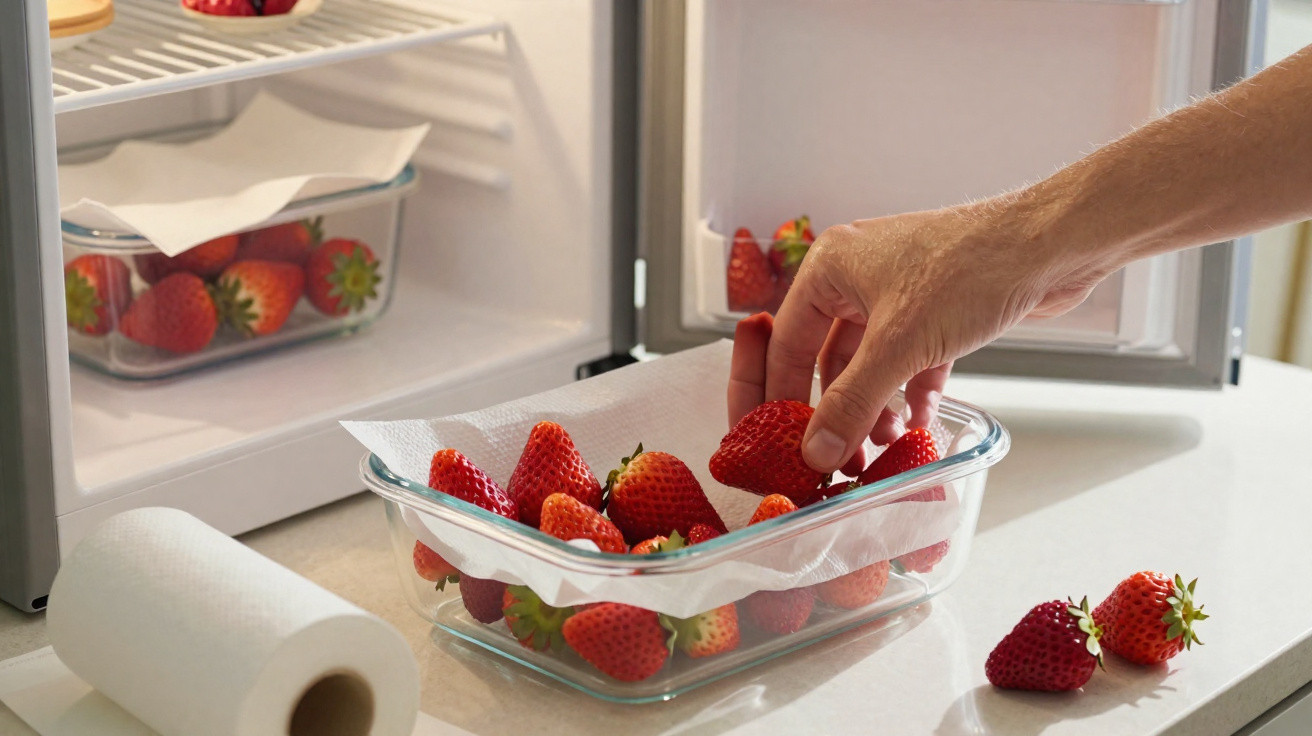
The fix is already in most kitchens: a sheet of kitchen paper. The idea is straightforward. Kitchen paper soaks up excess moisture instead of letting it sit on the fruit’s surface. That removes mould’s favourite conditions.
"A dry, absorbent sheet on the bottom of the punnet works like an invisible umbrella between the strawberry and condensation."
How the kitchen paper method works, step by step
- After shopping, do not wash the strawberries; simply remove any damaged fruit.
- Cut a sheet of kitchen paper to size and place it on the bottom of the punnet or a shallow container.
- Arrange the strawberries in a single layer, avoiding stacking where possible.
- Optionally, place another sheet gently on top without crushing the fruit.
- Close the container or loosely cover the original punnet and put it in the fridge (0 to 4°C).
The key is checking it. If the paper looks visibly damp, replace it. A fully soaked sheet becomes a little swamp and flips the benefit into the opposite.
Three common mistakes that ruin strawberries unnecessarily
Mistake 1: Washing strawberries straight after buying
Many people rinse strawberries immediately for hygiene reasons. Unfortunately, that’s exactly what kick-starts deterioration. Water seeps into the porous structure, lingers in the small dips, and noticeably shortens how long they keep.
Tests show that unwashed strawberries stored on kitchen paper last, on average, several days longer in the fridge than pre-washed ones. The best routine: wash them gently only shortly before eating, then serve straight away.
Mistake 2: The wrong neighbours in the fridge
In the fruit drawer, very different types of produce often end up side by side. What many don’t realise is that some fruits release the ripening gas ethylene – especially apples and bananas. Strawberries are sensitive to it.
- Apples: a strong source of ethylene, speeding up ripening and over-ripening
- Bananas: particularly problematic for delicate fruit when ripe
- Strawberries: respond by softening faster and developing mould earlier
If you want strawberries to stay fresh for longer, store them away from these gas producers, ideally in a separate section or container.
Mistake 3: Removing the stalks too early
Pulling off the green tops may seem harmless, but it opens the fruit. Air, bacteria, and fungal spores can enter more easily through the cut. The strawberry then turns soft and mushy sooner.
Better: leave the stalks on until the strawberries are actually going on the plate. Only then remove them with a knife or a small huller.
For hygiene enthusiasts: the vinegar-water method
If you’re particularly focused on cleanliness, or you want to keep strawberries for longer than a week, there’s another option: a brief bath in a vinegar-water mix.
Mixing ratio:
- 1 part household vinegar
- 3 parts water
Soak the strawberries for about five minutes, gently move them around, then rinse under running water and dry them thoroughly. The vinegar significantly reduces the number of germs on the surface without permanently changing the flavour.
"The combination of a short vinegar bath and subsequent storage on kitchen paper can extend shelf life to up to two weeks under ideal conditions."
Once dry, store the fruit in the fridge in a container with an absorbent base, as described in the kitchen paper method.
The daily 30-second check
Strawberries behave a bit like dominos: one mouldy berry can quickly affect the ones next to it. That’s why it pays to take a quick look each day.
- Remove any fruit with visible mould immediately.
- Use very soft strawberries promptly, for example in yoghurt or a smoothie.
- Check the kitchen paper and change it if needed.
This mini check takes less than half a minute, yet it can make the difference between a week of enjoyment and the bin.
How well-stored strawberries taste best
Straight from the fridge, strawberries can feel firm but often seem less aromatic. Cold temperatures dull both fragrance and flavour. Leave them at room temperature for 15 to 20 minutes and the same plate tastes noticeably more intense.
Practical routine:
- Take the strawberries out of the fridge.
- Only now wash and hull them.
- Leave them on a plate briefly at room temperature.
- Serve as you like: plain, with sugar, cream or yoghurt.
What all of these techniques are really doing
At heart, every strawberry trick comes down to three levers: moisture, temperature, and germs. Kitchen paper manages moisture, the fridge slows biological processes, and vinegar reduces the microbial load. Keep those three under control and you’ll get much more out of every punnet.
It also has a real impact on your budget and on food waste. Fewer mouldy strawberries mean less frustration, fewer repeat purchases, and less fruit thrown away. In households with children, where strawberries often disappear in bursts, a simple system pays off.
Some of these methods also apply to other delicate berries such as raspberries or blackberries. They, too, benefit from dry storage, gentle handling, and regular checks. The quiet star remains the same: a simple sheet of kitchen paper that becomes an unassuming freshness helper in the fridge.
Comments
No comments yet. Be the first to comment!
Leave a Comment