
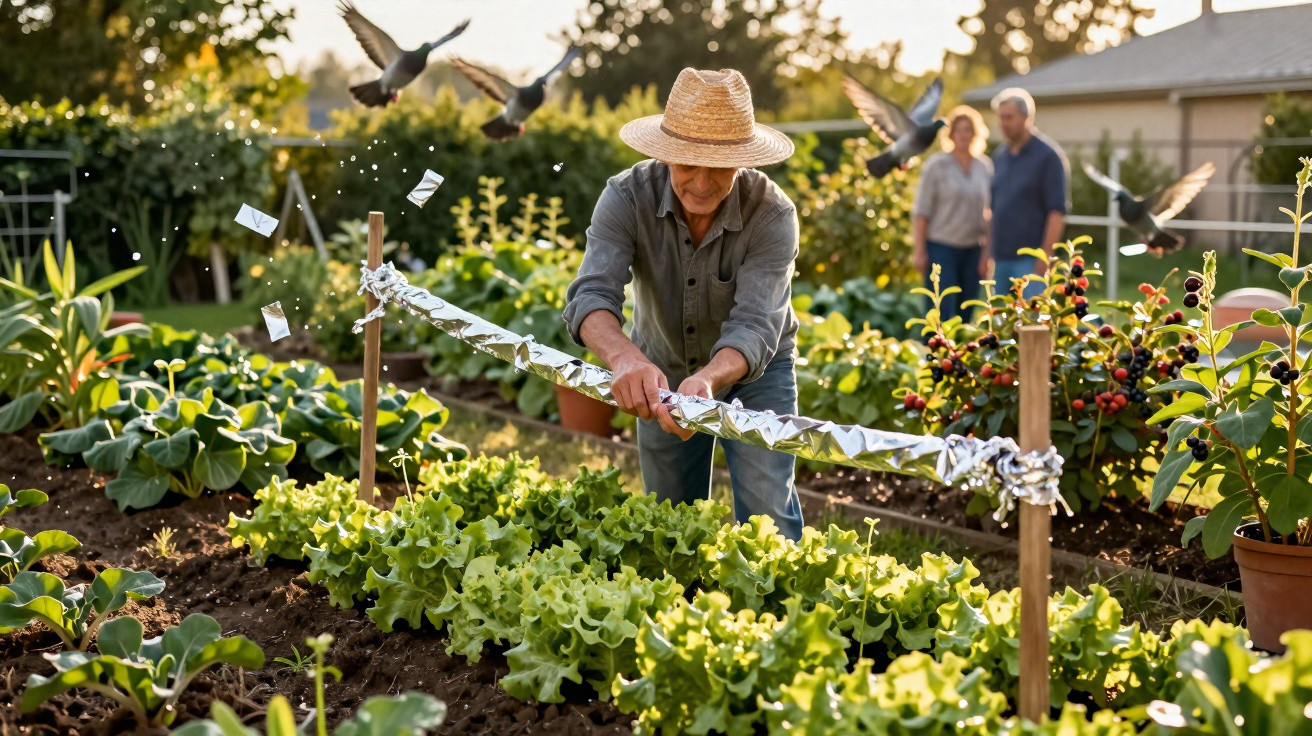
As the first warm days arrive, it’s not only plants that start to surge into growth – pigeons and other greedy garden visitors become far more active too. Many keen gardeners feel at their wits’ end when lettuces are pecked, beds are scratched up and patios are left dirty. A horticultural expert is now recommending a simple trick that costs next to nothing, is quick to do and avoids poisons entirely: ordinary kitchen aluminium foil.
Why pigeons descend on the garden at this time of year
In spring, pigeons move into an intense period of breeding and feeding. They are constantly on the lookout for safe resting spots and easy food sources. Gardens, balconies and patios can look like a ready-laid buffet – with water, food and plenty of flat areas for landing.
Common pigeon hot spots include:
- window sills and balcony railings
- straight edges on pergolas or carports
- garden benches, tables and fences
- bed borders around lettuce, spinach and young seedlings
- the area around bird baths or small ponds
Once pigeons feel secure, they tend to return to the same places again and again. The result is not only visible damage to plants, but also large amounts of droppings. This waste is highly acidic, can attack paintwork, timber and metal, and may attract other pests such as rats.
"Chasing pigeons away early in the year not only protects beds and the patio, it also reduces mess across the whole garden in the long run."
Many garden owners want to avoid harsh measures and are looking for a way to keep birds away without harming them. That is exactly where aluminium foil can help.
How aluminium foil unsettles pigeons without harming them
Garden experts rely on a straightforward principle: light reflections, sparkle and unfamiliar noises can strongly unsettle pigeons. Aluminium foil provides all of these effects – using something that is already in most kitchens.
Three things are doing the work in particular:
- Reflection: sunlight bounces unpredictably off the crumpled surface. Those sudden flashes can register as a warning signal to pigeons.
- Movement: pieces of foil that hang and flutter in the breeze make landing areas feel unstable because the motion is hard to predict.
- Contact: pigeons dislike the sensation of foil against their feet and beak, which discourages pecking in certain spots.
Together, this can make the area seem risky, prompting the birds to look elsewhere – ideally away from your garden.
How gardeners can use aluminium foil properly outdoors
For this approach to work, it is not enough to place a tiny piece of foil somewhere at random. The key is positioning it exactly where the birds most like to perch, land or feed.
Steps to get started
If you want to use aluminium foil in a targeted way, a practical approach is:
- Observe: spend a few days noting where pigeons land, sit and feed.
- Identify key points: mark places such as window sills, railings, bed edges and areas around the vegetable patch.
- Prepare the foil: tear it into pieces, loosely scrunch it up or cut it into strips.
- Put it in place: hang balls, secure strips, or push pieces into the soil – each time at the spots you observed.
"Aluminium foil only works where it’s clearly visible or could come into direct contact with the birds – so always work close to their favourite places."
Hanging “sparkle garlands” to deter pigeons on balconies and patios
On balconies, patios and pergolas, hanging setups are particularly useful. Simply scrunch aluminium foil into balls, thread them onto string and fix them at different heights. The balls should be able to move as freely as possible in the wind.
Typical places for these “sparkle garlands” include:
- along the balcony railing
- under the eaves
- on pergolas above seating areas
- on hooks near the patio door
The reflective chain makes pigeons less inclined to settle there for long periods, helping protect furniture and paving from droppings.
Aluminium foil in beds: protecting lettuce, berries and young plants
In vegetable beds and around fruit plants, the contact effect tends to matter more. Here, aluminium foil can be placed directly on or in the soil.
Options include:
- wrapping strips of aluminium foil around the base of vulnerable plants
- stretching short lengths between planting rows
- pressing small pieces lightly into the soil around young seedlings
- placing individual scrunched balls between strawberry plants
If pigeons land there, they notice the unfamiliar surface when walking or pecking and often avoid the area after a short time.
Where aluminium foil works especially well – and where it doesn’t
Aluminium foil is most suitable in gardens where pigeons mainly target beds, ornamental plants or seating areas. If you already have established nests on roof ledges or in hard-to-reach gaps, you may need additional measures.
| Location | Effect |
|---|---|
| Balcony railing | Fewer perching spots for pigeons, less droppings on the floor |
| Vegetable bed | Protects lettuces and young plants from being pecked |
| Fruit trees | Reflections in the canopy discourage birds as they approach |
| Window sills | Familiar landing places become less appealing |
It also helps to shift the foil slightly from time to time. Pigeons are creatures of habit, but they can get used to fixed features. Small changes keep the disruptive effect going for longer.
Tips for sustainable, animal-friendly use
Aluminium foil should not be left scattered around the garden. If you choose to use it, keep things tidy and plan to reuse it. When the season is over, you can usually collect the material and send it for recycling.
Practical pointers:
- secure the foil so it won’t blow away with every gust
- watch for sharp edges so nobody gets hurt
- near children and pets, only use firmly fixed pieces
- collect every piece again at the end of the gardening season
If you want to minimise aluminium use for environmental reasons, you can reuse foil strips several times or combine them with other reflective materials, such as old CDs or purpose-made reflective tape from garden centres.
What gardeners should also know about pigeons in the garden
Pigeons do not only cause cosmetic damage. Their droppings can contain pathogens, which may be problematic for people with weakened immune systems. Where patios or window sills are heavily soiled, it’s sensible to wear gloves and clean surfaces thoroughly.
At the same time, birds can be beneficial in gardens: they eat insects and help spread seeds. The aim is not to drive away every bird, but to protect sensitive areas such as vegetable beds and seating spaces in a targeted way.
Aluminium foil fits that approach well: it deters without injuring animals and is noticeably cheaper than many mechanical systems. Combined with clean surfaces, tightly closed bins and thoughtfully chosen feeding spots for other birds, you can keep a garden that works for people – while becoming far less inviting for pigeons.
Comments
No comments yet. Be the first to comment!
Leave a Comment