
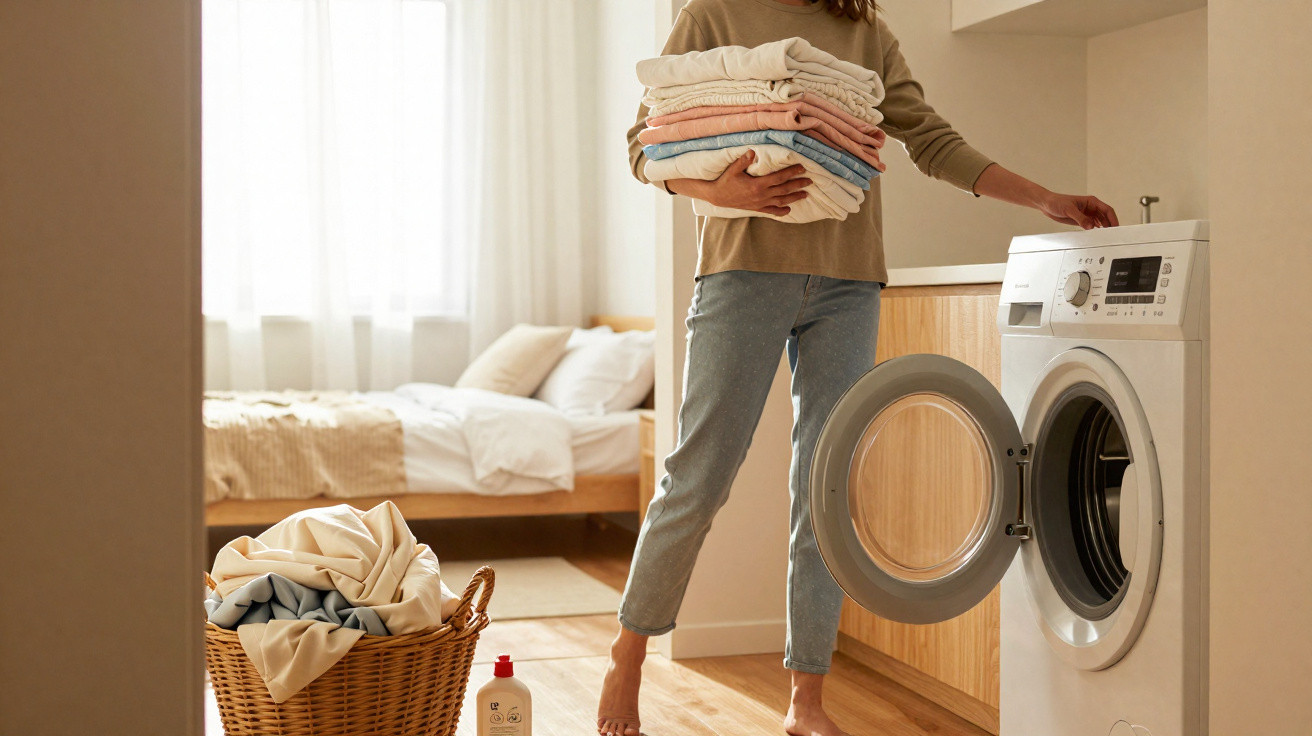
Choosing the right wash temperature affects both hygiene and your electricity bill.
Plenty of people love slipping into bed at night when the sheets smell fresh from the detergent. What sits behind that cosy feeling is far less romantic, though. Each night, a person can lose up to half a litre of sweat, along with skin flakes, natural oils and traces of cream or make-up. All of it ends up in your bed linen - and becomes an ideal breeding ground for bacteria, fungi and house dust mites. So the practical question follows: how hot does the machine really need to run to get bed linen properly clean, without putting unnecessary strain on the fabric or your budget?
Why bed linen gets “dirty” faster than it looks
Sheets can look clean for a long time. The problem is that the real build-up is invisible, and it starts again every evening as a matter of course.
- Sweat adds moisture and salt to the fibres.
- Skin flakes and body oils become food for bacteria and mites.
- Make-up, body lotion and hair gel leave extra residue behind.
- If you eat in bed, crumbs and food traces join the mix.
Mites, in particular, thrive in these conditions. They multiply quickly in warm, damp mattresses and sheets. Their droppings can trigger strong allergic reactions in sensitive people, with symptoms such as a blocked nose, stinging eyes or asthma attacks.
Experts recommend washing bed linen at least every 14 days - and weekly if you sweat heavily or have allergies.
Even so, many people leave sheets on the bed for three or four weeks. That can directly affect hygiene, sleep quality and often your skin too - spots on the back or chest can, in some cases, be linked to unwashed bed linen.
Is 40°C enough? When the standard temperature makes sense
Most everyday cotton programmes are set to 40°C by default. These days, that temperature is widely seen as a sensible balance between hygiene, caring for textiles and keeping energy use down.
For a healthy household with no special risk factors, and for normally soiled bed linen made from cotton or a cotton blend, the following is a solid routine:
- Changing the bed linen: weekly or every two weeks
- Wash temperature: 40°C
- Detergent: biological powder/liquid or colour detergent at the recommended dose
- Programme: avoid the very shortest cycles so the mechanical cleaning has time to work
With that combination, most bacteria, skin debris and odours are removed reliably. At the same time, colours hold up better, fibres age more slowly, and energy consumption stays reasonable.
As a comparison, a 60°C cycle can use roughly half as much again in electricity as a 40°C wash. At 90°C, consumption increases again by around a similar margin. So if you automatically choose the hottest setting out of habit, you can end up paying noticeably more each month - without any real benefit, provided your bed linen is going into the wash regularly.
When 60°C is the better option
There are times when 40°C is not enough. In those situations, moving up to a 60°C cycle is worth it.
Typical cases for 60°C
- Illness in the household: flu, stomach bugs, Covid or other infectious conditions affecting the bed.
- Strong odours: very heavy sweating, for example during heatwaves or puberty.
- Known house dust mite allergy: hotter regular washes reduce exposure.
- Bed linen for babies or people needing care: when hygiene is the top priority.
- Stubborn staining: blood, urine or heavily discoloured areas.
At 60°C, far more bacteria, mites and fungal spores are killed. For allergy sufferers in particular, this can be the difference between breathing freely at night and lying awake with itchy, irritated eyes.
For people who are ill, allergic or especially sensitive, 60°C is often the most sensible temperature for bed linen.
If you want to boost the hygienic effect further, you can add a small splash of clear household vinegar to the fabric softener compartment. This helps neutralise smells and supports disinfection - without extra fragrances that can irritate some people.
90°C: only an option in exceptional cases
Many washing machines still offer a 90°C programme or a “boil wash”. For most bed linen, this is no longer necessary and can even be damaging over time.
When a very hot wash can make sense
- Heavily soiled, white cotton bed linen in hotels, hospitals or care facilities.
- Individual sheets with persistent blood or urine stains, as long as the fabric is very robust.
- A machine “cleaning wash”, for example using towels or old sheets, to loosen germs and detergent residues inside the appliance.
In everyday home use, 90°C rarely adds a noticeable hygiene advantage for bed linen, but it can cause real drawbacks:
- Cotton may shrink or lose its shape.
- Colours fade, and whites can dull more quickly.
- Fibres become brittle and the lifespan of the bed linen drops significantly.
- Electricity costs rise sharply.
A common rule of thumb among textile-care specialists is: it is better to wash more often at 40°C than rarely at 90°C.
Regularity beats extreme temperatures: clean bed linen is more about frequent washing than maximum heat.
The right temperature for each fabric
Not all bed linen can handle the same heat. Checking the care label is worthwhile, even if you do not know every symbol by heart.
| Material | Recommended routine temperature | Occasionally possible |
|---|---|---|
| Cotton / Renforcé | 40°C | 60°C for heavy soiling |
| Jersey, percale, satin (cotton) | 40°C | 60°C in exceptional cases |
| Blends with polyester | 40°C | 60°C only if stated |
| Linen, fine linen blends | 30–40°C, gentle programme | higher only if the manufacturer allows |
| Silk | 30°C, delicates or hand-wash programme | no 60°C cycle |
Delicate fabrics such as silk or fine satin can quickly lose their sheen or become distorted if the temperature is too high. If you want premium bed linen to last, it is safer to stay one step below the maximum listed temperature and use a gentle cycle.
Energy, hygiene, comfort: how to set your own rule
When it comes to bed linen, three priorities tend to pull in different directions: cleanliness, electricity costs and the longevity of the fabric. A few simple principles make it easy to strike a good balance.
- Healthy adults without allergies: change weekly or every 14 days; usually 40°C; temporarily 60°C during illness.
- Heavy sweaters, athletes: wash weekly; depending on smell and how it feels, switch to 60°C more often.
- Allergy and asthma sufferers: weekly; often 60°C; also consider mite-proof covers for the mattress and pillows.
- Baby bed linen: change more frequently; often 60°C; ideally use fragrance-free detergents.
A sensible basic rule: default to 40°C, increase to 60°C for illness, strong odours or allergies - and use 90°C only in an emergency.
More practical tips for genuinely fresh bed linen
Temperature alone does not determine the result. Everyday habits can significantly improve hygiene:
- Ventilate the bedroom: a brief burst of fresh air in the morning lowers humidity and makes conditions less favourable for mites.
- Fold the duvet back: do not seal the bed up immediately after getting up; let it air and dry first.
- Vacuum the mattress: use a vacuum cleaner with an upholstery attachment from time to time.
- Shake out pillows and duvets: this loosens dust and helps them dry out.
- Look after the washing machine: regularly run a hot cycle with no laundry; leave the door and detergent drawer open so they can dry.
One more point that is often overlooked: going to bed with cleansed skin and without make-up reduces how much dirt ends up in your sheets. That protects the fabric, can help your skin, and cuts the need for very hot wash cycles.
If you follow these basic rules, you will rarely need extreme temperatures and can still climb into a bed that feels properly clean and hygienically fresh. Choosing between 40°C, 60°C and 90°C then becomes less of a debate and more a deliberate decision based on your situation and the material you are washing.


Comments
No comments yet. Be the first to comment!
Leave a Comment