
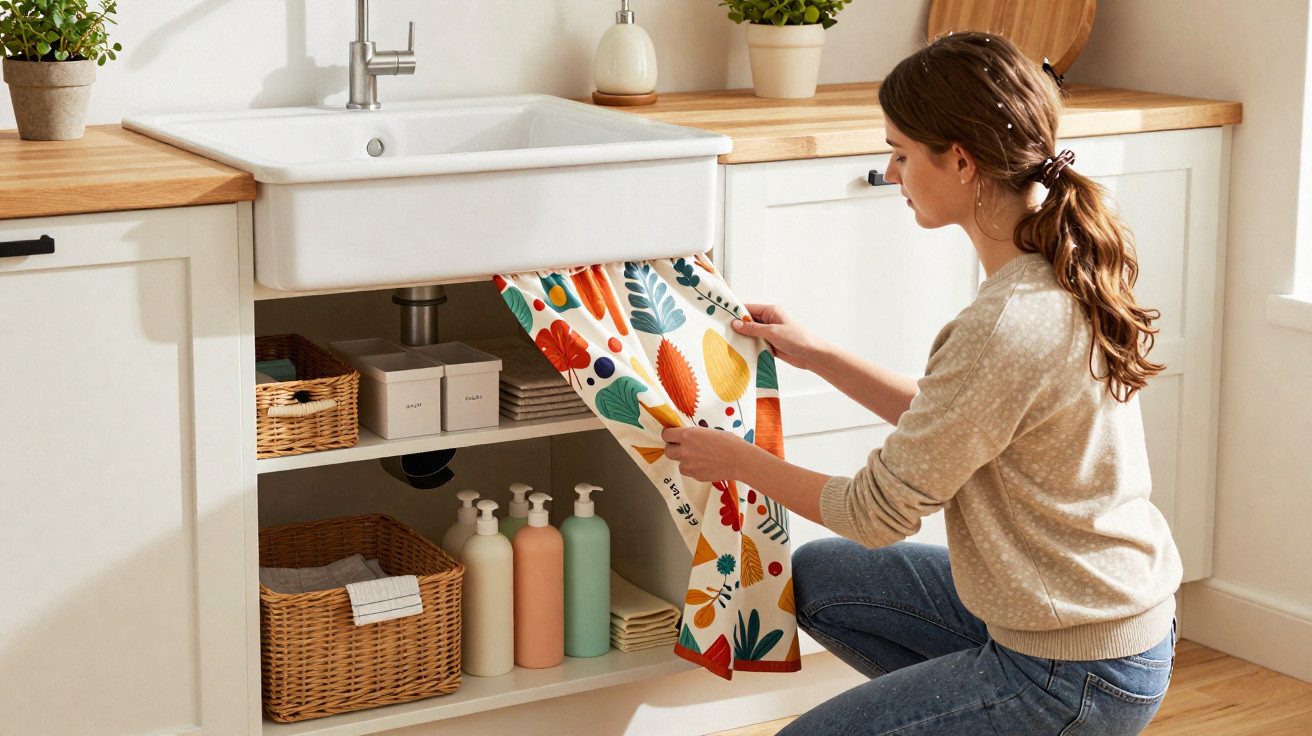
A nearly forgotten vintage idea is coming back in 2026 - and it’s transforming this exact nook.
In plenty of kitchens, cleaning sprays, cloths and carrier bags get shoved under the sink until there’s no room left. The result is cluttered, awkward and unsightly. Home organisation experts are now reviving a solution many of our grandparents would have recognised: a simple fabric fix that creates order, looks attractive and can be done in minutes - with no need for pricey fitted storage systems.
Why the space under the sink so often becomes a chaos zone
The cupboard under the sink is one of the most used - and most poorly used - corners of the home. It typically ends up holding:
- Bottles of cleaning products
- Washing-up liquid and refill containers
- Sponges, brushes and cloths
- Rolls of bin liners and loose bags
- sometimes even food items that really don’t belong there
On top of that, there are pipes, the trap and sometimes a bin setup that eats into the usable space. Standard cupboard doors may hide the mess, but they don’t necessarily make the area easier to use. Things slide to the very back and often only reappear when they’re out of date.
Rethink what’s under the sink and you instantly gain storage, convenience and more style in the kitchen.
The 2026 comeback trend: the sink skirt returns
What used to be a staple in traditional country kitchens is now seeing a genuine revival: the sink skirt - a fabric curtain fitted beneath the sink to conceal the open area.
Instead of a rigid cupboard front, a piece of fabric hangs in place and hides the entire under-sink section. Behind it, cleaning products, buckets and baskets are kept out of sight - from the outside, all you see is a decorative textile.
How the sink skirt works in everyday use
The method is straightforward:
- A rod, slim tube or tension pole is fixed above the open recess.
- A fabric curtain is hung from it, usually falling to just above the floor.
- To reach what’s behind it, you simply slide the fabric aside or lift it slightly.
The result: the room looks calmer, everything stays quick to reach, and the area under the sink gains far more character than it would with a plain white door front.
Advantages of a fabric curtain over traditional cupboard doors
Interior professionals point to several benefits that make this approach appealing for modern kitchens in 2026.
More charm and a personalised look
A sink skirt lets you change the feel of a kitchen very quickly:
- Colours can be matched to kitchen fronts or tiles.
- Patterned fabrics add country-style or retro character.
- Plain, single-colour fabrics feel modern and understated.
If you fancy a refresh, you simply hang a different fabric. That’s far cheaper than replacing doors or undertaking a full kitchen refit.
Easier access to storage
Cupboard doors can get in the way, especially in smaller kitchens, and they often bump into the dishwasher or a bin. With a curtain, one quick movement is enough:
- Lift the fabric, grab the bottle, let it fall back into place.
- For bigger tasks, push the curtain fully to one side.
It saves frustration when you’re cooking and need washing-up liquid or a cloth quickly with one hand.
Simple to clean and easy to replace
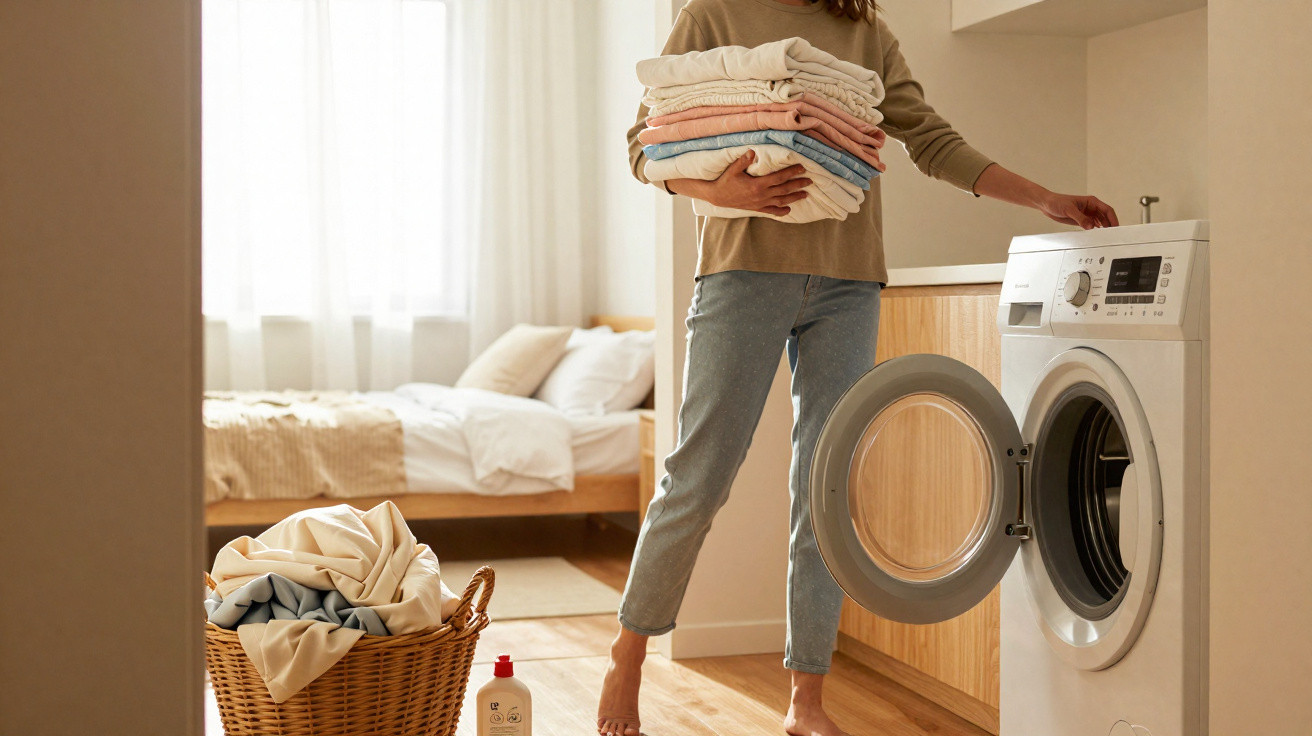
The under-sink area gets dirty fast. Drips from bottles, damp cloths, dust and crumbs are everyday realities. A curtain can be unhooked in seconds and put in the washing machine. If you prefer, you can keep two versions and swap them regularly.
A curtain can be washed - swollen chipboard can’t. In rented homes in particular, that’s a powerful argument.
How to organise the space behind the sink skirt smartly
A fabric curtain doesn’t automatically solve every storage issue. Behind the skirt, you still need a structure - otherwise you’re just hiding “concealed clutter”.
Create order with baskets and boxes
Stackable baskets and plastic boxes work well for dividing the area. A simple baseline layout might look like this:
| Area | Contents |
|---|---|
| Left | General cleaners (multi-purpose cleaner, glass cleaner, floor cleaner) |
| Centre | Washing-up items (washing-up liquid, dish brushes, sponges, dishwasher tablets) |
| Right | Waste and bags (bin-liner rolls, recycling bags, paper waste bags) |
Bottles of stronger, more hazardous cleaners should stand securely and, ideally, be stored in a lidded box - particularly in homes with children or pets.
Work around pipes instead of losing space
Under the sink, several pipes usually run through the cabinet. Flexible, height-adjustable shelving helps you make use of awkward gaps without knocking into the plumbing. Many of these shelves include cut-outs for the trap so the upper section stays usable too.
Slim baskets placed sideways can also be pulled forward easily. This creates a kind of “open pull-out” effect without installing runners.
Extra storage directly on the curtain
Some sink skirt designs include small pockets, similar to a hanging organiser. These are ideal for lightweight items, such as:
- Rubber gloves
- Spare sponges
- Microfibre cloths
- Dishwasher tablets
Anything heavy or prone to tipping doesn’t belong in these pockets - it should sit securely on the base or inside sturdy boxes.
How to fit a sink skirt in the kitchen and bathroom
This trend isn’t limited to the kitchen. A fabric curtain can be just as useful under a bathroom basin or in a utility room.
Choose the right material and fixing
For use around sinks and basins, the fabric needs certain qualities:
- easy-care and machine-washable at a minimum of 40°C
- preferably quick-drying
- not too heavy, so the rod doesn’t sag
Cotton blends or hard-wearing curtain fabrics work well. Often, a telescopic tension rod wedged between the sides is enough. If you want a more permanent option, screw a small curtain rod to the underside of the worktop.
Style choices: from country-house to minimalism
The overall effect depends heavily on the fabric. Gingham checks and florals nod to classic country-house kitchens. Smooth linen-look fabrics in beige or grey suit minimalist homes. Stripes can introduce a bistro feel. If you’re feeling bold, strong colours like mustard yellow or petrol can be a striking accent - especially in smaller kitchens.
The fabric curtain beneath the sink feels like a small piece of furniture - and it shapes the character of the whole kitchen.
More order, more safety, less stress
Once you reorganise the area under the sink, the difference is quickly noticeable: day-to-day life feels calmer. You’re no longer rummaging blindly for bottles, you cut down on duplicate purchases, and you waste less time searching.
It can also be made safer. Strong cleaners can be kept in a lockable box, while harmless items such as cloths, buckets or old towels can sit nearer the front. In homes with children, it’s worth taking a careful look at what really should be within reach.
More ideas for the sink area
If you’re already reworking the space, you can take it a step further:
- A small internal bar can act as a holder for spray bottles.
- Hooks on the side panel can store brushes or gloves.
- A shallow basket on the base can collect empty packaging for later recycling.
This turns the under-sink cupboard from an unloved “mess hole” into a well-planned work zone that makes everyday tasks easier. The sink skirt takes centre stage: it hides what’s unsightly, while also making it more appealing to reach behind the fabric - because, at last, there’s proper order.


Comments
No comments yet. Be the first to comment!
Leave a Comment