
The classic kitchen sponge often sits by the sink for days, gets wrung out, used again and again, and feels indispensable. Yet hygiene researchers say this everyday item can turn into a real bacterial habitat. In the worst case, instead of cleaning glasses and plates, the sponge spreads germs around the whole kitchen. A low-cost dispenser sold by Action is now being touted as a way to improve the situation significantly.
The kitchen sponge as a germ spreader at home
Hygiene specialists now rank the washing-up sponge among the most heavily contaminated objects in the home - in some cases even more so than a toilet bowl. The reason is how it is built and used: it is porous, stays damp, is often warm, and constantly comes into contact with food residue.
"The kitchen sponge gives microbes perfect living conditions: moisture, food, warmth - all in a very small space."
Researchers at Furtwangen University in Baden-Württemberg took a closer look at kitchen sponges. Their conclusion was that very large quantities of bacteria can build up in the fibres in a short time. After a period of use, the germ count repeatedly returns to a similar level - regardless of how often the sponge is "cleaned" in between.
Why rinsing, microwaves and vinegar rarely help
Many households try to rescue a sponge by:
- rinsing it under hot water
- soaking it with vinegar or cleaning products
- putting it briefly in the microwave
The study indicates that while the germ count may sometimes drop a little in the short term, it does not solve the problem over time. The researchers say these approaches are not enough to keep bacterial levels effectively low. In some cases, they can even mean that particularly resilient germs survive and become more dominant.
Even so, the sponge remains what microbes like: warm, wet and laced with organic leftovers. The older the sponge gets, the denser this “microfilm” becomes - and the next time you wash up, it can end up back on plates, glasses and worktops.
How often you should really change a kitchen sponge
Hygiene experts advise replacing it far more frequently than many people do. A simple rule of thumb is to use a new sponge about once a week. And if it starts to smell, changes colour or becomes crumbly, it is overdue anyway.
If you want to reduce waste, you can switch to washable alternatives such as microfibre cloths or special sponge cloths that can go in the washing machine. However, that does not completely eliminate the underlying issue: these materials also tend to stay damp after use and can again become a good breeding ground if they do not dry properly.
"What matters is not only the material, but how quickly everything dries again after washing up."
Drying is the overlooked hygiene factor
The less time a sponge or cloth stays wet, the fewer bacteria can multiply inside it. Experts therefore recommend simple steps:
- wring the sponge out thoroughly after use
- store it somewhere airy, and do not leave it sitting in water
- avoid overfilled sinks where everything is left soaking wet
- rotate several cloths so each one can dry properly
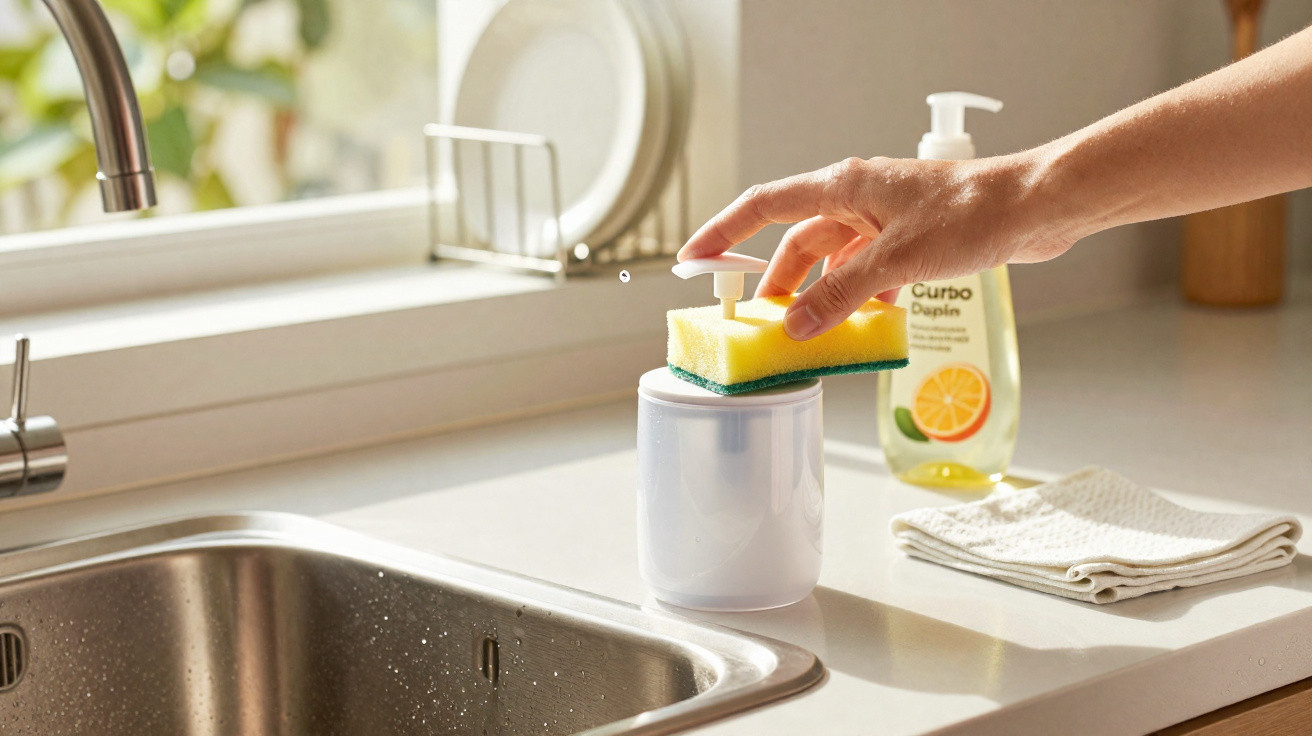
This is exactly where a trending product from Action stores comes in: a small washing-up liquid dispenser that also acts as a sponge rest.
The 3-euro gadget from Action: washing-up liquid dispenser with sponge holder
In Action’s household section, a washing-up liquid dispenser has been drawing attention - and is widely praised on social media. The concept is straightforward:
| Feature | Description |
|---|---|
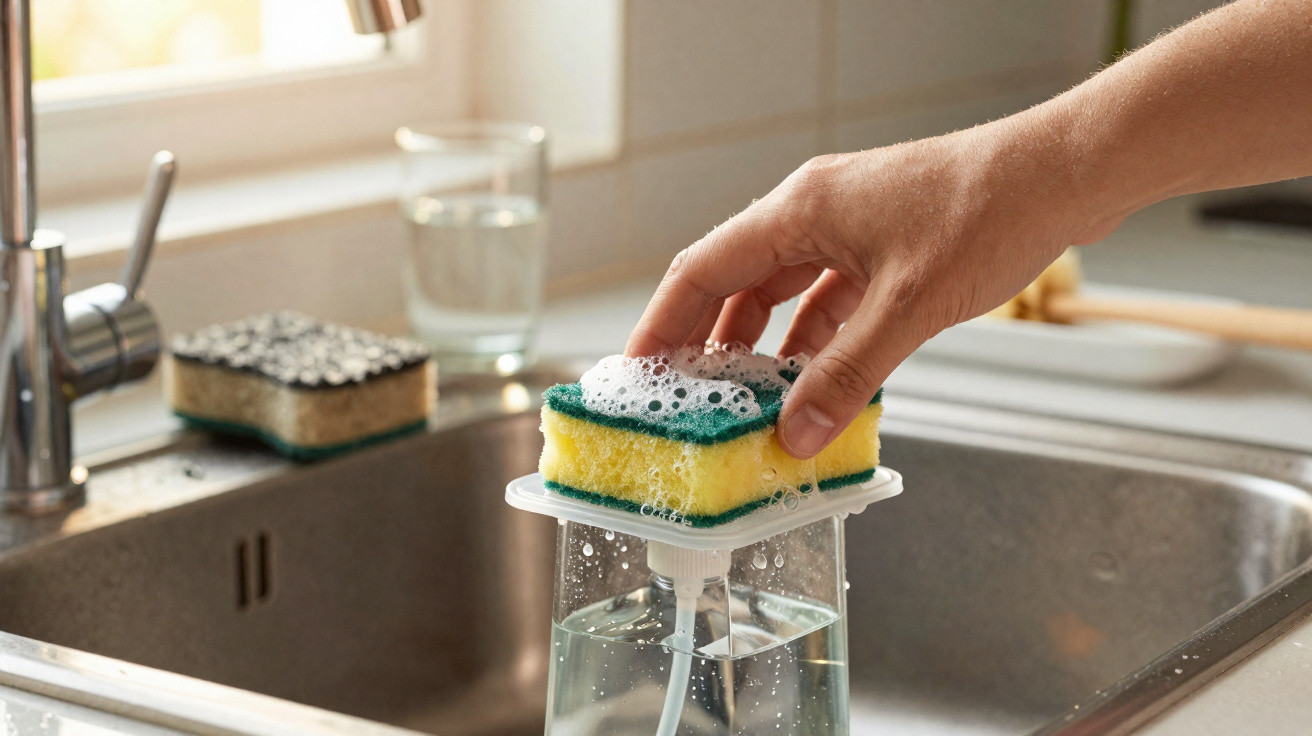
| Design | Lower container holds washing-up liquid, with a top surface that acts as a rest |
| Operation | Place the sponge on top and press down by hand |
| Function | A measured portion of washing-up liquid is pumped directly into the sponge |
| Size | approximately 10 × 10 × 15 centimetres, with a non-slip base |
| Price | under 3 euro, sponge included |
The thinking is that the sponge no longer sits somewhere in a wet sink, but rests elevated on the dispenser. That allows air to circulate while water drips down. Users also report that excess water collects in the lower section, which can be tipped out easily, making the container simple to clean.
"The dispenser saves washing-up liquid, reduces puddles around the sink, and helps the sponge dry."
Less washing-up liquid, less mess around the sink
In day-to-day use, this creates two effects. First, only as much washing-up liquid as you actually need gets into the sponge. With a standard bottle, many people end up dispensing far too much. The dispenser effectively enforces clear portions - one or two presses are often enough per wash-up.
Second, the area around the sink stays tidier. Instead of sticky bottles and wet sponges left on the stainless-steel surface, you have a compact block that can be wiped down quickly or taken apart for cleaning. Users often describe it as feeling "tidier" and "more practical" than what they had before.
Does the washing-up liquid dispenser really improve hygiene?
The Action dispenser is not a disinfecting device. It does not kill germs in the sponge. What it changes is the environment: less standing water, better drying, and fewer sponges left lying in puddles or on crusty surfaces.
Used sensibly, the gadget offers several upsides:
- The sponge sits up high and can dry faster.
- Less washing-up liquid residue and grime builds up on the sink area.
- The container itself is emptied and cleaned regularly.
- The measured dosing saves cleaning product and is gentler on the skin.
Even so, hygiene specialists would still not recommend keeping a sponge for long. The Furtwangen researchers make it clear that short replacement intervals - around weekly - are the best protection against heavy germ build-up.
"Gadget or not: if you keep the sponge for months, you still risk a nasty, germy surprise when washing up."
How to get the most out of the 3-euro helper
If you buy the dispenser, it helps to follow a few ground rules:
- Position the dispenser close to the sink, but do not leave it in the splash zone.
- Only fill the container to a level that makes refilling or replacing it easy when needed.
- After washing up, squeeze the sponge out firmly and place it on top; do not leave it in water.
- Empty the lower section regularly and rinse it through with hot water.
- Use a new sponge after a week at the latest.
If you are very sensitive, or if someone in the household is immunocompromised, you can also use disposable paper for heavily soiled tasks (raw meat, eggs, cat food) or a separate cloth that is washed more frequently.
What is behind the “bacteria fear” by the sink
Bacteria themselves are not unusual; every home is full of them. It only becomes an issue when disease-causing germs collect in large numbers in critical places: on food-prep surfaces and on items that come into direct contact with the mouth, such as cutlery or glasses.
A heavily contaminated sponge can then become a distributor. It wipes over the worktop, the chopping board, a child’s cup - and microbes are left behind everywhere. This risk rises particularly in warm kitchens and where sponges are replaced infrequently.
For healthy adults, this usually does not end dramatically. For small children, older people, or anyone with a weakened immune system, stomach bugs and similar complaints can be much more taxing. If you want to reduce the risk, a few simple behaviour changes can already make a big difference.
Alternative strategies for a clean kitchen
Action’s dispenser is only one way to make washing up more hygienic. Other approaches include:
- Wash dishes sooner so food scraps do not dry on.
- Use separate cloths for floors, bathrooms and the kitchen - not one “all-purpose cloth” for the whole home.
- Wash tea towels and cloths regularly at 60 degrees.
- After contact with raw meat, clean wooden boards and knife blades immediately.
If you have a dishwasher, you can put plates, glasses and cutlery through it more often and use the sponge only for specific tasks. That automatically reduces the sponge’s germ load because it is used less.
The core message from hygiene experts remains: do not panic, but adjust your routines. A kitchen sponge does not have to be a health risk - provided it is replaced in good time, allowed to dry properly, and practical helpers like the low-cost dispenser by the sink do their part.


Comments
No comments yet. Be the first to comment!
Leave a Comment