
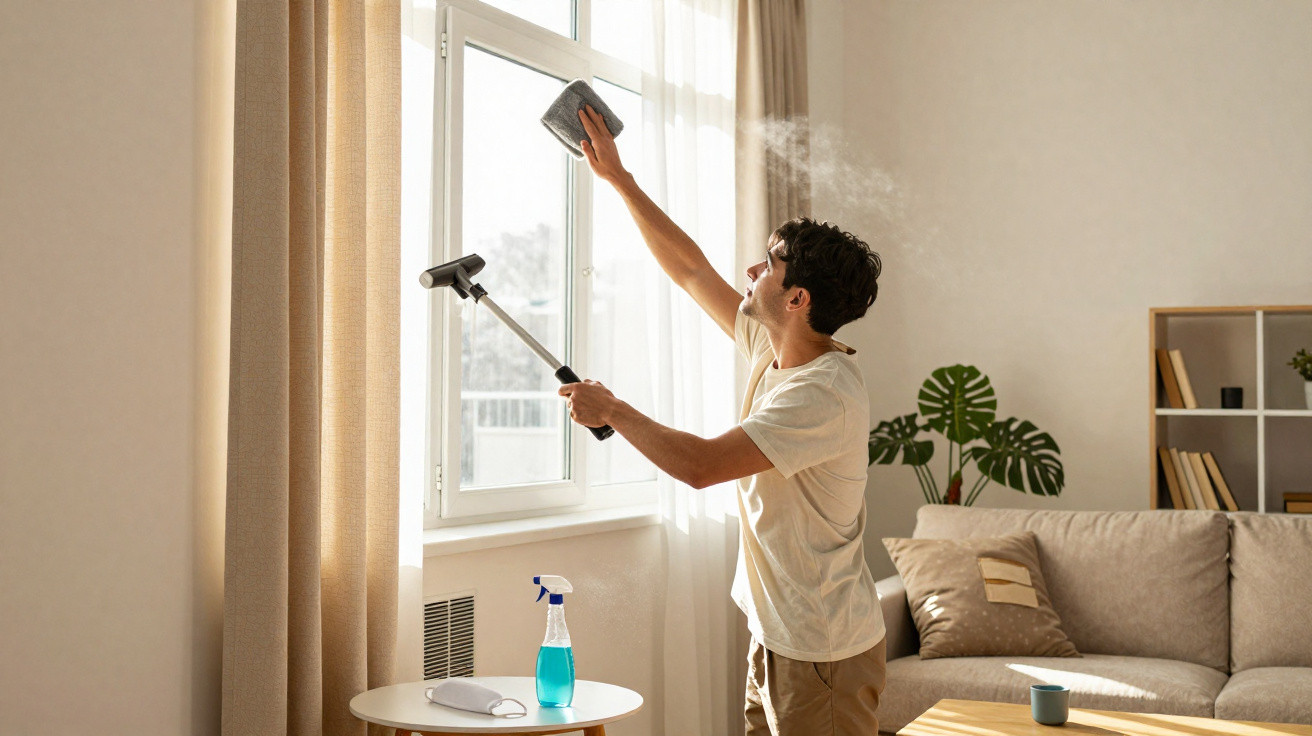
The reason is often not that you clean too rarely, but that two areas simply get overlooked in day-to-day life. They can harbour more dust than underneath any bed - and from there it spreads quietly around the whole home and into your airways.
Why dust settles where nobody cleans
Most people focus their cleaning on horizontal surfaces: floors, shelves, tables. That makes sense because that’s where dirt is visible. Dust, however, doesn’t follow that logic. It stays suspended in the air, clings to fabrics, and catches on edges and grilles.
The spots you rarely touch - or never think about - turn into genuine dust magnets. Dust can sit there undisturbed for weeks, sometimes months, and then gets stirred back up with every movement of air.
"In many homes, indoor air is two to five times more polluted than outdoor air - and dust and its companions play a central role in that."
Household dust is not just grey fluff. It can also contain:
- Pollen
- Pet hair and skin flakes
- Mould spores
- Residues from cleaning products and chemicals
- Fine particles from textiles and plastics
If you have allergies, asthma, or other respiratory issues, this mix can trigger stronger reactions. Children, older people, and anyone with sensitive airways are particularly affected.
First dust trap: curtains - the living room’s grey lungs
Curtains and drapes are among the dustiest items in a home. They often hang for months in front of windows and patio doors, sitting right in the path of airflow.
Each time you open a window - and every person walking past - stirs up particles that then lodge in the fabric. Textiles hold on to dust like a filter rather than repelling it. You usually won’t notice it for a long time: the material looks clean, even when it’s loaded with fine particles.
"If you never clean your curtains, you’re breathing air every day that’s passing through a hidden ‘dust filter’."
How often should curtains really be cleaned?
A simple schedule is enough to reduce dust levels noticeably:
- Once a month: Take the curtains down and shake them vigorously outdoors.
- Every three months: Wash gently in the machine (typically 30 °C on a delicate or gentle cycle).
- In between: Vacuum with a handheld vacuum using a soft brush attachment.
It may sound like a lot, but in practice it only takes a few minutes. Shaking them outside removes the top layer of dust that would otherwise be blown back into the room with the next draught.
Tips depending on curtain material
- Lightweight curtains and voile: Wash in a laundry bag, use a low spin speed, and hang while damp - this often makes ironing unnecessary.
- Heavy drapes: Vacuum regularly, roughly every four to six weeks; wash or have them cleaned once or twice a year.
- Dry-clean only: Use a handheld vacuum between professional cleans; in homes with heavy dust exposure (busy roads, pets), shorten the cleaning interval.
If you have cats or dogs, it’s worth vacuuming or changing curtains more often. Pet hair binds with dust and can cling stubbornly to the fabric.
Second dust trap: ventilation grilles - the invisible dust depot in the wall
Even more underestimated than curtains are ventilation grilles and air ducts. Whether it’s a bathroom extractor fan, a wall vent in a bedroom, or a more complex ventilation system: anywhere air flows regularly, dust will collect.
Particles build up first on the outside of the grille and then migrate into the ducts. In places you rarely look, thick layers can develop over the course of months.
"A dusty ventilation grille spreads polluted air into every room - instead of cleaning it."
Why dirty ventilation grilles become a health issue
Grilles and ducts that are heavily clogged can:
- restrict air circulation
- trap moisture within the system
- encourage mould growth in the shafts
- continually blow irritating particles back into the room
Possible consequences include irritated mucous membranes, a scratchy throat, dry eyes, headaches, and worse allergy symptoms. Many people assume it’s a cold or high pollen levels - and rarely suspect the unremarkable grille above the bathroom door.
How to clean ventilation grilles in just a few minutes
You can handle the basic clean at home without calling a specialist company:
- Switch off the power if there is an electric fan fitted.
- Carefully remove the grille (undo screws or release clips).
- Vacuum loose dust using a brush attachment.
- Soak the grille in warm soapy water and wipe with a cloth.
- Let it dry thoroughly, then refit it.
Plan to do this at least every three months. If you have a large household, pets, or live on a busy road, an even shorter interval is worthwhile.
When professionals need to step in
Complex ventilation systems with multiple filters and long duct runs can’t be fully cleaned DIY. At the latest, if:
- there’s a clear smell of mould coming from a duct
- you can see dark deposits inside
- residents complain of ongoing breathing difficulties
…a specialist should inspect and clean the ducts. A professional service every one to two years can make sense, particularly in modern, very airtight buildings.
How to build a sensible cleaning routine for dust hotspots
If you want to use your time effectively, it’s not about mopping the floor even more often - it’s about adding the quiet dust traps into your plan. A realistic routine could look like this:
| Task | Interval |
|---|---|
| Shake curtains vigorously | monthly |
| Wash or clean curtains | every three months |
| Clean ventilation grilles | every three months |
| Handheld vacuum on upholstered furniture | weekly |
People who stick to this routine often notice changes within a few weeks: less dust settling on furniture, air that feels less “stuffy”, and some even report calmer nights without a tickly cough.
How to reduce dust overall in the home
The two major dust traps are only part of the issue. A few simple additions can further ease the burden:
- Use doormats: Place them both outside and inside the front door to significantly reduce dirt coming in.
- Limit textiles: Rather than scattering throws and cushions everywhere, use a smaller number on purpose and wash them regularly.
- Ventilate regularly: Brief, frequent “shock ventilation” (opening windows wide) refreshes the air without cooling the home too much.
- Check the vacuum filter: A full or cheap filter can blow fine particles back out instead of trapping them.
People with allergies should also consider smooth flooring instead of large carpeted areas and change bed linen more frequently. A lot of dust settles at night right in your breathing zone.
Why paying attention to the “invisible” spots is worth it
At first glance, dust seems harmless - a bit of grey here, a few fluff balls there - more annoyance than danger. But when you look at common health complaints in many households, the connection becomes clear.
The good news is you don’t need to become a cleaning professional every day. If you deliberately build curtains and ventilation grilles into your routine, you can gain a noticeable improvement in quality of life with relatively little effort. You don’t always notice clean air straight away - but you certainly notice bad air.

Comments
No comments yet. Be the first to comment!
Leave a Comment