
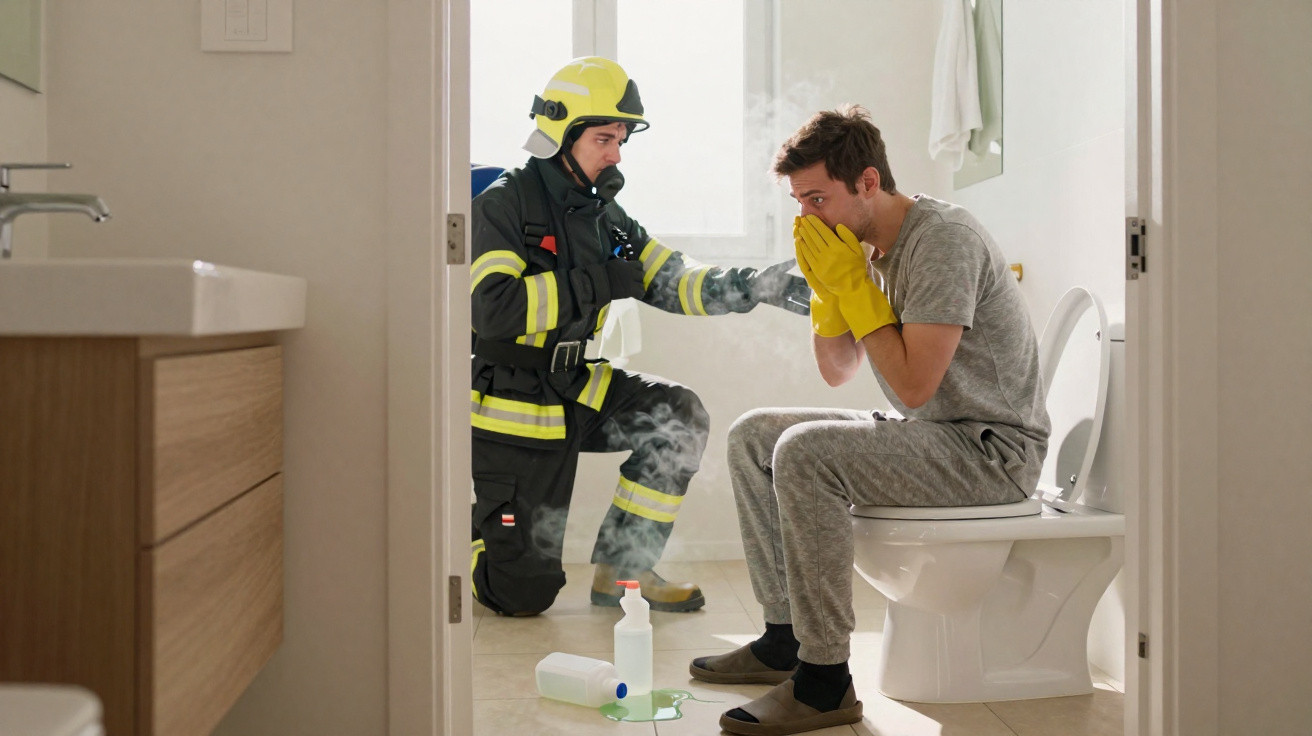
A routine cleaning job ends in a dramatic rescue operation - highlighting a household hazard that is often underestimated.
A 35-year-old man simply wanted to deep-clean his bathroom. A short time later he was gasping for air and 13 firefighters had been deployed. In Albi, in the south of France, the combination of two everyday cleaning products created a dangerous toxic-gas cocktail. The incident underlines how quickly ordinary housework can become a medical emergency when chemical products are mixed incorrectly.
Bathroom cleaning turns into an emergency: what happened in Albi
The accident happened in a residential area of Albi on a Thursday evening at around 6 pm. According to initial reports, the man was trying to remove mould from his bathroom window frames and the grout. To do that, he reached for two commonly used products: household bleach and a vinegar-based cleaner.
To make the job easier, he poured both liquids into a single spray bottle. After only a few sprays, a pungent, mist-like gas began building up inside the enclosed, poorly ventilated bathroom. The 35-year-old quickly felt intense burning in his eyes and airways, followed by severe coughing and the sensation that he could no longer breathe properly.
Neighbours or relatives called the emergency services. Soon afterwards, a large number of responders arrived.
"13 firefighters with three vehicles had to be deployed to treat a single patient and make the flat safe."
The crews removed the man from the bathroom, ventilated the rooms and used monitoring equipment to check the gas concentration. He was then taken to hospital. His condition was described as serious but stable.
How cleaning products can suddenly produce toxic gas
At the heart of the issue is a chemical reaction. Bleach is usually based on sodium hypochlorite, while vinegar cleaners are acidic. When the two come into contact, chlorine gas is released. This is a substance that was used as a chemical weapon in the First World War - it has no place in a bathroom.
The impact on the body depends on the concentration and how long the exposure lasts. Even brief exposure can cause the mucous membranes to react very strongly.
- Irritation of the eyes and nose
- Coughing fits and tightness in the chest
- Breathlessness, up to and including a fear of suffocation
- Pain or burning in the throat
- In severe cases, damage to the lungs
In small, poorly ventilated spaces like bathrooms, the gas concentration can rise sharply within seconds. Anyone cleaning there breathes the fumes directly - often without being able to leave in time, because the symptoms can begin so abruptly.
Why these household accidents happen so easily
In many homes, bleach and vinegar-based cleaners are seen as “miracle products” against limescale, mould and stubborn dirt. Out of habit, many people use more than one product at once in the hope of boosting the effect. The risk behind that is often barely understood.
In the Albi case, the spray bottle mattered too. Spraying creates fine droplets and aerosols, helping the gas spread through the room even faster. Add the typical bathroom set-up - a small window, perhaps only slightly open, the door shut, and very little air movement - and the danger increases.
"A few sprays, a few breaths - that’s all it takes to put a healthy adult into serious breathing difficulty."
Many people also skim the safety instructions on the bottle - or do not read them at all. Warnings such as “do not mix with other cleaners” can feel abstract, until something goes wrong.
What the fire service says about incidents like this
Fire and rescue crews are familiar with similar call-outs from real life. Toxic vapours do not only arise in fires; they can also be produced during cleaning in the kitchen, bathroom or cellar. Fire services repeatedly stress that cleaning products should never be combined “by feel”.
Common high-risk combinations include:
- Bleach with acidic cleaners (for example, products for limescale or urine scale)
- Bleach with descalers for toilets or taps
- Multiple strong degreasers used in enclosed spaces
- Unknown old chemicals from a cellar that get mixed “just quickly”
In an emergency, crews follow a strict hazardous-materials approach: ventilate, clear the area, use gas monitors, wear protective equipment, move affected people into fresh air and provide medical care. That is exactly what was required in Albi.
How to respond correctly if a similar accident happens
If you suddenly inhale strong fumes while cleaning, do not wait to see whether it “gets better”. Every minute matters to prevent further harm. The key steps are easy to remember:
- Stop cleaning immediately and leave the room.
- Open windows and doors wide if you can, without taking deep breaths.
- Move the affected person into fresh air and keep them calm.
- Call the emergency services if breathlessness, chest pain or severe irritation occurs.
- Leave the cleaning products where they are; do not handle them further and do not add any other chemicals.
Under no circumstances should you try to “clean away” the smell or neutralise it with another product. Additional reactions could make the situation worse.
Tips for safe cleaning: what must not be mixed
If you use multiple products when cleaning at home, a few simple rules can help. They are the difference between a clean result and a health hazard.
| Combination | Risk |
|---|---|
| Bleach + acidic cleaner (e.g. vinegar, descaler) | Formation of chlorine gas, irritates airways and eyes |
| Bleach + ammonia-based cleaner | Formation of chloramines, severe irritation of the lungs and mucous membranes |
| Multiple strong drain cleaners | Violent reactions, heat generation, corrosive fumes |
| Unknown old chemicals from a cellar or garage | Unpredictable reactions, poisoning or fire risk |
A safe rule of thumb: use only one strong product per cleaning task, then rinse thoroughly with water before using a different product.
Why this topic is also relevant for Germany
The incident in Albi may feel far away, but it reflects a hazard that also exists in German households. The products differ only slightly, and similar mistakes in use occur. Particularly at times when many people disinfect more and clean “more thoroughly than before”, the risk of misuse increases.
Poison information centres in Germany have reported calls for years about inhaled cleaning fumes. Fire and ambulance services are not always contacted - many incidents remain hidden, even though those affected experienced clear symptoms.
What the technical terms mean
The substance produced in this incident - chlorine gas - is strongly oxidising. It reacts with moisture in the airways and forms irritating acids. These attack the mucous membranes and, at high doses, can damage lung tissue.
Chlorine-based bleach is often sold as a disinfectant and is considered highly effective against germs, mould and discolouration. Vinegar cleaners, by contrast, are valued for tackling limescale and light soiling. Both products have a place in the home - but only when kept strictly separate.
If you are unsure, it is better to use mild, ready-to-use multipurpose cleaners rather than mixing up “stronger solutions” yourself. The hoped-for extra cleaning power usually fails to appear, while the risks increase significantly.

Comments
No comments yet. Be the first to comment!
Leave a Comment