
Surprisingly large numbers of germs can gather inside its fibres.
Anyone who washes up every day usually reaches for the sponge without thinking. That everyday habit is now coming under increasing scrutiny from hygiene specialists and researchers. Studies suggest the damp helper is a genuine germ trap-sometimes even worse than the toilet-right where plates, glasses and cutlery are cleaned. A low-cost kitchen item from Action is meant to ease at least part of the issue, without forcing you to completely change your washing-up routine.
Why the classic washing-up sponge becomes a hygiene problem
At first glance, the colourful sponge by the sink looks entirely harmless. In reality, the mix of moisture, warmth and leftover food creates ideal conditions for microorganisms.
"Some kitchen sponges contain more bacteria than a toilet seat-and they’re used exactly where plates, glasses and cutlery are cleaned."
A research team at Furtwangen University of Applied Sciences reported in a widely noted study that germ levels in a sponge rise rapidly after only a short period of use-and can repeatedly climb back towards the starting level, even when people attempt to “clean” it.
Why rinsing, the microwave and vinegar only help to a limited extent
Many households try to salvage the sponge: rinsing it under hot water, putting it in the microwave, or soaking it generously in vinegar. Researchers say these approaches don’t solve the problem in the long run.
- Thorough rinsing: removes visible grime, but leaves a large proportion of bacteria deeper inside the fibres.
- Microwave: can kill off some germs, but only if the sponge is moistened and heated very evenly-which rarely happens in everyday use.
- Vinegar or washing-up liquid: can reduce germs in the short term, but doesn’t change the fact that the sponge stays warm and wet.
That lingering dampness is precisely what turns it into an ideal breeding ground. Bacteria multiply again, and the next time you wash up they end up on plates, glasses and worktops.
What hygiene experts recommend
That’s why specialists advise clear rules for handling washing-up sponges:
- Replace regularly: in a household, use a new sponge at least once a week.
- Let it dry properly in between: don’t leave the sponge sitting in stagnant water; instead, let it drain and air-dry.
- Consider alternatives: washable cloths or brushes that can be cleaned at high temperatures.
Even washable microfibre options only partially address the underlying issue: although they can be machine-washed, in day-to-day use they often end up lying around damp as well. Hygiene therefore depends not just on the material, but above all on how it’s used.
What Action’s €3 gadget is supposed to change at the sink
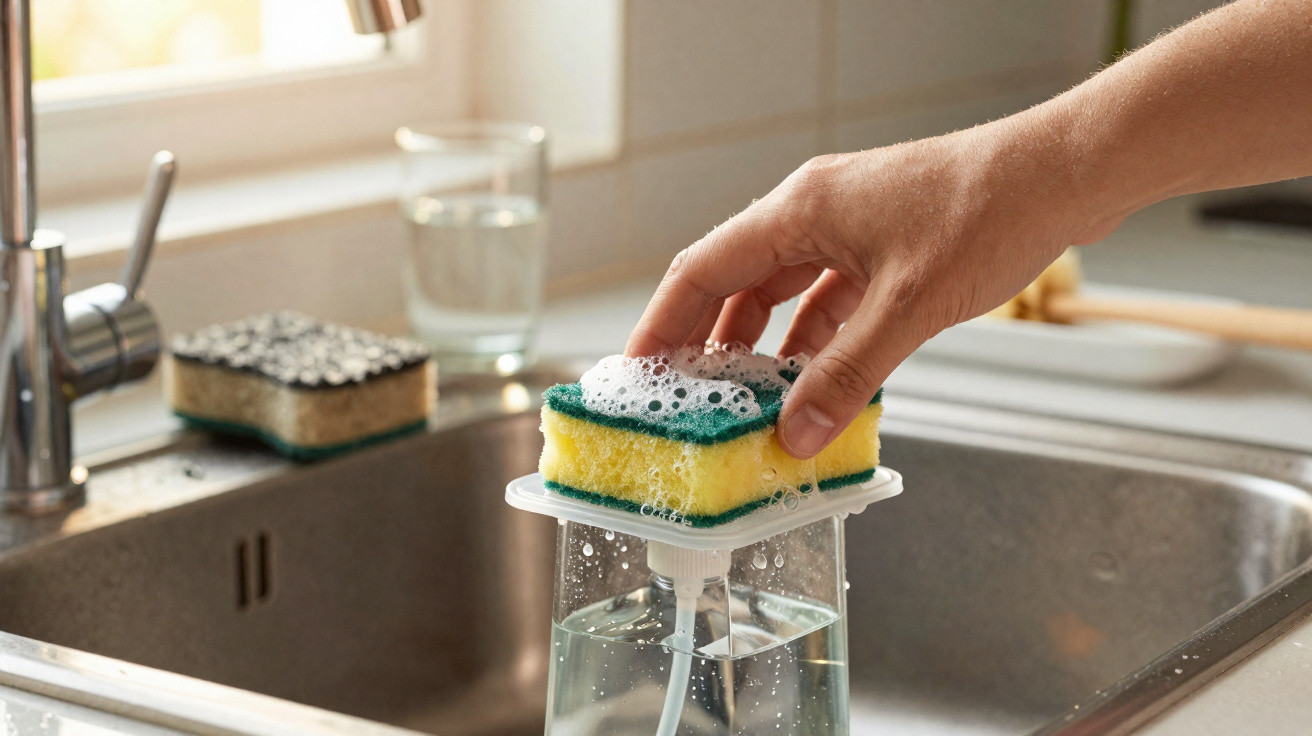
Against this backdrop, a small accessory from Action’s household aisle has been attracting attention: a washing-up liquid dispenser with a storage platform for the sponge, costing under three euros.
The concept is straightforward. At the bottom there’s a container for washing-up liquid, with a platform above it. When you press the sponge down from the top, a small mechanism pumps a measured amount of liquid upwards. At the same time, the sponge sits raised up rather than in a puddle.
"The idea: less product, less grimy water, faster drying-and therefore indirectly less germ stress."
The manufacturer gives approximate dimensions of around 10 x 10 x 15 centimetres, including a non-slip base and a matching sponge. Overall, it looks more compact and tidier than the typical half-empty-bottle chaos at the edge of the sink.
What users appreciate about the dispenser
In user reports, three points come up again and again:
- Appearance: many find it noticeably more presentable than a cut-open plastic bottle by the sink.
- Dosing: with one or two quick presses, only as much washing-up liquid ends up on the sponge as is actually needed.
- Water catchment: drips collect in the lower container and can be emptied and cleaned separately.
If you regularly “accidentally” pour too much washing-up liquid into the sink and then spend ages rinsing away foam, this setup can reduce both consumption and the sponge’s contact with dirty washing-up water.
Does the dispenser really help against bacteria?
The dispenser itself doesn’t kill germs. It isn’t a disinfecting device; it’s an organiser that makes two things easier:
| Problem | How the dispenser can help |
|---|---|
| Sponge sits in dirty water | Sponge rests raised up; water collects separately in the container |
| Sponge dries poorly | More air contact, less continuous dampness |
| Excessive washing-up liquid use | Metered release per press |
| Dirty area around the sink | Unit can be taken apart and cleaned |
It only becomes more hygienic if people use the system properly: wring out the sponge after washing up, place it on the top platform, empty and rinse the container regularly, and still change the sponge often.
"Experts emphasise: anyone who replaces the sponge weekly and keeps it as dry as possible in between reduces the risk significantly-with or without a dispenser."
How to use sponge and dispenser more hygienically day to day
If you don’t want to switch entirely to different cleaning tools, a few simple routines can make a big difference. The €3 gadget fits into everyday life with relatively little effort.
Practical everyday tips for better hygiene at the sink
- Don’t fill the washing-up liquid container right to the brim; top it up more often and clean it as you go.
- After each wash-up, wring the sponge out firmly before putting it on the dispenser.
- Wash out the catchment container at least once a week with hot water and washing-up liquid.
- Use a washing-up brush alongside it, as it dries faster and is easier to clean.
- For particularly sensitive kitchen tasks (e.g. raw meat), use a separate sponge and dispose of it even more frequently.
If you have a dishwasher, you can put heavily soiled items straight in and only use the sponge for light residues. This reduces the amount of time the sponge is in contact with greasy, sticky food remnants.
Why kitchen hygiene is often underestimated
Many people are meticulous about the bathroom, while the kitchen gets treated as an afterthought. At first that seems logical: the kitchen rarely smells unpleasant and everything looks tidy. That’s exactly where the misconception lies.
Bacteria are invisible and multiply particularly well wherever organic material is present-meaning anywhere food is handled. The sponge becomes a central hub: it touches chopping boards, worktops, cutlery and plates, spreading germs like a stamp.
When damp sponges are combined with lukewarm indoor temperatures, conditions arise in which pathogens such as certain gut bacteria can survive well. People who are more vulnerable-older adults, sensitive individuals, or young children-can react more quickly to such germs with stomach upsets.
Practical alternatives and complements
Alongside the washing-up liquid dispenser, there are other approaches that work well together:
- Washing-up brushes: dry out faster and are easier to replace or clean in the dishwasher.
- Washable cloths: machine-wash at 60°C and then allow to dry completely.
- Stainless-steel "soap" and cleaning stones: less reliance on foam, more mechanical cleaning, which reduces the burden on the sponge.
No product removes the basic rules of hygiene. An inexpensive dispenser can make daily washing up more pleasant and a bit cleaner, but it doesn’t replace regular sponge changes, thorough drying, or a critical look at anything that stays damp in the kitchen.
Comments
No comments yet. Be the first to comment!
Leave a Comment