
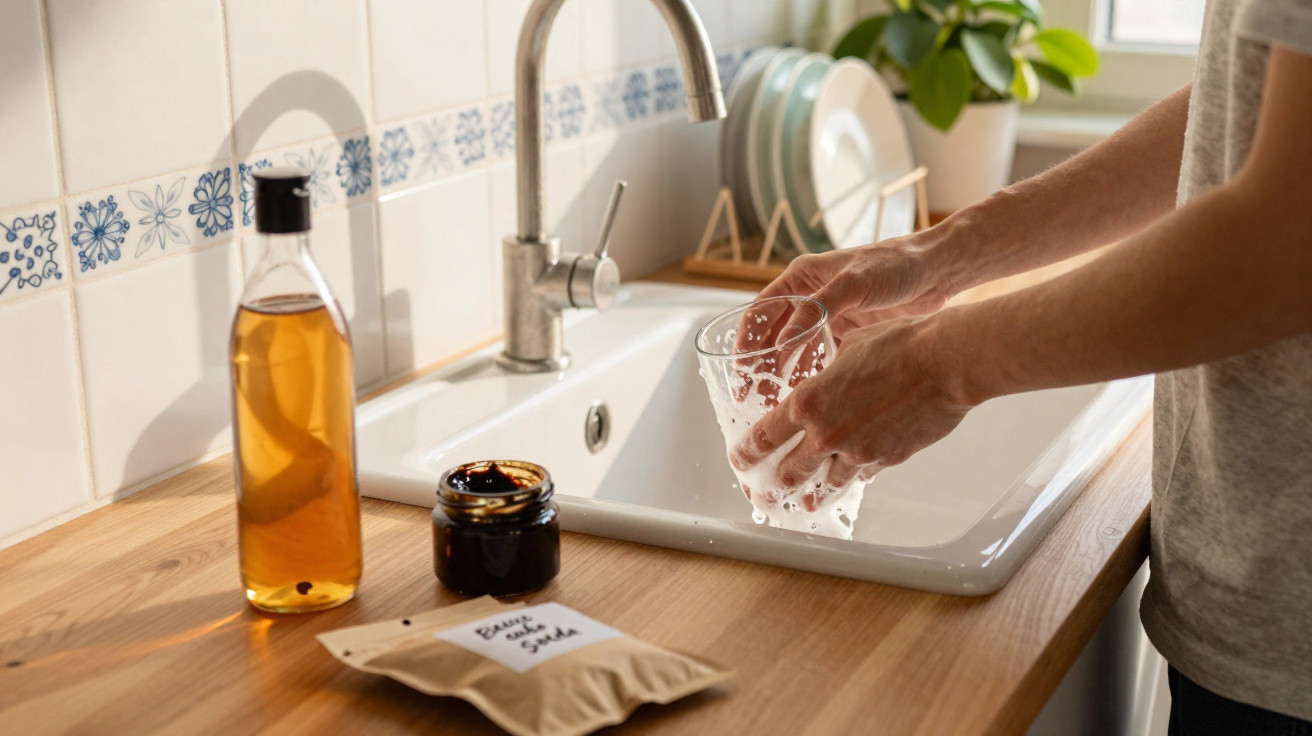
A quick look along the washing-up aisle in any supermarket tells you everything: brightly coloured bottles, bold claims, and lengthy ingredient lists. At the same time, concerns keep growing - microplastics, harsh surfactants, and plastic waste. More and more people are asking themselves a simple question: isn’t there a way to wash dishes that’s cheaper, kinder to the environment, and gentler on the skin? The answer is yes - and it comes down to a blend made from just three everyday ingredients.
Why conventional washing-up liquid is facing increasing criticism
Washing-up liquid is one of those products most people use nearly every day without giving it much thought. That’s precisely the issue: the impact on both the environment and your skin can build up over time.
- Chemical surfactants: They cut through grease effectively, but they also enter rivers and lakes via wastewater.
- Preservatives and fragrances: These often irritate sensitive skin and may encourage allergic reactions.
- Plastic bottles: Empty containers can only be recycled to a limited extent and frequently end up in general waste.
Anyone who does a lot of washing up by hand will recognise the signs: cracked fingertips, dry skin, and an unpleasant lingering smell of artificial perfume. It’s no surprise that straightforward, natural alternatives are enjoying a real surge in popularity.
"A homemade washing-up liquid based on just a few household staples cuts costs, is kinder to the skin, and reduces plastic waste in the kitchen."
The basic idea: a washing-up mix from three simple household staples
At the heart of this recipe are three components that work especially well together: black soap, bicarbonate of soda (baking soda), and washing soda (soda crystals). In many chemists and supermarkets you’ll find all three in the cleaning aisle - usually plain-looking, and typically inexpensive.
Black soap as a mild base
Black soap forms the foundation of this liquid washing-up mix. Traditionally it’s made from plant oils such as olive oil or linseed oil, and it’s considered gentle yet thorough.
- cleans without leaving a greasy film behind
- is noticeably more skin-friendly than many harsh washing-up liquids
- usually comes with a shorter ingredient list
People with sensitive or cracked skin often benefit in particular, because washing up doesn’t dry the hands out as aggressively.
Bicarbonate of soda: a fine cleaner with a deodorising effect
Bicarbonate of soda works like a mild scouring agent. Its fine particles help lift dried-on food without scratching plates or glasses. It also neutralises odours - handy for pans that have cooked fish, garlic, or cabbage.
Washing soda: a degreaser for stubborn residue
Washing soda provides the real degreasing strength. It supports what’s known as saponification: fats and oils combine with the soap so they can be rinsed away more easily with water. That means fried-on grease on the base of a frying pan can loosen without you having to scrub for minutes on end.
"Soap cleans, bicarbonate polishes gently, washing soda cracks grease - together they create a surprisingly effective washing-up mix."
How to mix about 500 ml of homemade washing-up liquid
For a standard bottle holding roughly half a litre, you only need small amounts of these household ingredients. The mixture comes together in just a few minutes.
Basic everyday recipe
For about 500 ml you’ll need:
- 1 tablespoon bicarbonate of soda
- 1 tablespoon washing soda
- about 2 cm of black soap in the bottom of the bottle (liquid)
- hot tap water
- an empty washing-up liquid bottle or a glass bottle with a cap
Method:
- Using a funnel, add the bicarbonate of soda and washing soda to the empty bottle.
- Pour in the black soap until the bottom is covered to a depth of about 2 cm.
- Top up with hot water, leaving a little space at the top so the liquid can be shaken properly.
- Close the bottle and shake vigorously until all the crystals have fully dissolved.
You can use the mixture straight away. Usually a small squirt into the washing-up bowl is enough, because the solution is quite concentrated.
Variation with grated soap flakes for a more “classic” washing-up feel
If you prefer a thicker consistency and a little more foam, you can adapt the basic recipe. A popular variation in many households at the moment involves dissolving grated bar soap in hot water as an extra step.
The thinking is simple: the soap flakes make the liquid creamier, the foam lasts longer in the bowl, and it feels more familiar - especially for anyone who has learned to associate lots of foam with “good cleaning power”.
How well does the homemade washing-up liquid actually clean?
Feedback from households that have been using the mixture for months points to a consistent outcome: plates, glasses, and pans come up clean, greasy marks disappear, and stubborn crusts lift far more easily.
- dishes look clean and shiny, without streaks
- greasy residue loosens well even at lower water temperatures
- there’s less foam overall, but it’s denser - and that’s enough for effective cleaning
There’s also a practical side benefit: the waste pipe tends to stay cleaner. Because of the bicarbonate of soda and washing soda, fats and food residues are less likely to build up in the trap. As a result, the typical musty smell from the sink occurs less often.
"Less foam doesn’t mean less cleaning power - the mix works in the water, not in the foam."
Benefits for your budget, health and the environment
Significantly lower cost per litre
Each ingredient is inexpensive, and you use them sparingly. If you buy the basics in larger packs, you can end up paying only a few pence per litre of washing-up liquid you make. Compared with branded supermarket products, a household can easily save a double-digit amount in pounds over the course of a year - and families who wash up a lot can save considerably more.
Less plastic, fewer problematic substances
Mixing your own washing-up liquid means reusing the same bottle again and again, which noticeably reduces plastic consumption. The ingredients typically contain no colourants, no strong perfumes, and far fewer questionable additives. People with sensitive skin often report that redness and tight, uncomfortable hands fade after a few weeks.
What you should keep in mind when handling washing soda
Washing soda is a powerful degreasing substance. That’s exactly why it’s useful for cleaning, but it can also dry out the skin. A few straightforward precautions are enough to stay on the safe side:
- wear washing-up gloves if you have sensitive skin
- avoid breathing in the crystals and reseal the pack straight away
- store the product out of children’s reach
For delicate surfaces such as untreated wood or aluminium, the washing-up water is only suitable to a limited extent. In these cases, wipe briefly afterwards and dry immediately.
Practical tips for everyday use in the kitchen
Dosing and storage
Because the mixture is so concentrated, one squirt into the washing-up bowl is often plenty. If you dispense it directly onto a sponge, use only a small drop. Using too much can create a smeary film that only disappears again with lots of water.
It’s best stored in a dark place and not too cold. If the washing-up liquid thickens after a few days, simply thin it with a little cold tap water. A quick shake and it’s ready.
What else the homemade washing-up liquid is useful for
This mix doesn’t only belong in the washing-up bowl. Many people also use it elsewhere around the home, for example:
- cleaning the sink itself
- for a ceramic hob or gas hob (wipe over with a damp cloth afterwards)
- for tiles and kitchen worktops
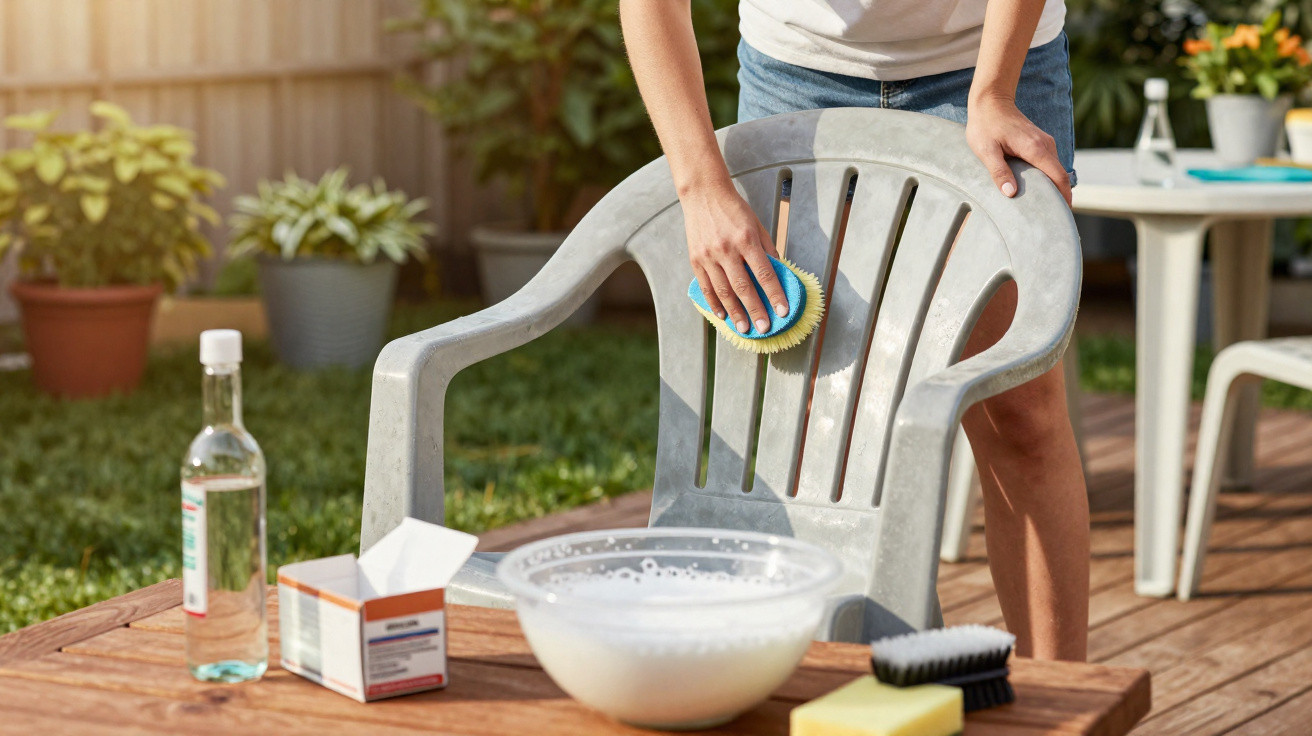
- for grubby plastic chopping boards and bowls
Take care with sensitive natural stones such as marble or limestone, as bicarbonate of soda and washing soda can damage the surface.
Why simple household staples are in demand again for cleaning
Many people feel overwhelmed by the constant stream of specialist cleaners - one new product for every corner of the house. The renewed focus on a few clear basics such as soap, bicarbonate of soda, and washing soda is partly a reaction to that fatigue.
Once you understand the ingredients and what they do, you can combine them with intention: a little more soda for heavily greasy frying pans, a little less for glasses or delicate decorative plates. Over time, that builds a reliable feel for the right balance, rather than relying entirely on advertising claims.
In many households, these three basic ingredients effectively replace several products at once: washing-up liquid, drain cleaner, and an extra cleaner for pots and pans. That saves cupboard space, reduces unnecessary purchases, and helps ensure less chemistry ends up going down the drain unchecked.


Comments
No comments yet. Be the first to comment!
Leave a Comment