
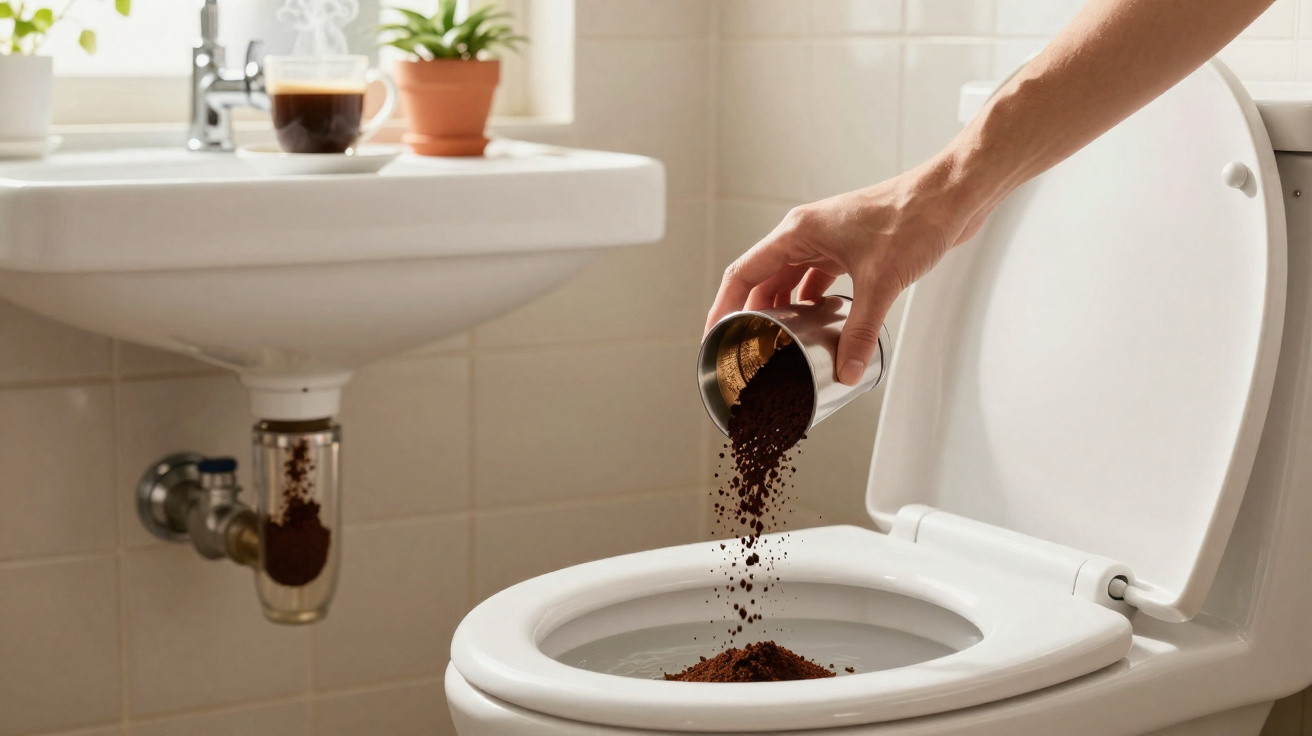
A new cleaning trend is doing the rounds online: coffee grounds are no longer going in the bin, but straight into the toilet - with consequences.
In plenty of bathrooms, the morning coffee routine no longer ends at the sink. Instead, a spoonful of used coffee grounds is tipped into the toilet bowl, spread around with the brush and then flushed away. Supporters claim it traps odours, cleans the bowl and even cuts down on waste. It sounds brilliant - but only at first glance.
How the coffee-grounds-in-the-toilet trend started
The idea can seem logical at first: rather than buying pricey toilet cleaning tablets, you use what you already have left over - the coffee grounds from your machine or filter. Across TikTok, Instagram and household groups, more and more videos promote this exact little ritual.
Typically, it goes like this: one tablespoon of damp coffee grounds is added to the bowl, worked around with the brush, left briefly, then flushed. Many users rave about a cleaner-looking bowl and a slightly fresher smell.
"The trend taps into three wishes at once: less chemistry, less waste, less money spent on cleaning products."
That is why people who favour “natural cleaning” often reach for this method. It is framed as a gentle scrub for the ceramic - and it feels satisfying because a kitchen by-product is supposedly being put to good use.
What coffee grounds in the toilet bowl actually do
On the visible surface of the bowl, coffee grounds can indeed have some effect. The fine grains lightly rub the surface and can shift mild discolouration or thin build-up. If you are tackling faint marks or fresh rings, you may see a quick improvement.
There is also the odour-dampening angle: many people already use coffee grounds in the fridge or shoe cupboard. The moist material can absorb airborne smells. In a toilet, the room may feel more pleasant for a while after brushing, particularly if the grounds sit in the bowl briefly.
- A mild scouring action from the grains
- Short-term neutralisation of unpleasant odours
- The feeling of “eco” cleaning without added products
However, that is where the benefits largely stop. The real issue is not the bowl itself - it is the pipework beyond it.
Hidden risk: what happens to coffee grounds in the drain
Unlike toilet paper, coffee grounds do not dissolve in water. The particles tend to sink, clump together and readily snag at narrow points in the pipe. Wastewater professionals often place coffee grounds in the same category as wet wipes: things that simply do not belong in the system.
Plumbers repeatedly describe similar situations: inside the pipework, coffee grounds mix with kitchen grease, limescale from the water and paper fibres. Over time this creates a solid plug that gradually reduces the flow area.
"A spoonful of coffee grounds can quickly become a hard mass when combined with grease and limescale - a problem you only notice once hardly anything drains away."
Particularly problematic are:
- Old pipework with already rough internal surfaces
- Blocks of flats with long, winding wastewater runs
- Homes with a cesspit or a small wastewater treatment plant
In these setups, even a small but regular amount of coffee grounds each week can be enough to worsen issues within a few months. The end result is not a cheap eco hack, but an expensive visit from a drain-clearing service.
When coffee grounds in the toilet are especially risky
If you are tempted to try the trend, you should understand your home’s plumbing first. Some systems are far less forgiving than others. Typical warning signs include:
- Gurgling noises from the toilet or basin
- Water briefly sitting in the bowl after flushing
- Frequent blockages or reliance on chemical drain cleaners
If any of this already happens from time to time, adding more solid material is a bad idea. In older blocks of flats, multiple flats share the same soil stacks. What goes into one toilet can cause trouble further down the line.
Owners of homes with a cesspit or a small wastewater treatment plant should also take particular care. In those cases, particles enter a limited system directly. Coffee grounds can settle at the bottom and interfere with how the system operates.
How to use coffee grounds sensibly - without harming the toilet
If you like the deodorising effect of coffee grounds, you do not have to send them through the toilet pipes. A straightforward alternative is to let the grounds dry, put them in a small dish and leave it in the bathroom. That way they can absorb odours from the air without putting any load on the drains.
Practical ways to use coffee grounds at home:
- Odour neutralisation: in a dish in the fridge, shoe cupboard or the loo
- Cleaning: as a gentle scrub for chopping boards (for example after onions or garlic)
- Garden: mixed into compost as a source of nutrients for the soil
- DIY cosmetics: in hand or foot scrubs (mixed with oil)
"The best place for coffee grounds is the compost, the garden or a little dish - not the toilet’s drainpipe."
If you still want to use them in the bowl, do so only very rarely, keep the amount small, and then flush with plenty of water. Warm water may help loosen other residue, but it will not dissolve the coffee grounds themselves.
Which alternatives genuinely protect your toilet
If you want to avoid harsh toilet cleaners, there are several options that do not burden the pipework:
- Citric acid dissolved in water for limescale rings
- Sodium bicarbonate (baking soda) combined with vinegar for a fresher smell
- Toilet brush used regularly before stubborn build-up forms
A consistent cleaning routine is more effective than repeatedly trying to rescue weeks of build-up with “miracle” fixes. If you give the bowl a quick brush more often, you will need much less chemical product - and no coffee grounds either.
Why the trend persists anyway
Many coffee-ground hacks thrive on social media visuals. In short clips, you only see the immediate effect: brown grounds in a white bowl, the brush swirling, then porcelain that looks clean. What you do not see are the pipe sections behind the wall, where tiny remnants can accumulate year after year.
There is also the feel-good element of supposedly reusing waste. With sustainability constantly in the spotlight, that message resonates with many people. Coffee leftovers seem harmless - they do not look like a problem material - yet they can become exactly that when regularly washed into the drains.
How much coffee grounds a household produces - and what that means
An average coffee drinker can easily produce several tablespoons of coffee grounds per day. If even some of that were consistently disposed of via the toilet, it would add up to several hundred grams per month. In a block of flats with many households, that amount multiplies quickly.
Over time, this creates deposits that do not simply break down and disappear. Drain operators repeatedly report blockages where grease, limescale and solid particles fuse into cement-like lumps. Coffee leftovers often play a quiet supporting role - later they are hard to identify, but their texture can help hold the blockage together.
So if you find the current trend tempting, it is worth looking at the whole chain: from filter to bowl to sewer. You can still get that pleasant smell in the bathroom with a dish of dried coffee grounds. Your pipework will be grateful if the spoonful goes into compost or the garden bed instead of into the toilet.


Comments
No comments yet. Be the first to comment!
Leave a Comment