
A modern dishwasher looks clean, sterile, almost clinical. With hot water, detergent and rinse aid, what could possibly survive? A research team put that assumption to the test. Their findings were clear: every appliance examined contained bacteria, yeasts and even “black” fungi on the rubber door seals. The upside is that a few simple, targeted actions can dramatically reduce this microbiome.
Why a dishwasher can become a germ hotspot
Inside a dishwasher, conditions swing to extremes: sometimes near-boiling heat, sometimes completely dry, with aggressive cleaning agents, salt and a distinctly alkaline pH in between. For many microorganisms, that combination is lethal - but for others, it creates ideal living conditions.
Germs thrive especially where moisture and grime collect: around the door seals, in the filter, on the spray arms and in concealed corners of the tub. In these spots they form so-called biofilms - slimy layers in which different bacteria and fungi live together and protect one another.
In one study, researchers found biofilms containing yeasts, “black” fungi and opportunistic bacteria on every rubber seal tested.
Common residents of such deposits include species from genera such as Pseudomonas, Escherichia and Acinetobacter. Many are harmless to healthy people, but they can cause infections if the immune system is weakened. Particularly persistent are specialised fungi that can cope with high temperatures and cleaning chemicals - for instance certain black yeasts that cling to damp rubber edges.
Low everyday risk - but it does not have to be that way
If you are healthy, there is usually little to worry about. Plates, glasses and cutlery are exposed to hot water and detergent during washing, and then dry out afterwards. The situation can be more sensitive if:
- there are young children in the household who frequently lick plates or cutlery
- someone with a severely weakened immune system lives in the home
- the dishwasher is used extremely rarely or almost always on the Eco programme
- door seals are visibly mouldy or slimy
Studies repeatedly suggest that when you open a still-hot dishwasher, tiny droplets and particles can enter the air in the room. They can be measured - but how much this contributes to infections in day-to-day life is not yet definitively settled. What is clear, though: the less biofilm there is in the machine, the fewer germs are available to break free in the first place.
Three targeted cleaning routines that reduce the germ load
1. Door seals: the favourite spot for black deposits
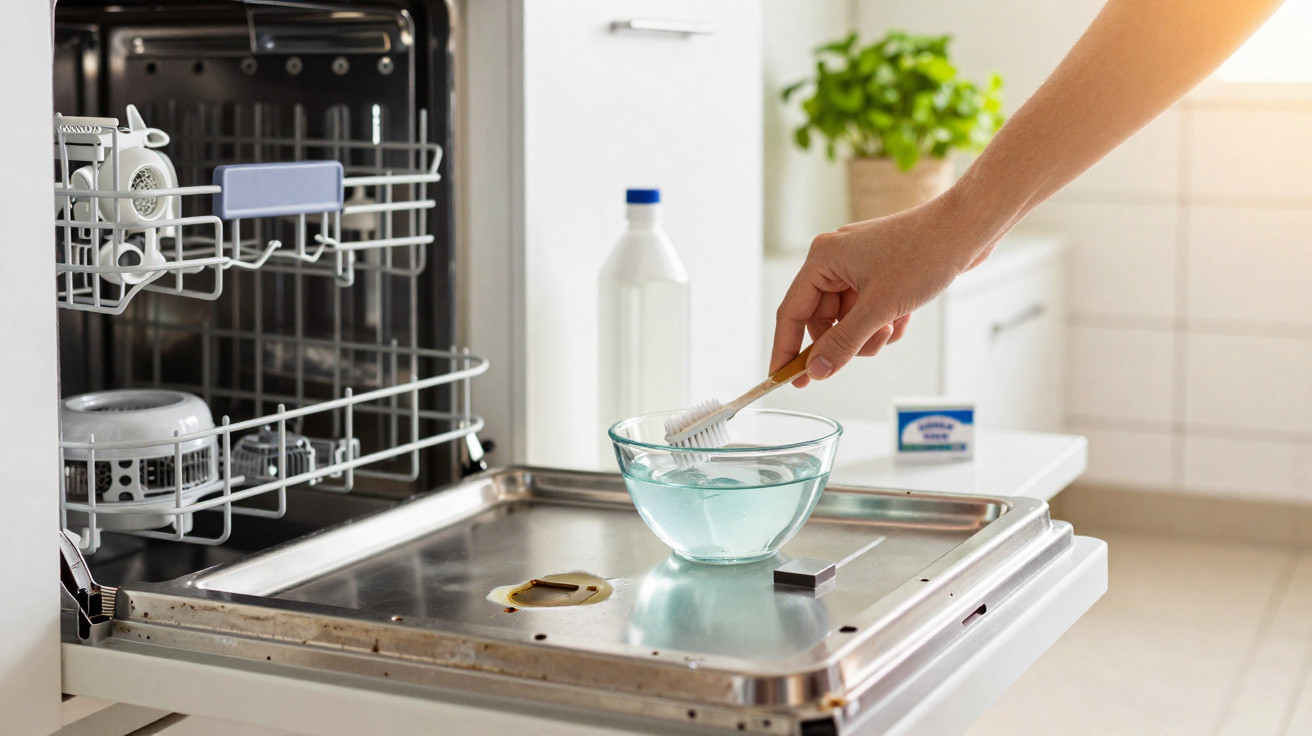
The rubber seal around the door is effectively a comfort zone for microbes. Water can sit there, food residue sticks, and after a few months you may see dark - sometimes slimy - edges forming.
Proceed as follows:
- Expose the entire rubber seal, including along the lower edge of the door.
- Use kitchen roll to wipe away loose dirt and moisture.
- Dip an old toothbrush into a mixture of hot water and clear household vinegar.
- Scrub the full seal thoroughly, paying close attention to folds and edges.
- If deposits are very greasy, add a little mild washing-up liquid or a small amount of soft soap.
- Wipe again with clean water, then dry thoroughly.
The acid in vinegar disrupts the growth of many fungi and yeasts. If you are sensitive to vinegar, you can switch to citric-acid products - the effect is similar, just less pungent.
2. Filter and base of the tub: where the dirt gets trapped
The filter is the main collection point for pasta, vegetable scraps, bone splinters and grease. If it clogs, cleaning performance suffers - and it also becomes a breeding ground for bacteria and fungi.
A thorough weekly clean is worthwhile:
- Remove the filter by twisting it out or unclipping it, following the manual
- Rinse under very hot water, using a brush to help
- Rub the metal or plastic mesh on the inside and outside
- Wipe out the area in the base of the tub where the filter sits with a cloth
- If there are strong odours, sprinkle a little bicarbonate of soda or baking powder in the filter area and leave it for an hour
Bicarbonate of soda helps neutralise smells and can make conditions less favourable for mould. Important: after the waiting time, run a normal programme once so the powder is fully rinsed away.
3. Spray arms and a hot empty run: the deep clean
Spray arms translate the machine’s power into motion. If the fine nozzle holes clog, food particles remain behind and water jets no longer hit dishes properly. It is annoying - and it encourages biofilms to build up again.
A recommended monthly routine:
- Remove the upper and lower spray arms according to the manufacturer’s instructions.
- Rinse under running water and carefully dislodge visible particles from the nozzles using a toothpick or wooden skewer.
- If there are heavy limescale marks, soak the parts for a few hours in warm water with a little citric acid.
- Clip the spray arms back into place, then start an empty run at 60°C or higher.
- Add a few tablespoons of citric acid granules to the machine - ideally into the base of the tub - to descale the pipework and interior.
A hot empty run once a month acts like a “reset” for the inside of the dishwasher and measurably reduces the microbial load.
After each normal cycle, one simple habit also helps: leave the door slightly ajar until the inside is fully dry. Dry surfaces significantly slow the growth of many bacteria and fungi.
What else to keep in mind day to day
A few routine habits reduce the chance of the dishwasher turning into a germ reservoir:
- Quickly rinse very dirty plates rather than leaving food residue sitting in the machine for days.
- Do not rely only on low-temperature or quick cycles; use programmes at 60°C and above on a regular basis.
- Do not wash cleaning cloths, heavily mouldy sponges or garden tools in the dishwasher - they introduce unnecessary amounts of microbes.
- Keep an eye on seals and corners visually; remove discolouration and build-up early.
If you will not be using the dishwasher for a longer period, let it dry out completely, with the door left slightly open. Microorganisms multiply much faster in stagnant, lukewarm water.
What terms like biofilm and “opportunistic” germs actually mean
“Biofilm” can sound abstract, but it describes something very familiar: a slimy layer of microorganisms and their metabolic by-products that attaches to surfaces. You find it in dental plaque, in a sink trap, in shower hoses - and, yes, in dishwashers.
Within this film, bacteria and fungi are far more resilient than they are as single cells floating in water. Cleaning agents, heat and mechanical force struggle to reach the inner layers. That is why an occasional hot wash without prior hands-on cleaning often does not remove deposits completely.
“Opportunistic” germs, meanwhile, take advantage of opportunities - meaning when the immune system is weakened, for example after serious illness, surgery or chemotherapy. If you are in that situation, it is sensible to pay closer attention to household hygiene and to maintain the dishwasher particularly regularly.
How good maintenance affects lifespan and energy use
Clean filters, descaled spray arms and seals kept free of slime offer a double benefit. First, the number of germs in the appliance falls. Second, the pump, heater and sensors operate more efficiently when no layers of residue get in the way.
In practice, that means cycles do not run longer than necessary, the machine heats the water more quickly, and the water level is accurate. Over time, electricity use drops, and the appliance is more likely to last a few extra years before expensive repairs are needed.
If you build the three routines - seals, filter, and spray arms including a hot empty run - firmly into your household schedule, you prevent the dishwasher becoming a source of germs. The time involved is usually only a few minutes per week. Many people notice the impact quickly: the interior smells fresher, glasses come out clearer, and the uneasy feeling when opening a hot door fades step by step.



Comments
No comments yet. Be the first to comment!
Leave a Comment