
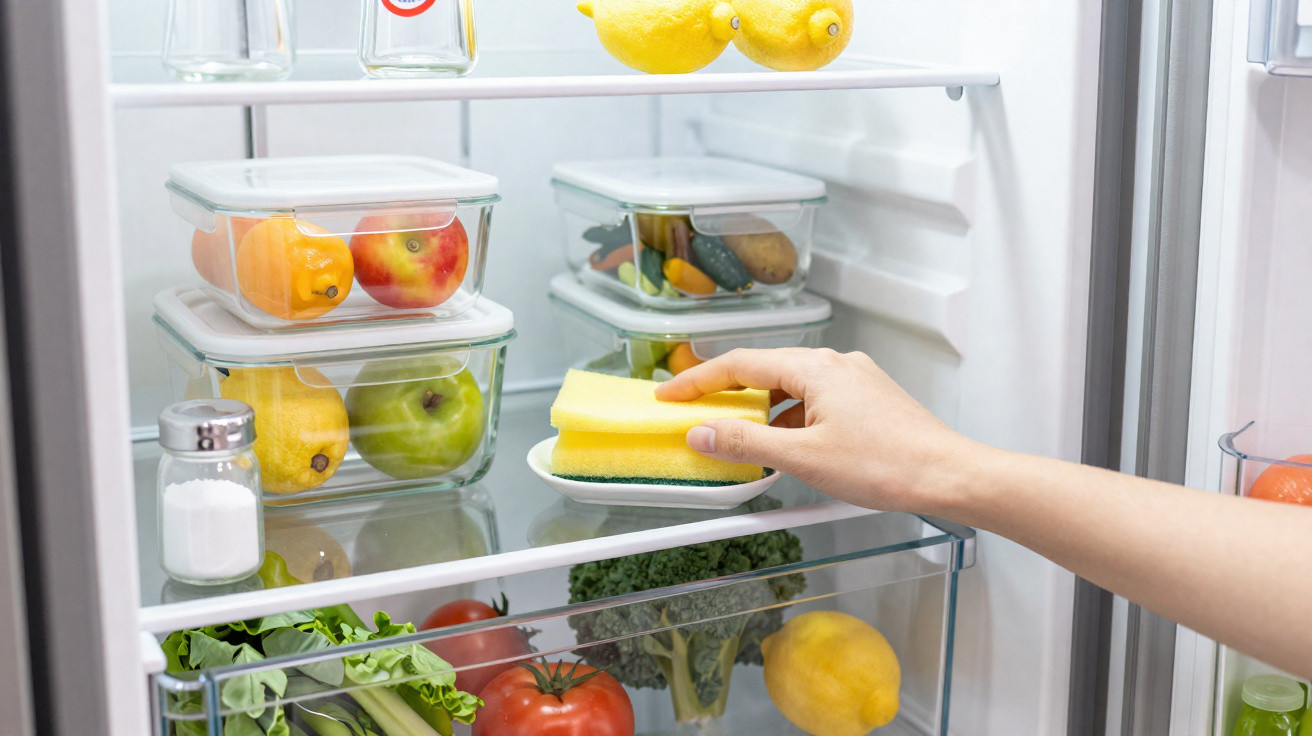
A household tip has been doing the rounds on social media and, at first glance, it sounds like a wind-up: put an ordinary sponge in the fridge, and it’s meant to cut down bad smells, reduce condensation and keep fruit and vegetables fresher for longer. Cleaning experts say there’s more to it than you might expect.
Why a sponge in the fridge can actually make sense
Inside a fridge, temperature, moisture and airflow are constantly interacting. Each time you open the door, warmer room air moves in, bringing humidity with it. Fruit, vegetables, cold meats and cheese also release moisture into the air.
That dampness then settles as tiny droplets on the inner walls, glass shelves and in the salad drawer. This creates ideal conditions for:
- fruit and veg going mouldy more quickly
- greasy smears and film building up on shelves
- unpleasant odours spreading through the appliance
"A dry sponge acts in the fridge like a small moisture reservoir, soaking up excess damp and helping to prevent odours and mould growth."
This is exactly the effect cleaning specialists make use of: the sponge absorbs some of the humidity from the air, making the internal microclimate less damp.
How the sponge trick works in practice
For the method to do what it’s supposed to, a few details matter. Used incorrectly, a sponge can do more harm than good-especially if it’s old or loaded with washing-up liquid residue.
Choosing the right sponge for the fridge
The best option is a plain, new household sponge with no scouring pad and no coloured coating. Ideally, it should be neutral and odour-free-like the simple multipack sponges sold in supermarkets.
- New and clean: no food particles, no washing-up liquid, no greasy residue.
- Completely dry: don’t dampen it, don’t rinse it, and don’t put it in wet.
- Odour-free: avoid scented sponges or products with added cleaning agents.
If you’d rather avoid plastic sponges, a cellulose sponge or a natural-material household sponge can also work. The key point stays the same: it must be dry and able to absorb moisture.
Where to put the sponge inside the fridge
Experts suggest placing the sponge where moisture tends to collect most. In many homes, that’s:
- in the salad drawer, or directly above it
- on a glass shelf near the back wall
- wherever water droplets regularly form
Important: the sponge should lie flat and not be stuck against food. Ideally, keep it in its own corner of a shelf so nothing touches it directly.
How often you need to replace the sponge
A sponge isn’t something you leave in there indefinitely. If it sits in a damp environment for too long, you may end up encouraging bacteria rather than limiting it.
"As a rule of thumb: the sponge should come out of the fridge at the latest every two days, be dried, or replaced straight away."
A practical routine:
- Remove the sponge from the fridge after one to two days.
- Squeeze it out thoroughly and let it dry completely in the open air.
- Bin any sponge that’s visibly dirty or smells musty immediately.
- If you use the trick often, keep a small supply of spare sponges to hand.
If you store particularly delicate foods, you can swap it daily. The cost remains modest, as basic sponges are typically only a few pence each.
Does the sponge actually help with bad smells?
A sponge isn’t an air freshener. It doesn’t add a pleasant scent, so it won’t “perfume” the fridge. Its advantage lies elsewhere: it absorbs moisture-and that dampness is usually what encourages smells to develop.
Less humidity means:
- food grows mould more slowly
- opened items don’t spoil as quickly
- liquids leak less often and spread less
As a result, strong odours are less likely to build up. However, if you’ve got a forgotten tin of fish or a mouldy pepper in the salad drawer, you’ll still notice a powerful stink-the sponge cannot “neutralise” spoiled food.
Sponge plus the classics: bicarbonate of soda and cleaning
Household pros recommend not treating the sponge hack as a standalone solution. It tends to work better when paired with proven approaches. One especially popular option is bicarbonate of soda (baking soda, sodium bicarbonate).
| Method | What it’s good for |
|---|---|
| Dry sponge | Reduces humidity and condensation, slows spoilage |
| Bowl of bicarbonate of soda | Absorbs odours inside the fridge without adding fragrance |
| Regular cleaning with a mild cleaner | Removes bacteria, mould spores and sticky residues |
When you combine all three, most people notice the fridge feels fresher and takes less effort to keep under control.
How the sponge can extend the freshness of fruit and vegetables
Many types of veg react badly to stagnant moisture. Condensation builds up quickly in salad drawers in particular, often collecting at the bottom as a small puddle. Cucumbers, peppers, lettuce and berries then sit in that dampness-and they rot sooner.
"A dry sponge near the salad drawer absorbs some of this moisture and creates a more balanced environment for sensitive foods."
There’s also a handy variation: if you store berries or herbs in a container, place a piece of kitchen roll on the bottom and put a tiny, dry snippet of sponge in one corner. It soaks up excess moisture and helps the flavour stay stable for longer.
Where the trick reaches its limits-and what to watch out for
As useful as a sponge can be, it doesn’t replace basic fridge hygiene. Standing water in grooves, spilled sauces or sticky jam residues still need wiping away regularly.
Problems tend to arise in particular if:
- you use an old, already-used washing-up sponge
- the sponge is left in the fridge for more than a few days
- food sits directly on, or right next to, a damp sponge
Washing-up sponges are widely seen as one of the germiest items in the kitchen. If you simply “recycle” one by moving it into the fridge, you’re just relocating the germs. That’s why the guidance is clear: only use fresh sponges for the fridge, and replace them on a fixed schedule.
Practical add-ons for a hygienic fridge
If you use the sponge hack, a few small habits can noticeably boost the effect:
- At least once a month, remove all drawers and glass shelves and wash them with lukewarm water and a little mild cleaner.
- Wipe up leaks immediately, rather than leaving them for “later”.
- Store leftovers in sealed containers instead of leaving them open on plates.
- Check the temperature: 4 to 7 °C is a sensible range for most households.
Combine these steps with the sponge trick and you’ll typically keep veg crisp for longer-and you’ll get fewer “surprises” when you open the fridge door.
No fuss, real benefits: a small sponge that makes a difference
Putting a dry sponge in the fridge may look unimpressive, but it can deliver noticeable day-to-day benefits. The principle is straightforward: bind moisture, reduce condensation and ease the environmental stress on food. That can make the fridge more hygienic and, often, significantly less smelly.
Used correctly-swapped out regularly and backed up with a solid cleaning routine-the sponge trick helps you get more from your fridge with very little effort, without pricey, heavily advertised speciality products.

Comments
No comments yet. Be the first to comment!
Leave a Comment