
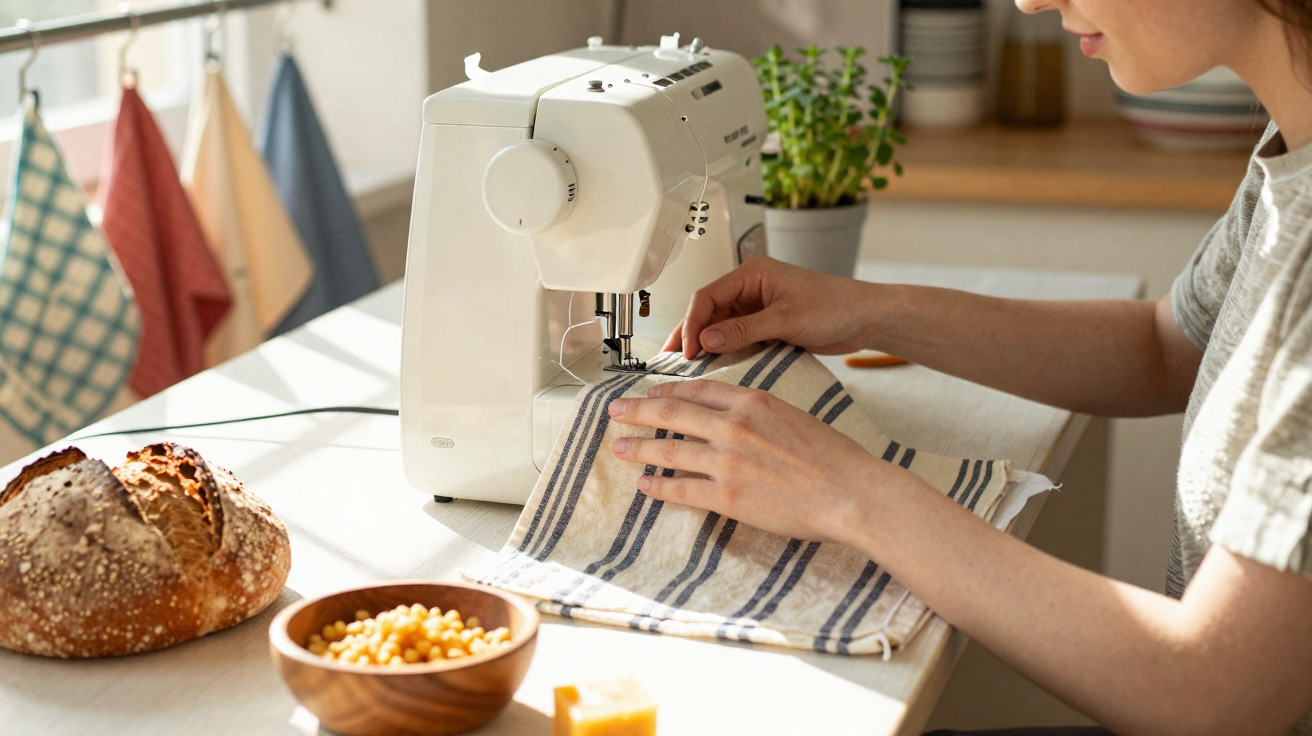
If you only use old, striped tea towels for cleaning now - or throw them away - you are binning a little textile treasure. These apparently past-their-best pieces can be turned with just a few stitches into a handy accessory that reduces plastic, looks lovely, and does your breakfast bread a real favour.
Why Gran’s striped tea towels are more valuable than they look
Those familiar, slightly faded kitchen towels with red or blue stripes are often made from linen, or an old linen–cotton blend. In the past, these fabrics were woven to last: tightly made, hard-wearing, easy to wash, and they become softer with every cycle.
You rarely find that sort of quality cheaply in shops today. If you already have them in a cupboard, you are basically holding a small heirloom. The fabric lasts for years, absorbs moisture well, stands up to heavy use, and still feels simple and timeless. That exact combination suits the move towards a more pared-back, sustainable kitchen.
"Old striped tea towels aren’t textile waste, but high-quality raw material for modern zero-waste helpers."
Germany’s environmental agency has promoted reusing natural textiles for years. Every cloth that is not thrown away but used again saves resources, water and energy that would otherwise be spent making new fabric. And when that reuse results in a new favourite item, sustainability suddenly feels genuinely enjoyable.
The trend idea: a bread bag made from an old tea towel
Right now, the standout upcycling project for old tea towels is a sewn bread bag. It replaces paper bags from the bakery and plastic wrap at home - while adding a touch of country-kitchen charm.
The time investment is modest, but the payoff is big: every bread bag you make yourself avoids buying a ready-made linen bag. In shops, those can easily cost £15 to £20 each. If you use two or three towels, you can produce several bags at once - for a baguette, bread rolls, and a large farmhouse loaf.
No need to fear the sewing machine: the bag is that straightforward
Even if you hardly ever sew, you can finish this project in an afternoon. Essentially, it comes down to three steps:
- Prepare the fabric: Lay the tea towel flat, cut away any badly worn areas, and work with the sections that are still in good condition. Ideally, cut it so the decorative stripes will end up running down the side or centred.
- Sew for strength: An “English seam” works well for the side seams. First, stitch wrong sides together, trim the seam allowance close, turn the piece, then stitch again. That hides raw edges inside, helps the bag last longer, and prevents fraying.
- Close the top: Fold a narrow hem inwards at the top edge, fold again, and stitch it down to create a small channel. Thread through a cotton tape or an old cord, and you have a drawstring closure.
If you do not have a sewing machine, you can sew smaller versions by hand using backstitch. It takes a bit longer, but it is entirely doable and makes a calm, sofa-friendly evening project.
Why linen stores bread better than plastic
Linen - and old linen–cotton blends - have a key advantage: the weave is dense yet breathable. That is the opposite of plastic, which traps moisture against the bread.
In day-to-day use, that means:
- The crust stays crisper because it is not sitting in condensation.
- The crumb does not dry out as quickly because the fabric buffers moisture.
- Mould has a harder time, as dampness is less likely to build up.
Many people find their baguette or Sunday bread rolls stay enjoyable for noticeably longer in a linen bag. Another benefit: the texture of linen can deter some kitchen insects, which is a very welcome side effect in food cupboards.
Extra trick: a bee-wrap effect with beeswax
If you want to extend freshness even further, you can treat the inside of the bag with a layer of pure beeswax. This creates a kind of natural “bee wrap” effect:
- Smooth the inside of the bag so it is clean and completely dry.
- Sprinkle a thin layer of beeswax (pastilles work best) over the fabric.
- Cover with baking paper and gently warm with an iron until the wax melts and soaks into the fibres.
The fabric remains flexible, becomes lightly water-repellent, and still stays somewhat breathable. Bread keeps fresh for longer in a noticeable way. For cleaning, lukewarm water and a mild household bar soap are enough; water that is too hot will soften and lift the wax layer.
How to care for your bread bag properly
Before using it for the first time, wash the old tea towel thoroughly. This removes dust and any lingering cupboard smells. A quick iron afterwards tightens the fibres - seams come out neater, and the bag hangs more nicely.
For everyday use, let bread cool completely before putting it into the bag. Otherwise, too much moisture builds up inside. If possible, hang the filled bag on a hook so air can circulate. Every few days, empty it and air it out, and wash it in the machine when needed.
"If you treat your bread bag like a piece of clothing, you’ll enjoy it for years - and save a lot of single-use packaging."
What else you can make from leftover fabric
With one or two tea towels, you will almost always have offcuts left over. There is no need to throw any of them away. The striped edges, in particular, look especially attractive in small makes.
Small projects with a big impact
- Scent sachets: Sew narrow strips into mini bags, fill with dried lavender, and place them in wardrobes. They smell pleasant and help deter moths.
- Bowl covers: From larger remnants, sew round or oval covers with elastic around the edge. They replace cling film over bowls and baking tins.
- Bags for dry foods: A scaled-down version of the bread-bag pattern is ideal for pasta, rice or lentils in the cupboard.
If you have children, you can also sew little play pouches from colourful leftovers - for marbles, wooden figures, or travel games. It is a simple way for them to learn that old things deserve a second life.
Why this trend fits our times so well
A lot of households are in a similar place right now: they want less waste, fewer impulse purchases, and still a tidy, good-looking kitchen. A bread bag made from Gran’s towel hits exactly that point - combining nostalgia with a very current lifestyle.
Once you begin, you quickly spot other uses for old household linen. Tablecloths can become shopping bags; bed sheets can turn into cushion covers or fabric napkins. It saves money and creates a distinctive look that no homeware shop can replicate exactly.
Another important point: linen and old blended fabrics are far less problematic than synthetics when it comes to microplastics. When washed, they do not shed plastic particles that later end up in rivers and seas. Switching your kitchen over to natural fibres bit by bit is a concrete step towards cleaner water.
If you still feel unsure about sewing, start with a small trial run: make a simple bag for onions or garlic first, then move on to the bread bag. After one or two projects, the machine starts to feel effortless - and that drawer of old tea towels suddenly looks like a treasure chest.
Comments
No comments yet. Be the first to comment!
Leave a Comment