
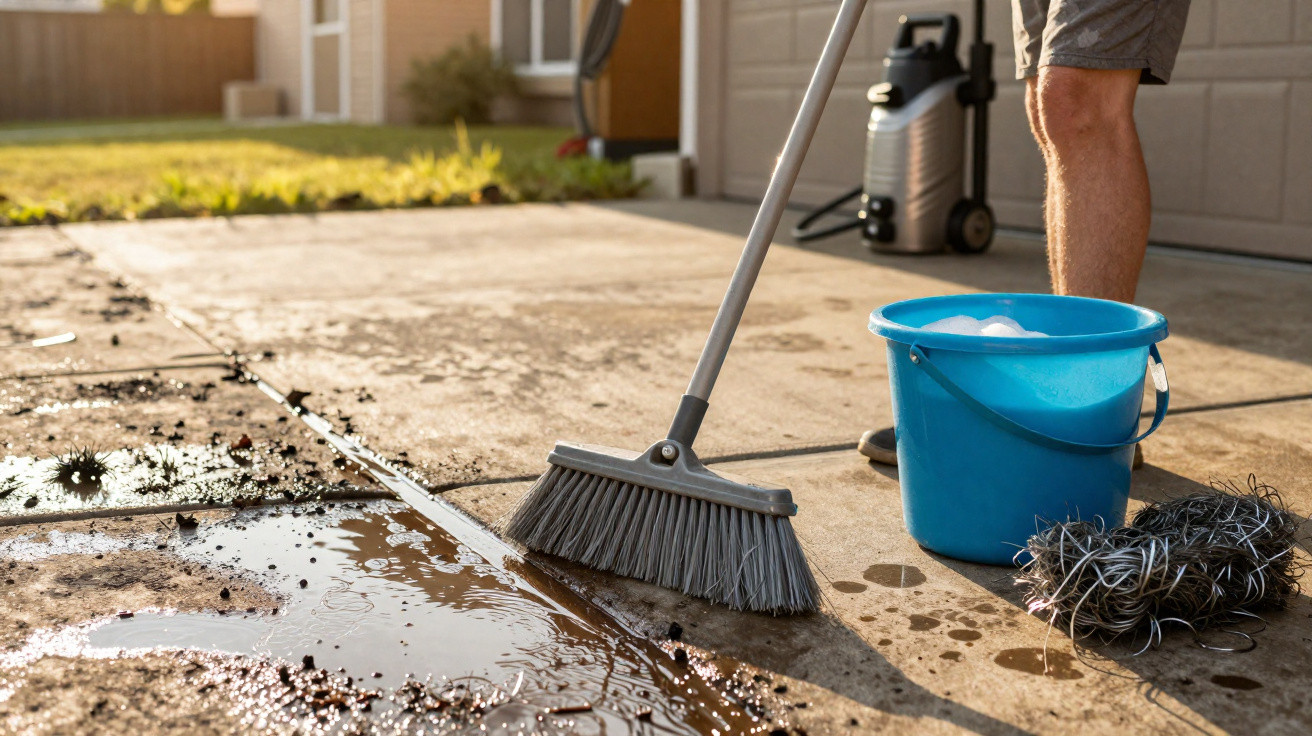
Many homeowners don’t realise that getting a “freshly poured concrete” look doesn’t require an expensive pressure washer or a noisy hire machine from a DIY shop. A basic kitchen cleaner, a bucket of warm water and a smartly adapted broom can be enough to shift years of grime, moss and grey film - using items many people already have at home.
Why dirty driveways are a bigger issue than you think
Your driveway is one of the first things visitors notice - and, truthfully, so do neighbours and potential buyers. If it looks dull, stained or green with growth, the whole property can seem less cared for, even when everything else is immaculate. Concrete and paving blocks attract muck like a magnet: exhaust residue, tyre marks, moss, algae, oil and, in winter, de-icing salt.
There’s also the practical reality: anyone who’s tried tackling this with a standard hand brush or just a garden hose often gives up in frustration. That’s why pressure washers have become the default option - helpful, but not always the smartest choice.
Pressure washers: effective, but loud, expensive and not risk-free
A pressure washer relies on very high water pressure. It can remove dirt quickly, but there are several drawbacks:
- Purchase cost: A decent branded unit can easily set you back several hundred pounds.
- Noise: Anyone who’s been “greeted” by a neighbour at 9 am on a Sunday knows how irritating the racket can be.
- Risk of damage: Too much pressure can wash out joints, roughen concrete or chip decorative paving.
- Water usage: Longer cleaning sessions can noticeably increase your water bill.
For older surfaces - and especially decorative finishes - it’s worth taking a look at gentler alternatives. This is where the understated broom trick using kitchen cleaner and steel wool comes in.
The steel wool and broom hack: what’s really going on
Instead of a motor, a machine and a jet of water, this approach needs only three things:
- an ordinary outdoor broom or scrubbing broom
- steel wool (often sold as “steel pads” or “stainless steel pan scourers”)
- a standard household multi-purpose or kitchen cleaner
"With a simple steel-wool cover, a broom becomes a hand-powered ‘dirt milling tool’ for concrete - quieter, cheaper and surprisingly effective."
How to adapt the broom
The idea is straightforward, but remarkably effective:
- Gently pull apart several layers of steel wool so you end up with a flat “mat”.
- Wrap it around the broom head, as if you were putting a cap over the bristles.
- Press it on firmly and, if needed, secure it with a bit of wire or a strong elastic band.
Those fine metal fibres weave around the bristles and increase the abrasive contact area. When you scrub, they reach into small pores and shallow recesses that a normal brush can’t properly get into. This makes stubborn grey film, algae growth and baked-on layers of dirt much easier to lift.
Step-by-step: clean a driveway without a pressure washer
If you want to try it, the process is much like a traditional deep clean - just without the machine.
1. Clear the area and remove loose dirt
- Move cars, bikes, plant pots and toys off the driveway.
- Sweep away leaves, small stones and loose debris with a normal broom.
- Check for loose jointing, cracks or crumbly areas - you’ll want to scrub more gently there later.
2. Mix up the cleaning solution
In a bucket, combine:
- warm water (not boiling water, as that can create stress in the concrete)
- a normal squirt of kitchen cleaner or multi-purpose cleaner
For light oil marks, you can add a little washing-up liquid because it cuts through grease well. Avoid aggressive drain cleaners, oven cleaners or strongly acidic products on concrete - they can attack the surface and may cause discolouration.
3. Pre-wet the surface
Lightly dampen the driveway using a garden hose or a watering can. This helps stop the cleaner being absorbed or drying too quickly, and it encourages loosened dirt to lift rather than setting back onto the surface.
4. Scrub with the steel-wool broom
Now bring in your DIY scrubber:
- Dip the broom into the cleaning solution, or pour the solution onto the area using a watering can.
- Work in sections, for example in 1 to 2 square metre patches.
- Scrub with steady back-and-forth strokes until a dirty film starts to appear.
On grey, slightly rough concrete, you’ll often see the top layer of grime release quite clearly. Moss pockets and dark streaks from tyre abrasion should gradually become lighter.
Where the trick shines - and where you should hold back
Steel wool is abrasive, meaning it works by gently grinding away buildup. That’s what makes it effective, but it also means it isn’t suitable for every finish.
| Suitable | Use with caution | Better to avoid |
|---|---|---|
| tough, older concrete | very smooth, exposed concrete | new driveways (under 6–12 months) |
| slightly rough aggregate concrete | decorative paving with a sealant | resin or synthetic resin surfaces |
| mossy, unsealed areas | coloured concrete | glossy coatings and painted finishes |
If you’re not sure, test it in an inconspicuous corner first. If you notice dull patches or scratches, switch back to a standard stiff brush or try a softer pad.
After scrubbing: rinse properly and let it dry
Once a section looks noticeably cleaner, rinse it with plenty of water from the garden hose. Flush away the loosened dirt and any tiny metal fibres from the steel wool so they aren’t left outside to create rust spots later.
Important: when you’re finished, rinse the entire driveway thoroughly. This reduces streaking and helps the finish look more even.
Concrete always looks darker when wet. The real result only shows once it’s fully dry - after a few hours, ideally after a day. If you like, you can go back over particularly stubborn patches a second time.
How to keep your driveway cleaner for longer
To stop it looking dull and blotchy again after only a few weeks, a simple maintenance routine helps:
- Deep-clean twice a year: In spring after winter grime, and in autumn before the wet season.
- Sweep regularly: Leaves, soil and seeds encourage moss if they’re left sitting on the surface.
- Deal with oil and petrol spills immediately: Lay kitchen roll on top, then treat with a soapy solution before it soaks in.
- Pull weeds early: Roots in joints can loosen the surface and allow water to penetrate more easily.
Many professionals also recommend applying a concrete or paving sealant once the surface has been thoroughly cleaned and is completely dry. This clear layer reduces how easily new stains soak in and makes future cleaning noticeably easier.
What to keep in mind with cleaners and steel wool
Steel wool can rust outdoors. If you have very soft rainwater, you may occasionally see tiny orange specks if small particles are left behind. Careful rinsing significantly reduces this risk. For extra peace of mind, choose stainless steel pads, which are less prone to rust.
For cleaners, a standard multi-purpose product or washing-up-liquid-based solution is usually enough. Products containing strong acids, bleach or solvents can damage concrete, weaken jointing mortar or cause staining. If you’re dealing with stubborn rusty or greenish deposits, use a stone cleaner specifically labelled as suitable for exterior concrete, and follow the manufacturer’s instructions.
When a pressure washer is still the better option
The broom hack won’t replace a machine in every situation. Very large driveways, deeply soaked-in old oil stains, or thick, matted moss can sometimes be tackled faster with a water jet. And on heavily textured natural stone, steel wool may not reach into every recess.
For many typical single-family home driveways, though, this simple method is enough to make a dramatic difference - without a heavy pressure washer, extension cable reels or noise complaints. If the next time you look at your grey concrete you think of the cleaning cupboard in the kitchen, you’re already on the right track.

Comments
No comments yet. Be the first to comment!
Leave a Comment