
Many households know the pattern all too well: a weekend away, a few overripe pieces of fruit, a half-full bottle of wine - and within days the kitchen is buzzing with tiny gnats and fruit flies. Rather than reaching for harsh chemicals, more and more people are turning to a straightforward home scent remedy that unsettles the insects effectively while making the room feel noticeably fresher.
Why tiny gnats multiply so quickly in the kitchen
The little insects hovering over the sink or the food waste bin are usually fruit flies. Anything that is fermenting or starting to rot is exactly what they look for. Their highly sensitive sense of smell reacts strongly to the alcohols and acids produced as food breaks down.
- Favourite spots: fruit bowls, open leftovers of wine or juice, food waste, warm bins
- Other hotspots: constantly damp soil in plant pots, drains that are not properly rinsed
- Speed of reproduction: a single female fly can lay up to 35 eggs per day
Because their lifespan is relatively short - around two to three weeks - one insect can, in extreme cases, produce several hundred offspring. That is why a minor annoyance can quickly turn into an irritating infestation.
Many people then resort to indoor insect sprays. However, specialist authorities warn that in enclosed rooms these products can worsen indoor air quality. Children, older people, and those with asthma often react particularly sensitively.
"The good news: a specific spice scent can completely throw the gnats off - and, as a bonus, it makes the room air feel fresher."
The secret kitchen hero: how cloves work against gnats
At the heart of the method is a familiar staple from the spice rack: cloves. They contain eugenol, a substance that essentially scrambles fruit flies’ navigation by overstimulating their sense of smell.
Normally, the insects track scent trails of ethanol and acetic acid rising from fermenting leftovers. But if the air in the room smells strongly of clove, their delicate sensory system is knocked out of sync. They struggle to locate food sources and tend to move elsewhere.
"Cloves mask exactly the smells that attract fruit flies - the scent becomes an invisible barrier in the kitchen."
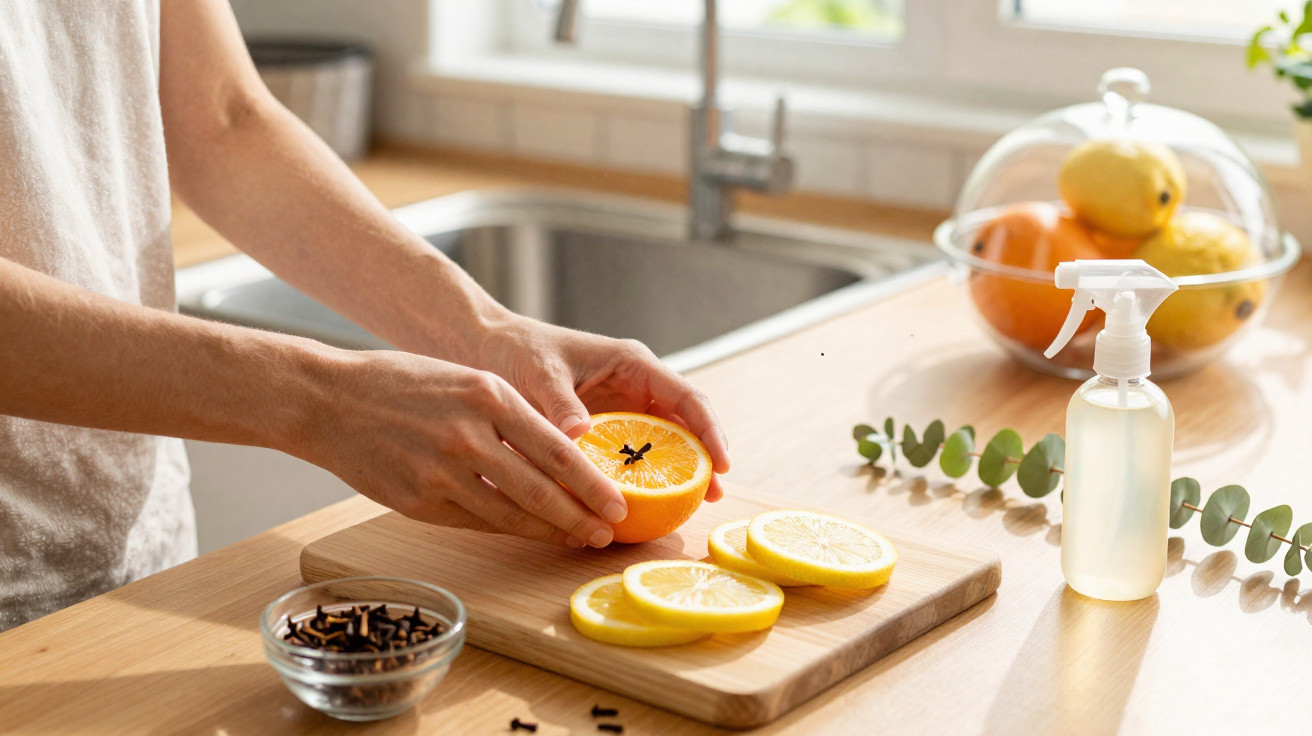
The most effective approach is often a combination of citrus fruit and cloves, with the fruit acting as a natural scent diffuser:
- The juicy cut surface spreads the clove aroma steadily through the room.
- The typical citrus note softens the intensity of clove for the human nose.
- Around sensitive areas such as the fruit bowl and bin, it creates a kind of protective ‘scent fence’.
At the same time, the essential oils from citrus and clove help reduce stale cooking smells. The kitchen feels fresher, without the heavy, perfumed air that some fresheners leave behind.
Step-by-step: how to use the anti-gnat scent correctly
Option 1: Citrus fruit with cloves - the classic
For everyday use, the preparation is simple and takes about two minutes:
- Halve a lemon or an orange.
- Push 15 to 20 cloves into each half.
- Place the halves cut-side up wherever the insects gather, for example:
- next to the fruit bowl
- on the edge of the sink
- on or beside the bin
- Replace every three to four days, once the fruit has dried out.
After a short time, the number of insects usually drops noticeably. For people, the scent stays fairly subtle - but for the insects’ sensitive antennae, the concentration is high.
Option 2: Clove infusion with household vinegar - the rapid response
If there is already a dense cloud hovering over the sink, a stronger method often brings faster relief:
- Pour 250 millilitres of clear household vinegar into a saucepan.
- Add ten whole cloves.
- Simmer the mixture gently for around 15 minutes.
- Take the pan off the hob and let it cool in the room so the vapours can circulate.
Vinegar vapour and clove together create a powerful smell barrier. For people, it is generally tolerable for a short time; for gnats and fruit flies, it is extremely unpleasant. In many kitchens, the main swarm area noticeably thins out within one to two days.
Other natural scents that tiny gnats dislike
If you do not like the smell of cloves, or you want extra scent sources, there are other plants whose essential oils are unwelcome to insects.
Eucalyptus as a spray for larger areas
Eucalyptus leaves produce a strong, clean aroma that helps keep insects away. You can make a simple spray like this:
- Boil 150 grams of leaves with 5 litres of water for about 15 minutes.
- Leave to cool, strain, and pour into a spray bottle.
- Spray vulnerable zones: worktops, around the sink edge, window sills, bin lids.
The fragrance lasts for a few hours and can be refreshed whenever needed.
Using essential oils in targeted spots
Concentrated oils are also popular. Suitable options include:
- lavender
- peppermint
- lemongrass
- tea tree oil
- geranium
Put a few drops onto small sponges, cotton pads, or wooden sticks and position them strategically - for instance by a window handle, along the back edge of the worktop, or behind the fruit bowl. If you have toddlers or pets, it is worth quickly checking which oils are suitable for everyday use.
No food source, no swarm: removing kitchen scent traps
Scent barriers work far better when the real attractants are removed. A few simple routines are often enough to stop gnats from being drawn in at all.
Handling drains, bins and fruit properly
| Problem area | Simple countermeasure |
|---|---|
| Sink drain | Flush through regularly with coffee grounds, then pour in hot water; occasionally clean with bicarbonate of soda and vinegar. |
| Bin | Wash the inside with soap, dry thoroughly, keep the lid closed, empty food waste more often. |
| Fruit | Store very ripe fruit separately or keep it cool; do not place the fruit bowl right next to the sink. |
| Houseplants | Avoid waterlogging; let the soil dry slightly between watering. |
A commonly overlooked factor is so-called climacteric fruits: bananas, kiwis, peaches, tomatoes, figs and pears release gases as they ripen, which makes other fruit age faster - and that pushes it into the fermentation zone sooner. Keeping these varieties separate reduces the scent signals that attract insects.
A small trick borrowed from the wine world: placing a dry cork in the fruit bowl can lightly bind odours and may also act as an extra irritant for sensitive insect noses. Also, always reseal opened wine bottles straight away, so no fermentation smells escape.
How safe are scent methods in everyday life?
Natural fragrances may sound harmless, but it still pays to use them thoughtfully. Cloves and citrus fruits are generally unproblematic at home, while some essential oils can cause headaches or irritate mucous membranes at high concentrations. If you are sensitive, start with small amounts and ventilate regularly.
Compared with aggressive insect sprays, cloves, citrus and eucalyptus have a clear advantage: they do not leave conventional insecticides on work surfaces, dishes or food. That can be a far more comfortable option, particularly for family kitchens or open-plan living spaces.
The combined effect is also noteworthy: if you consistently remove odour sources, place clove-and-citrus halves at key points, and top up with a vinegar-and-clove infusion when needed, you will usually notice a much calmer kitchen - even during the tricky late-summer weeks, when ripe fruit and warm temperatures would otherwise attract tiny gnats almost magnetically.


Comments
No comments yet. Be the first to comment!
Leave a Comment