
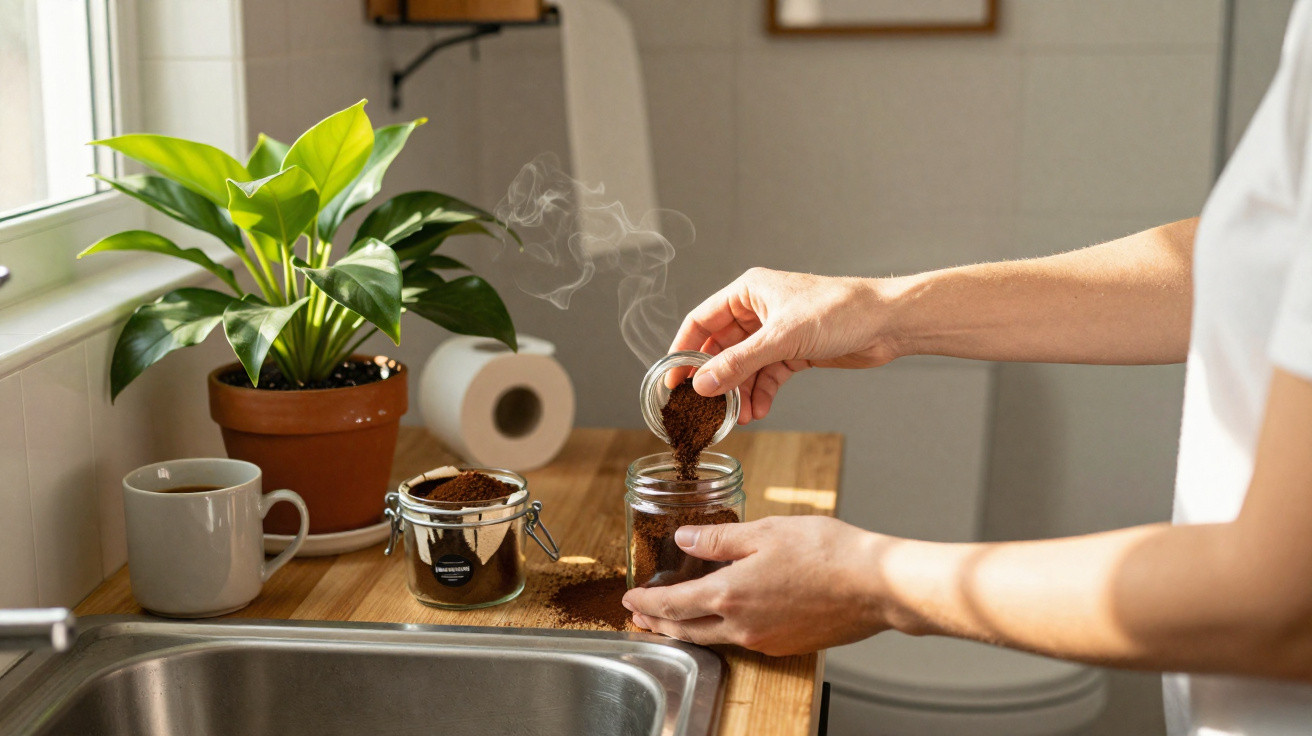
The simple trick splits opinion, but is supposed to stop unpleasant smells.
Online, countless tips about coffee grounds are doing the rounds. One particular trend has become a real talking point: instead of going in the general waste, a tablespoon of the brown granules is tipped straight into the toilet. The idea is to keep the loo clean and less smelly without relying on harsh chemicals. It sounds brilliant - but is it actually a good idea?
Why coffee grounds are suddenly going into the toilet
If you make coffee, you inevitably end up with a by-product: wet coffee grounds. Most people automatically scrape them into the bin or food waste caddy. But keen cleaners have long used them as a budget-friendly household staple - and now they’ve moved into the bathroom too.
The logic is straightforward: the tiny particles act like a very mild abrasive. Add a tablespoon to the toilet bowl and you can work the ceramic with a brush without buying pricey specialist cleaners. Fans describe it as a “peeling” treatment for the loo.
"Coffee grounds work in the toilet like a gentle substitute for scouring powder: they rub without scratching and can bind odours."
The hack is especially popular with people who want to avoid aggressive chemicals around the home. The grounds are there anyway, they smell pleasantly of coffee, and you can put them to use straight after breakfast.
How coffee grounds work in the toilet
A gentle cleaning effect instead of harsh chemicals
Coffee grounds have a fine texture, but they are not smooth. When you scrub with a toilet brush, they can loosen light grime on the ceramic in a similar way to a mild scouring agent. The crucial point: you only get results with mechanical effort - without using a brush, very little happens.
Many household cleaning enthusiasts say a silicone-bristled brush is particularly suitable. It picks up the grounds without swallowing them completely, and spreads them fairly evenly over the inside of the bowl.
- Amount: about 1 tablespoon per clean
- Method: tip the grounds into the bowl, spread briefly, then scrub with the brush
- Finish: flush until the water runs clear again
Odour control when nobody’s home
There’s a second supposed benefit: coffee grounds can bind odours. People use them in the fridge, in shoes - and, according to this trend, in the toilet as well. Some swear by it before a longer absence, such as going on holiday.
The instructions usually look like this: just before you leave, add coffee grounds to the toilet, disperse them lightly in the water - and then do not flush. The thinking is that the stagnant water will smell less pungent over the following days.
"If you’re away from home for a longer period, some people use coffee grounds as a kind of ‘odour filter’ in the toilet water - an application that circulates mainly in online household tips."
Whether it works equally well in every bathroom depends on several factors: pipe layout, water quality, how frequently the toilet was used beforehand, and not least the temperature in the home.
The catch: a small trend, but a big risk for the pipework?
As handy as it sounds, there are clear warnings. Some agricultural experts and certain plumbers generally advise against disposing of coffee grounds via the toilet. The reason: the grounds swell in water and don’t behave like normal toilet paper in the pipework.
In older properties with narrow or heavily twisted runs, that can be a problem. Those pipes often already hold residues of soap, limescale and paper. Add coffee grounds into the mix and it can quickly turn into a thick sludge that’s hard to shift.
"Combined with soap residue and paper, wet coffee grounds can form a thick plug - an ideal recipe for a blocked pipe."
When the trend is probably not a good idea
- Old waste pipes: rust, build-up and tight bends increase the risk of blockages.
- Weak flush: older cisterns often don’t carry the grounds completely through the system.
- Block of flats: build-up in shared pipework can later affect all residents.
- Existing issues: if the toilet often gurgles or blocks, it’s better not to add grounds.
Anyone who has ever had to pay for an emergency call-out for a blocked toilet will take these warnings seriously. Saving a bottle of toilet cleaner isn’t worth an expensive drain clean.
Where coffee grounds really shine: the kitchen and the garden
A smell-buster by the sink
In other places, coffee grounds can show their strengths far more safely. In the kitchen, for example, they’re widely used to neutralise odours. After chopping garlic or onions, many people rub a small amount of wet grounds into their hands and then rinse thoroughly. The intense smells noticeably fade.
Chopping boards can benefit too: sprinkle a little onto a damp board, rub gently, rinse - and the board smells less strongly of fish or onions.
A natural abrasive for pots and pans
Coffee grounds can also help with burnt-on residue in frying pans, saucepans or on a barbecue grill grate. They can lift grime layer by layer without aggressively attacking the surface. The key is not to press too hard, so non-stick coatings aren’t damaged.
A practical approach is:
- Put a little coffee grounds into the dirty pan.
- Add a splash of water or a bit of washing-up liquid.
- Rub in circular motions with a soft sponge or cloth.
- Rinse thoroughly with water.
Black gold for many plants
In the garden, coffee grounds have been a “secret tip” for quite some time. They contain nutrients such as potassium, phosphorus and nitrogen, which many vegetable plants appreciate. Cucumbers, tomatoes and courgettes in particular are often said to respond well to this natural feed.
Simply scatter dried grounds loosely around the plants or work them into the top layer of soil. Don’t overdo it - a thin layer is enough, otherwise the soil can become too acidic.
Many hobby gardeners also report that coffee grounds can deter certain visitors. Ants, slugs and even roaming cats are said not to like the smell when it’s spread around beds.
Where should the grounds go - the toilet or somewhere else?
If you want to play it safe, it’s better to use coffee grounds where they can’t cause damage: in the garden, in food waste, or in dry spots for odour control. On the compost heap, they’re particularly useful because they stimulate microorganisms.
In the bathroom, there are alternatives that are less risky for the pipes: cistern tablets, vinegar-based cleaners, citric acid, or specially formulated eco toilet cleaners. They dissolve fully in water and leave no solid residue.
| Use | Suitable for coffee grounds? | Comment |
|---|---|---|
| Light toilet cleaning | limited | It works, but can cause issues in older pipework. |
| Odour binding in the bathroom | yes | Better in an open dish; not necessarily in the toilet. |
| Plant feed | yes | Dry first; use sparingly. |
| Cleaning pans and pots | yes | Use a light touch; be careful with coatings. |
| Enriching compost | yes | The perfect place if you generate lots of grounds. |
How to prepare and store coffee grounds properly
For coffee grounds to be effective, they shouldn’t be left damp in the filter for days - mould can form. A better method is to spread them on a tray or plate, let them dry, and only then transfer them into a jar or tin.
For quick use in the bathroom, many people take the pragmatic route and use freshly produced, still-damp grounds straight away. For garden use or as an odour absorber in a cupboard, the dried version is the better option.
What the trend says about how we use household tips
The hype around putting coffee grounds in the toilet shows how strongly social media and advice sites shape everyday habits. A simple hack can spread at lightning speed - often faster than experts can weigh up the downsides. If you try these tricks, it’s worth asking two questions every time: what’s the benefit, and where could it cause harm?
When it comes to toilet pipework, the answer is fairly obvious. For occasional use in a modern bathroom, a spoonful of grounds may not be a disaster. But if you already struggle with blockages or you live in an older period property, it’s wiser to keep the spoon in the kitchen - and use that brown leftover for pans, garden beds and natural odour control.
Comments
No comments yet. Be the first to comment!
Leave a Comment