
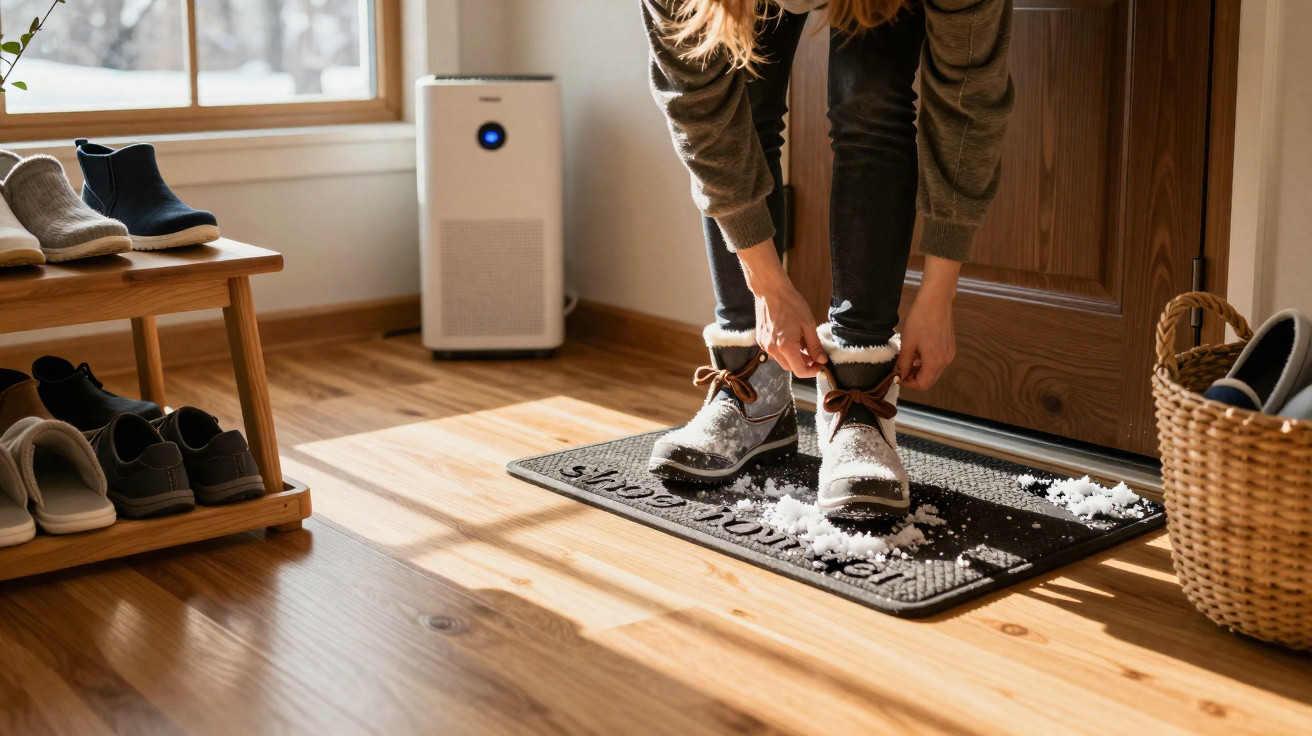
The first boot hits the hallway tiles with a damp, sucking thud.
A pale grey mark spreads from the sole like a slow-moving storm cloud across the floor. Two school bags slam into the wall, someone calls out from the kitchen, and the heating rumbles in the background. Outside, the pavement is dusted white with frost and streaked with brown slush. Inside, your flooring is quietly losing ground.
You notice a crust of salt on the mat, a ribbon of mud reaching towards the living room, and a suspicious sprinkle of something that could be grit… or could be yesterday’s cereal. The dog is already investigating the wet laces. Cloth in one hand, shoe in the other, you feel that small flare of dread: if this is only day three of winter, what will week six look like?
It doesn’t have to be like this. A better way with winter shoes begins before the first boot crosses the threshold.
The invisible mess winter shoes drag into your home
What causes the most trouble with winter shoes isn’t the obvious clumps of mud. It’s the near-invisible layer they leave behind. Every trip indoors brings a mix of road salt, pollen caught in wet leaves, mould spores from damp pavements, and fine dust that clings to rubber as though it were Velcro.
On bright days you can catch it in the light: a slight sheen on dark wood, the chalky outline of a dried footprint on tiles, tiny pale flecks ground into carpet fibres. On greyer afternoons, you don’t see it so much as feel it under your socks-faintly gritty, never quite fresh, always there.
Now scale that up to ten, twenty, fifty entrances a day. Everyone walks the same routes-front door to kitchen, stairs to sofa-so those particles spread slowly and steadily. If you live with allergies or asthma, that almost unseen trail can feel like moving through a cloud each time you walk around.
The figures are sobering. One US study found that people tracked nearly a third of the lead dust in their homes in on their shoes. European research has also recorded indoor pollen spikes on wet days with heavy foot traffic. It isn’t only mud being redistributed-it’s whatever that mud has picked up on the pavement.
Picture a normal winter Saturday: a supermarket trip across a salted car park; a quick walk where the path is mashed leaves, dog mess residue and grit; a petrol stop where you step into a slightly oily puddle without registering it. Each outing stamps more of the outdoors into the grooves of your soles.
By the time you’re back, your soles are like a memory stick packed with microscopic files. They won’t all drop off in the hallway. Some shed in the kitchen because the boots come off too late. Others fall in the living room when you nip back for the bag you forgot. A few hang on until you climb the stairs and finally kick your shoes off on the landing.
Floors rarely get filthy in one dramatic moment. They’re worn down by dozens of small, forgettable ones. Allergens spread with the same slow persistence. Dampness from wet footwear encourages dust mites. Mould near doorways can take hold faster when the floor stays wet for hours. The encouraging part is this: if the build-up happens step by step, it can be reduced step by step too.
The winter shoe routine that quietly saves your floors (and your sinuses)
The biggest change is almost absurdly straightforward: set a “shoe border” at the entrance and treat it like a border crossing. One side is wet, salty and gritty. The other side is dry, soft and breathable. The key is making the border effortless, so nobody has to think about it.
You only need three basics: a tough doormat outside, an absorbent mat inside, and a defined shoe zone no bigger than a small rug. The outdoor mat scrapes off the worst grit and ice-melt. The indoor mat soaks up the moisture. The shoe zone is where movement stops.
A picture-perfect Pinterest mudroom isn’t required. A cheap boot tray, an old baking tray for children’s wellies, or a shallow plastic crate lined with an old towel can work brilliantly. The goal is to catch what drops off, not to pretend it doesn’t exist. Once that “border” is in place, small habits start to stick.
A quick win is a 10-second wipe-down rule for the worst cases-think of it as a tiny car wash for soles. Keep a cloth or reusable microfibre pad right beside the shoe tray. When someone comes in with visible mud or slush, they step onto the indoor mat and briefly lift each foot for a fast swipe.
This is where the real allergen reduction happens. Wet soles don’t just carry salt and soil; they also hold the fine particles that can set off sneezing later in the evening. If that moisture ends up on a cloth rather than drying onto your floor, the whole situation shifts.
Will everyone follow a 10-second rule every single time? Of course not-which is why the routine needs to be forgiving rather than strict.
The classic mistake is going all-in and then giving up. People buy an immaculate white shoe rack and a decorative jute mat that photographs well but hates damp, then feel demoralised when everything turns brown within a week. Another common problem is placement: if the rack is too far from the door, children and guests will trek halfway down the hallway before they remember they were meant to take shoes off.
Let’s be honest: nobody does it perfectly every day. Design the set-up for real, chaotic human behaviour. Put the tray exactly where a tired person naturally kicks their boots off. Pick mats you can shake outside and bung in the wash without fuss. Accept that some days the dog will win and charge past you with wet paws.
During rough weeks, focus on containment, not perfection. If shoes normally end up scattered through the hall, allow them to spread… but only inside the zone. That way, even when the routine slips, the impact stays confined to one sacrificial patch of floor and fabric.
“Once we stopped pretending our hallway was a show home and treated it like a working airlock, the whole house felt calmer. The kids still forget, the dog still drips, but the mess has a place to land.”
The emotional piece doesn’t get much airtime, yet it often decides whether a routine lasts beyond week one. Tiny bits of friction destroy habits. Having to open a cupboard to find a shoe brush? Too much effort. Needing to hunt for somewhere to hang wet laces? They’ll end up on the radiator every time.
A winter-ready entrance isn’t about tidiness-it’s about making the easiest option the cleanest one. That might mean hooks at children’s height for coats, an open basket where gloves are always visible, and a brush or old towel that stays out rather than being hidden away “for later”.
- Put the indoor mat where the first natural step lands, rather than tight against the door.
- Go for dark, patterned mats that disguise stains between washes.
- Keep two mats in rotation so one can dry while the other is in use.
- Vacuum or shake out the shoe zone twice a week to stop allergens circulating again.
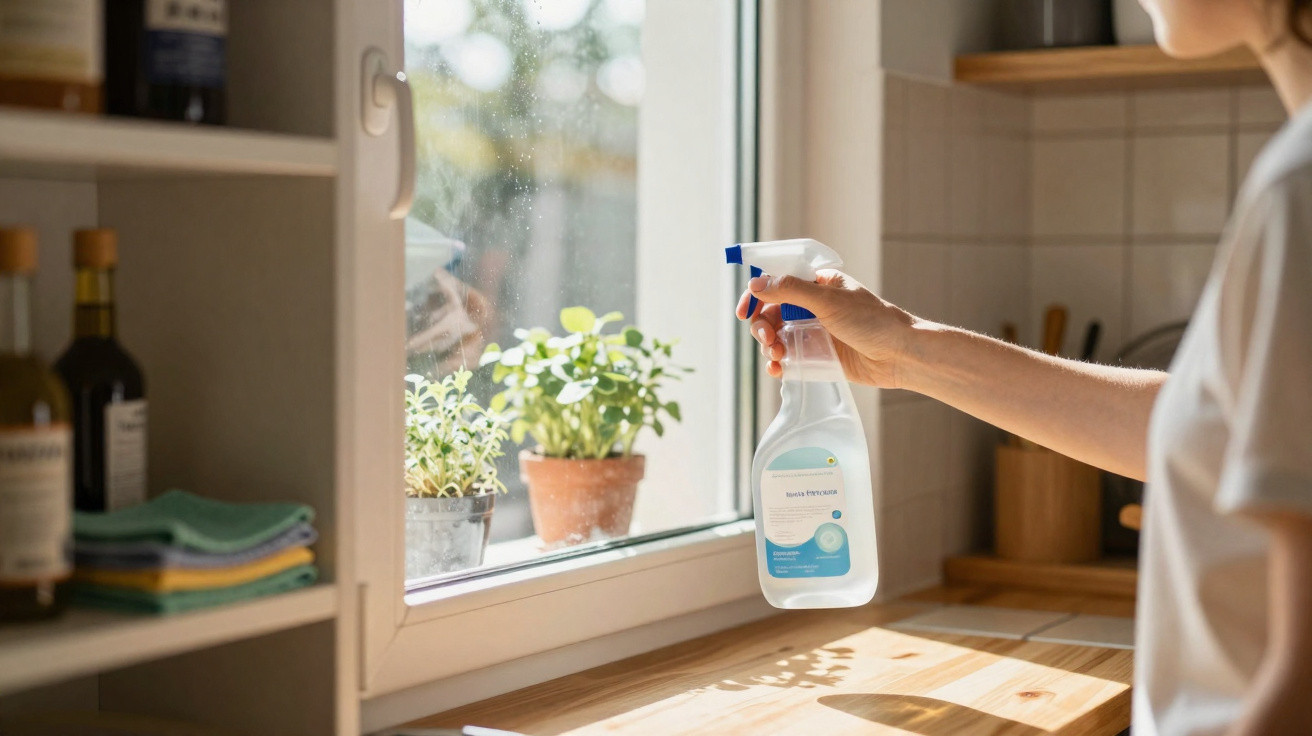
- Use a simple spray bottle with warm water and a little gentle cleaner for quick sole wipe-downs.
Living with the winter mess, without letting it rule your home
Most households don’t want a military checkpoint at the front door. They simply want to cross the living room barefoot in January without collecting a mystery crumb on every step. A flexible routine-made up of a few well-chosen gestures-can deliver that without turning you into the hallway police.
A useful shift in thinking is to treat winter shoe care like “daily dishes”, not “spring cleaning”. You wouldn’t leave a mug unwashed for three weeks. Grit and salt work the same way. A 30-second end-of-day sweep around the shoe zone with a handheld vacuum, or a quick mop pass near the mats, helps stop particles migrating into bedrooms, rugs and soft furnishings where they’re harder to remove.
When the house feels like a drying room full of boots and soggy socks, that small ritual can feel like taking the space back-nothing perfect, nothing Instagram-ready, just quietly managed.
The surprising benefit shows up in the air. People with dust or pet allergies often find their symptoms worsen indoors in winter rather than during hay fever season. Part of that is because windows stay shut, but it’s also because every wet sole and muddy paw turns the entrance into a launchpad for irritants.
If less debris gets past the first few metres, your next vacuum session actually finishes the job instead of merely shifting particles around. Air filters block up more slowly. Radiators don’t gather the same fine grey film. You notice fewer unexplained sneezes near the sofa, fewer itchy eyes after an evening on the floor with children or pets.
You don’t need a complicated system for it to work. A home allergist in London captured the idea in a line that stays with you: “Stop thinking of your floor as a passive surface. Treat it like a lung. What lands on it will be breathed, sooner or later.” It’s a slightly uncomfortable image, but it makes that extra pause at the door feel oddly worthwhile.
There’s a quiet satisfaction when the set-up starts running on its own. The day your teenager drops their boots onto the tray without being told. The moment a guest uses the mat automatically and says, “Where did you get this? It actually dries my shoes.” The small relief of walking through the hallway in socks and feeling… nothing. Just floor.
You’ll still get the occasional rogue footprint on the stairs. The dog will still locate the one remaining puddle and bring it home like a prize. But the overall feel of the house changes: less angry wiping, more quick, almost automatic habits that keep the worst of winter orbiting outside your main living spaces.
Maybe that’s the real victory of a winter-shoe maintenance routine-not pristine floors, but the sense your home is holding its own against the season. On long grey evenings, with wet boots lined up like sleepy soldiers by the door, that can be more than enough.
| Key point | Detail | Benefit for the reader |
|---|---|---|
| Create a “shoe border” | Combine an outdoor doormat, an absorbent indoor mat and a dedicated shoe zone | Immediately reduces how much dirt and allergens reach the rest of the home |
| Build short, regular actions | Quick sole wipe, a brief vacuum pass around the zone, rotate mats | Keeps floors noticeably cleaner without a huge mental load |
| Design for real life | Keep supplies visible and easy to reach, positioned where people actually remove shoes | Turns good intentions into lasting habits the whole family can live with |
FAQ:
- Should I always make my guests take off their shoes in winter? It’s your call, but offering a clear shoe zone and a couple of pairs of clean house slippers makes the choice easier without feeling strict or awkward.
- Are washable slippers or indoor shoes really worth it? For allergy sufferers they can be a small game-changer, because they keep feet warm while avoiding the dust and pollen trapped in socks worn inside shoes.
- How often should I wash my entrance mats in winter? For busy households, every 7–10 days is a good rhythm; shake them outdoors midweek to remove grit and trapped allergens between washes.
- Does a robot vacuum help with winter shoe dirt? It can, if you run it regularly around the entrance and main walking paths, but it doesn’t replace scraping mats and a basic shoe routine at the door.
- What’s the quickest thing I can do if I’m too tired for a full routine? On low-energy days, aim for just one action: either shake the mats outside or do a 30-second sweep or vacuum around the shoe zone. That alone slows the spread.

Comments
No comments yet. Be the first to comment!
Leave a Comment