
That convenience, however, creates three separate problems.
A move that seems harmless can block pipework, pollute waterways and waste valuable nutrients at the same time. If you enjoy tinned sardines, it’s worth knowing what happens to the oil - and how to use it sensibly or dispose of it properly.
The “easy” pour-away - and what it causes
Most people know the routine: open the tin, peel back the lid, put the sardines on a plate - and tip the oil straight into the sink. Once, twice, hundreds of times. Nothing obvious is left behind, no visible grime, and the drain seems to take it without complaint.
What disappears into the trap doesn’t simply vanish - it clings to pipes, builds up in the sewer network and ultimately ends up in the natural environment.
The trouble starts just centimetres below the sink. As the oil cools, it thickens and sticks to the inside of the pipe. When it combines with soap residue, food scraps and limescale, it forms a solid greasy coating. Each new “dose of oil” adds to that layer until water drains slowly - or not at all.
Blocked pipes and costly emergency call-outs
Plumbing companies regularly report severe blockages caused by kitchen fats. And they often begin with exactly these small habits: oil from tuna, sardines, vegetables in oil, or leftover frying fat is simply poured down the drain.
- first, the basin starts to gurgle a little,
- then unpleasant smells rise,
- eventually, water sits there for minutes,
- and in the end, an emergency plumber is needed.
A professional drain clean can easily run into three figures - often far more than a year’s worth of sardines.
Pressure on wastewater treatment and waterways
Whatever makes it past your household pipework ends up in the sewer system and later at the wastewater treatment works. There, fats and oils interfere with the microorganisms that are meant to break down waste. The more fat in the wastewater, the more technical effort is needed to get the water reasonably clean again.
If fats and oils reach streams, rivers and lakes, they form a film on the surface. Just 1 litre of cooking oil can cover an area of several hundred to thousands of square metres. That layer hampers oxygen exchange, harms fish and other aquatic life, and adds to general water pollution.
Why sardine oil is far too good for the sink
Inside the tin, the sardines mature in their oil. Over time, flavour compounds, some of the fat and fat-soluble vitamins move into the liquid. That rounds out the taste - and it’s precisely this concentrated part that many people pour away.
Pouring the oil away means throwing out flavour, nutrients and actual money all at once.
Omega-3 in the oil - not only in the fish
Sardines are a classic source of omega-3 fatty acids. These anti-inflammatory fats aren’t only in the flesh; they also end up in the oil in the tin. The oil can also contain fat-soluble vitamins such as vitamins D and E, plus additional aromatic compounds.
Using the oil means getting more value from the product. And because sardines are relatively inexpensive compared with many other fish, including the oil improves the nutrient value per pound even further.
Practical ideas: how to use sardine oil in the kitchen
The oil from the tin is surprisingly adaptable. It can stand in for other fats such as sunflower oil, olive oil or butter - especially anywhere a gentle fish flavour works well.
Four simple recipes with minimal effort
- Vinaigrette with a kick: One part sardine oil, one part neutral oil, a little vinegar or lemon juice, mustard, salt and pepper. Works well with tomatoes, green beans or potato salad.
- Sardine spread: Mash sardines with a little oil, cream cheese or quark, lemon juice and herbs. The remaining oil helps create a creamy texture.
- Quick pan pasta sauce: Warm the oil in a pan, sweat garlic, then mix with lemon juice and chopped parsley and toss through pasta. If you like, add the sardine pieces.
- Finish for roasted vegetables: After baking, drizzle peppers, courgettes or potatoes with a few spoonfuls of the oil. It boosts flavour and saves using other fat.
If the taste feels too intense, mix the oil with a more neutral one. That softens the fish note while largely keeping the nutrients.
Which oils are better not heated?
Depending on the product, the oil in the tin may be olive oil, sunflower oil or a blend. A quick check of the label will tell you. It’s less suitable for high-heat frying because it has usually been heated once already. For gentle warming, braising or cold preparations, however, it’s ideal.
What if you genuinely don’t want to eat the oil?
Some people simply dislike the smell or flavour. Sometimes the oil can seem rancid if the tin has been stored for a long time. Even then, it still shouldn’t go into the sink.
If you don’t want to use the oil, treat it like waste oil - not like wastewater.
Clean disposal, step by step
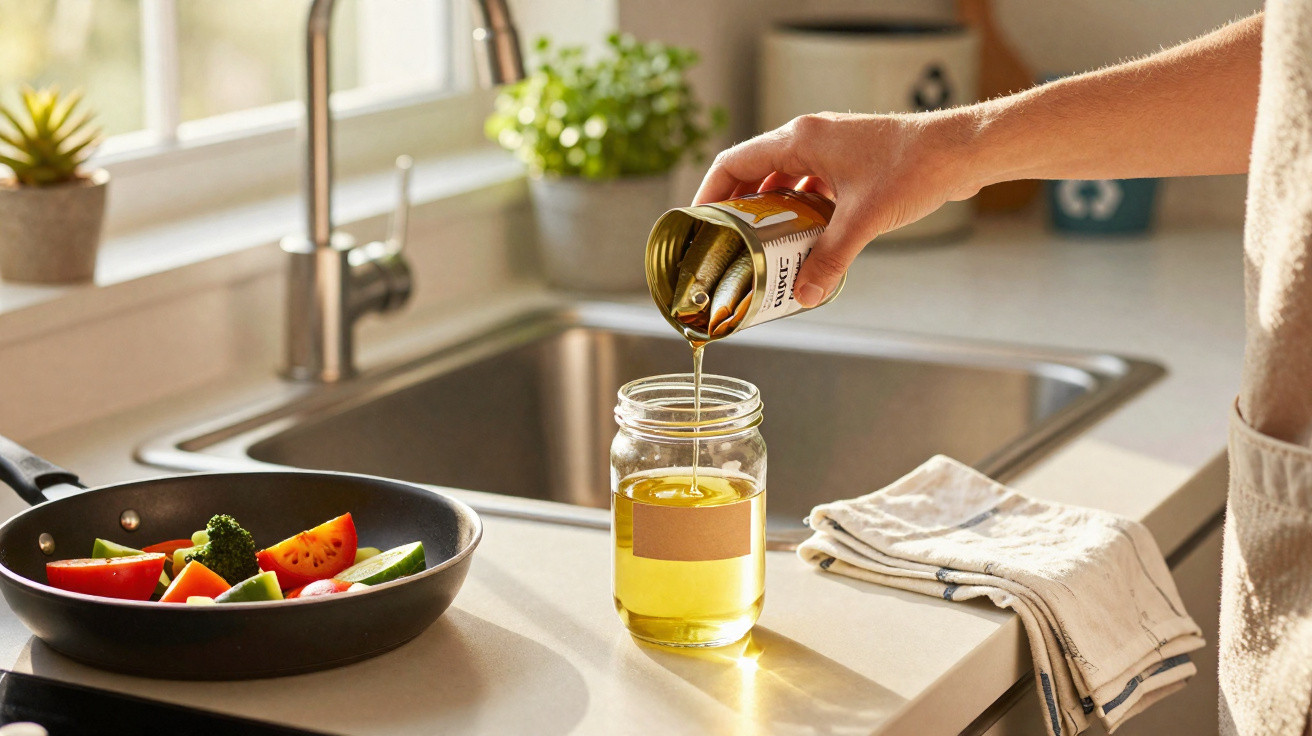
- Pour the oil into a small jar or an empty bottle.
- Seal the container well so no odour escapes.
- Store it somewhere cool and dark until it’s worth taking to a collection point.
- Take it with you next time you go to the local recycling centre or a designated collection site.
Many councils now provide dedicated containers for cooking oils - sometimes at household waste recycling centres, sometimes at local recycling points. The oils are collected there and can be used for energy recovery or processed further.
The bin as a last resort
If there’s no collection point nearby, the fallback is residual waste (general rubbish). The rule still applies: never pour it loose into the toilet or down the drain. Put it into a leak-proof container, allow it to cool, and only then place it in the bin. That way, at least it doesn’t enter the wastewater system in concentrated form.
How much damage can “a little” oil really do?
A teaspoon disappears without a trace, no question. The real issue is the total of many small amounts - from countless households, day after day. When fat and oil residues repeatedly enter the system over months, they can form so-called “fatbergs” in sewers: hard, waxy masses made up of fats, wet wipes and other rubbish.
These lumps can block access chambers, damage pumps and disrupt whole streets. Towns and councils routinely spend large sums cutting these masses out of sewers and disposing of them.
Everyday tips: better ways to handle cooking oil in general
The same principles that apply to sardine oil apply to all cooking oils and frying fats from the kitchen.
| Situation | Better way to handle the fat |
|---|---|
| Frying pan with cooking residue | Wipe out the grease with kitchen paper and dispose of it in general waste, then wash up |
| Deep fryer or large pot of oil | Let it cool, strain through a sieve into a bottle, store it and take it to a collection point |
| Small amounts from tins or jars | Use it for cooking or keep it in a collection container |
| Spoiled oils | Pour into tightly sealable containers, take to a recycling centre or - if that’s not possible - place in general waste |
Why it pays to be mindful with tinned oil
Using the oil saves other fats, increases the nutrient content of meals and reduces waste at the same time. For people aiming to eat an omega-3-rich diet, sardine oil in particular is an easy addition - and notably more sustainable than some expensive capsules.
At the same time, mindful handling reduces strain on your own pipes and on the public sewer system. Less fat in wastewater means a lower risk of blockages, fewer odour issues and less work at wastewater treatment plants.
In the end, it comes down to a simple reflex when you open the tin: pause for a moment and decide whether the oil should go into the pan, into the salad bowl or into a collection container - just not down the drain.


Comments
No comments yet. Be the first to comment!
Leave a Comment