
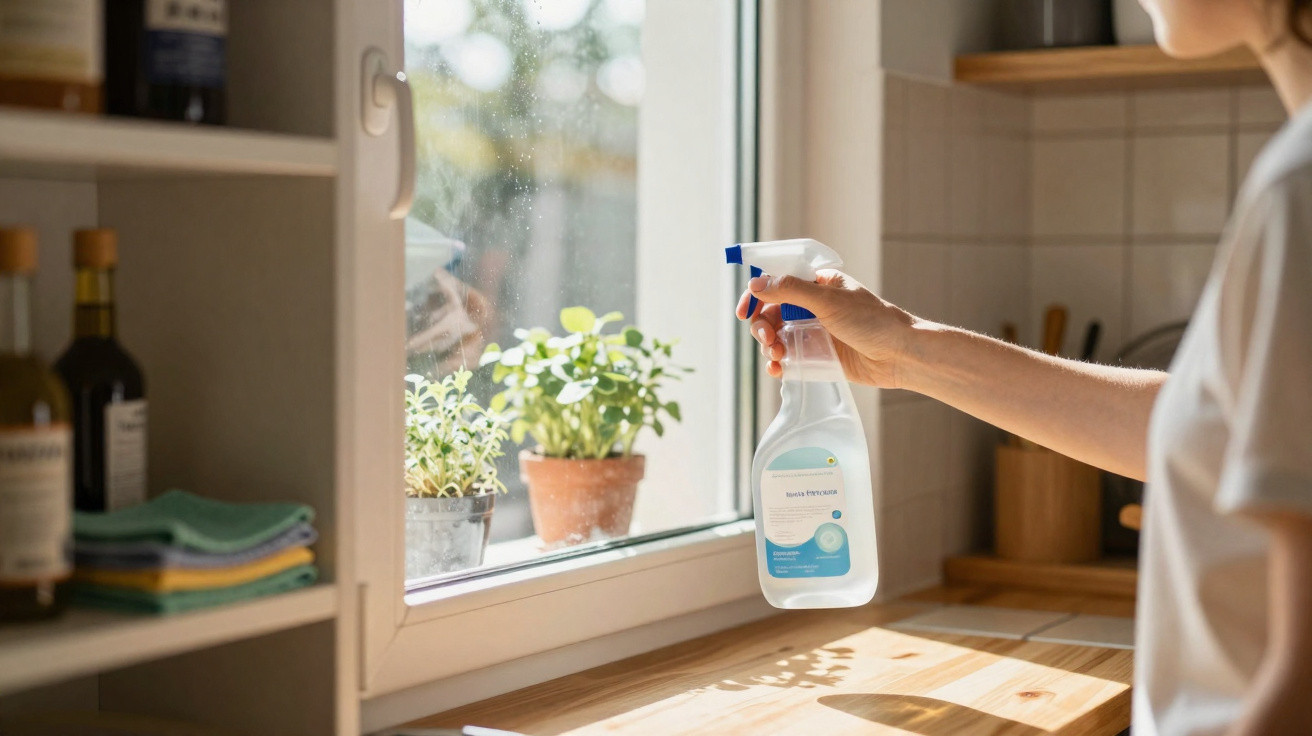
The streaks wouldn’t budge. Then a simple kitchen habit reset how I clean-almost overnight.
When the low winter sun caught the window, every smear lit up. I wanted a faster solution with fewer products and less hassle. One basic cupboard staple ended up doing most of the work, and I haven’t gone back to my old routine since.
The shift from fancy sprays to a pantry bottle
Cleaning windows can feel like an arms race of gadgets and perfumed sprays. Plenty of us hunt for that perfect, streak-free shine using blue liquids, fragranced wipes and pricey trigger bottles. I stopped the chase and chose something unglamorous instead: white vinegar. It sits by the salt, costs very little, and-because it’s a weak acetic acid-breaks down the very build-up that sticks to glass: hard-water marks, greasy film and day-to-day residue.
One small change: swap specialty glass cleaner for a mix of white vinegar and water. Less cost, fewer chemicals, clearer panes.
Why the chemistry favors vinegar
Glass may look perfectly smooth, but tiny pits and scratches trap minerals and oils. Vinegar helps dissolve mineral deposits left by tap water and loosens grease, so there’s less scrubbing, less lint, and a cleaner final wipe. The sharp smell doesn’t linger; it fades as the mix dries. And because a diluted solution doesn’t leave sticky additives behind, it can reduce how quickly new streaks show up.
What you’ll need
- A clean spray bottle
- Plain white distilled vinegar
- Cold water (filtered if your tap water is very hard)
- Two microfibre cloths or a squeegee and a lint-free towel
- Optional: one drop of mild washing-up liquid for first-pass dirt
The quick method that actually stays streak-free
Avoid cleaning in bright sun or gusty conditions. A cloudy day is ideal, as the liquid won’t dry too quickly and set marks into place.
- Combine one part white vinegar with three parts water in your bottle. Give it a gentle shake.
- Wipe dust from the frame and sill first, so grit doesn’t drag across the glass.
- Lightly mist the pane-don’t soak it; a fine layer works better.
- If there’s stubborn grime, use a single drop of washing-up liquid for the first wipe, then switch back to the plain vinegar mix.
- Wipe from top to bottom using a folded microfibre cloth, turning to a dry section often.
- Finish by drying the edges with a clean towel, or pull a squeegee down in overlapping passes.
Ideal starting ratio: 1 part vinegar to 3 parts water. Use filtered water if limescale is a problem. Dry edges last.
Where vinegar shines, and where it doesn’t
Vinegar is surprisingly useful, but it isn’t suitable for every surface. A quick sense-check helps protect trims, coatings and seals.
| Good fit | Use caution or avoid |
|---|---|
| House windows and mirrors | Natural stone (marble, limestone, travertine) |
| Shower glass, oven door glass | Screens and electronics |
| Car windows (untinted) | Tinted films, specialty coatings, anti-glare layers |
| Hard-water spots on glassware | Unsealed wood trim or damaged varnish |
Safety notes you’ll want to remember
- Try a small patch first on coated glass or near seals.
- Do not mix vinegar with bleach. That reaction can release dangerous chlorine gas.
- Avoid pairing vinegar with hydrogen peroxide in the same bottle; it can form peracetic acid, a strong irritant.
- Limit contact around rubber seals and wipe dry afterwards to help preserve them.
Never mix vinegar with bleach or hydrogen peroxide. Keep it simple: vinegar plus water is enough.
How to banish persistent streaks
Most streaking comes down to three things: cloths that aren’t truly clean, cleaner evaporating too fast, or mineral-heavy water. Fresh microfibre cuts down on lint and leftover residue. Work in the shade, early morning or later in the day so the solution dries more slowly. If your tap water spots easily, use distilled or filtered water in the mix. And if you’re dealing with nicotine haze or kitchen grease, a tiny drop of washing-up liquid for the first pass can help-just follow with a final mist of the plain vinegar solution and a dry wipe to finish.
Costs, health and the planet
Vinegar sits at the budget end of household cleaners, and once it’s diluted, one bottle can last for months. The ingredient list is simple: no dyes, no added fragrance, and acetic acid breaks down readily. That can mean fewer plastic bottles crowding the cupboard and fewer worries about residues on sills or on your hands-particularly in homes with children and pets.
Pro touches that make windows look professionally done
Edge work and pattern
Start by wiping around the edges to prevent drips running into your clean area. Then stick to a consistent pattern-vertical strokes indoors and horizontal outdoors-so if any lines remain, you can tell which side they’re on. Swap to a fresh cloth as soon as the one you’re using feels damp.
Squeegee technique
Keep the blade at a slight angle and pull from the top in smooth, overlapping strokes. After each pass, wipe the rubber edge with a dry towel. A clean blade is key to avoiding faint “ghost” streaks.
What about the smell?
That sharp note disappears quickly once the water evaporates. If you’d prefer something softer, leave a few lemon peels in a jar of vinegar for a week, then strain it. The lightly citrus-infused vinegar still works well. Be cautious with essential oils-too much can leave a film behind.
Beyond windows: useful side gigs for the same bottle
- Descale kettles and coffee machines: run a diluted cycle, then rinse twice with plain water.
- Shine glassware: soak briefly in a vinegar bath, then dry with microfibre.
- Rinse aid stand-in: add a splash to the dishwasher’s rinse compartment if spots keep appearing.
- Laundry softener alternative: a small amount in the rinse drawer can reduce stiffness and soap build-up.
- Bathroom chrome: spray, leave for a minute, then buff to remove water spots.
If your windows face special challenges
Homes by the sea often get a salty film. Rinse with plain water first, then use the vinegar mix. City windows tend to collect soot; do an initial pass with a drop of washing-up liquid, followed by the vinegar solution. During pollen season, sticky grains cling to everything-wash screens separately and let them dry fully before refitting, to avoid trapping moisture and encouraging mould.
Quick checklist for future you
- Mix: 1:3 vinegar to water. Use filtered water for hard-water areas.
- Timing: cloudy day, low wind.
- Tools: fresh microfibre or a clean squeegee blade.
- Finish: dry edges and corners last.
- Safety: never mix with bleach or hydrogen peroxide.
If you like a simple test, clean half a window with your usual spray and the other half with the vinegar mix. Check again mid-afternoon, when sunlight makes every flaw obvious. Most people see fewer streaks and less glare on the vinegar side. And once you’ve mixed a bottle, it can handle mirrors, shower doors and oven glass-without needing a cupboard full of specialist products.
For car glass, stay out of direct sun, avoid tinted film, and use soft water so you don’t create fresh spots. If you’re tackling tall panes, a long-handled squeegee and a belt pouch for cloths can save repeated trips up and down the ladder. Small tweaks like these cut minutes off the job and turn it from a chore into a quick, satisfying routine.


Comments
No comments yet. Be the first to comment!
Leave a Comment