
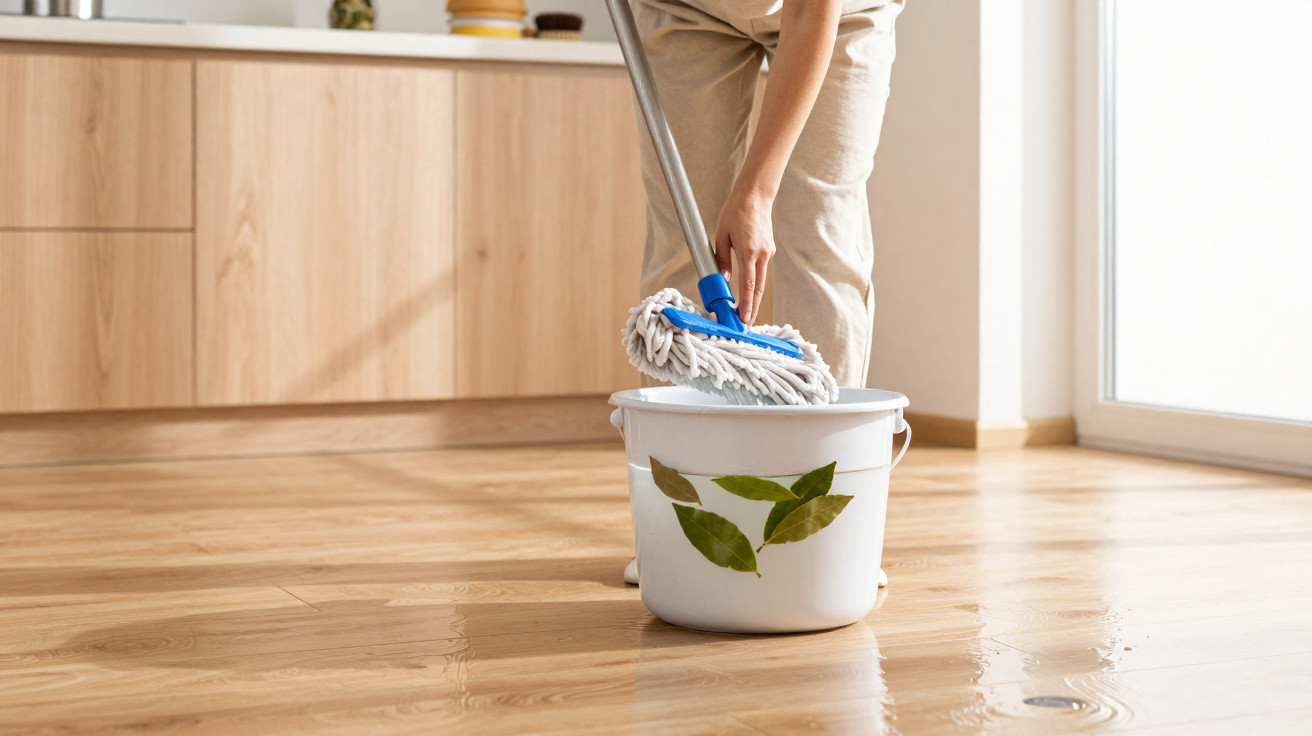
A simple tweak using an everyday kitchen spice can make all the difference.
Plenty of people mop their floors regularly, patiently wait for everything to dry - and then, not long after, the same footprints, streaks and dull film reappear. It is frustrating, takes up time and makes it feel as though all that effort was pointless. By slightly changing the approach and adding an unassuming leaf from the spice cupboard, tiles and laminate can look clearer again - and feel cleaner and more pleasant underfoot.
Why your floor still looks dull after mopping
In many homes the tap water is hard, meaning it contains a lot of limescale. When you mop, the water evaporates but those minerals stay behind as a fine, almost invisible haze. That residue is what robs the surface of its shine, so even a freshly cleaned floor can look dusty and muted.
On top of that, plain water may lift loose dust, but it struggles with greasy marks and dried-on spills. Shoe soles, toy wheels, food crumbs or a knocked-over coffee can leave traces that slowly combine into a lightly sticky layer. Visually, everything may seem fine - but barefoot the floor can feel dull or slightly slimy.
Why many floor cleaners can make it worse
When irritation sets in, it is tempting to grab a specialist cleaner - yet the result is often the opposite of what the label promises. Heavily perfumed floor products can sit on tiles or laminate as a thin coating. As you walk, there can be a faint tacky feel, dust clings more readily and streaks show up more clearly.
Even DIY mixtures can backfire when they are too strong. Overdoing soap leaves build-up that is difficult to buff away. Highly concentrated chlorine can damage grout and irritate the airways. And using too much acid can permanently harm delicate surfaces.
"A shiny floor doesn’t need harsh chemicals - it needs a mix that lifts dirt, reduces limescale and dries without leaving residue."
This is exactly where the spice-cupboard trick comes in - using something most people would expect in a tomato sauce, not in a bucket of mop water.
The unexpected helper: bay leaves in the mop bucket
Rather than buying another specialist product, some households rely on an old-fashioned but surprisingly effective home method: dried bay leaves in the cleaning water. It may sound like a tip from your grandmother, but it works remarkably well.
How to use the bay-leaf method, step by step
- Put about 6 dried bay leaves (or 8 if the leaves are very large) into a saucepan.
- Pour over 1 litre of hot water.
- Leave to infuse for around 10 minutes, until the water smells clearly of bay.
- Strain out the leaves and pour the liquid into your cleaning bucket.
- Top up with lukewarm water so you have enough mop water.
- Optional: add 1 tablespoon of clear household vinegar to help lift limescale residue.
Use the mixture lukewarm on the floor. A microfibre mop or a well-wrung cotton cloth is sufficient. Key point: do not mop too wet, otherwise puddles form and can dry into streaks again.
Why bay leaves help your floor
Bay leaves contain essential oils that have a mild antibacterial effect and help neutralise odours. In the mop water, you get the benefit of those compounds without turning the room into an overpoweringly perfumed space. The scent is closer to an herb garden than a chemical aisle.
Lukewarm water loosens greasy dirt more effectively, and microfibre fibres pick up the particles. If you choose to use it, the small splash of vinegar helps dissolve limescale film that would otherwise show up as a grey haze. That is why the floor can dry clearer and feel smoother - without becoming slippery.
"The result isn’t a mirror-like high gloss, but an even, satin-clear finish that feels pleasant under bare feet."
Which floors benefit from the trick - and where to be careful
The bay-leaf approach is best suited to:
- Ceramic tiles and porcelain stoneware
- Sealed laminate
- Vinyl and design/LVT flooring
- Painted or sealed wood-effect floors
With calcareous natural stone such as marble, travertine or slate, it is wise to be cautious - especially if vinegar is involved. Acid can etch these surfaces and leave them looking dull. If you have such flooring, test the mixture first in an inconspicuous spot and, when in doubt, leave the vinegar out entirely.
As a general rule, a clean mop system is non-negotiable. If you dip a thoroughly dirty cloth into fresh herb-infused water, you simply spread old grime around again and then wonder why the trick did not work.
Common floor-mopping mistakes - and how to avoid them
| Mistake | Result | Better approach |
|---|---|---|
| Too much cleaner in the bucket | Sticky film, streaks | Use only a few splashes and top up gradually if needed |
| Very hot water on sensitive flooring | Warped planks, swollen laminate | Use lukewarm water and avoid soaking the floor |
| Dirty mop head | Grey haze, marks remain | Rinse the mop regularly or replace it |
| Unsuitable acids on natural stone | Dull patches, permanent damage | Use a cleaner made specifically for natural stone |
How often to mop - and what helps the effect last
Using the bay-leaf version once a week is enough for many households. In high-traffic areas such as the hallway or kitchen, a second pass may be required. In between, a quick sweep or vacuum is often enough to remove crumbs and dust.
One more practical step: take outdoor shoes off at the front door. Treaded soles bring in sand, bitumen residue and moisture - exactly what later shows up as grey marks and dark streaks on the floor. Slippers or going barefoot can noticeably extend the time between proper cleans.
Why this trick is so appealing day to day
The spice is already in the cupboard, it costs very little, and it fits easily into a normal cleaning routine. You do not need new gadgets, a special kit or a strongly scented concentrate that might bother children or pets.
If you are sensitive to artificial fragrances, there is an added bonus. Bay smells subtle, fades gradually and does not cling to fabrics or furniture. The air typically feels far more comfortable than it does after using many heavily perfumed floor cleaners.
If you want to, you can adjust the method gently: some people add a few drops of a mild essential oil - such as lemon or lavender - to the bay infusion. A very small amount is enough; otherwise you risk a tacky film again or even headaches.
Ultimately, this kitchen trick shows how much difference a small change in routine can make. If you have felt as though you have been "mopping for nothing", a simple bay leaf in the bucket can be the first time in ages that your floors not only look clean, but feel clean too.
Comments
No comments yet. Be the first to comment!
Leave a Comment