
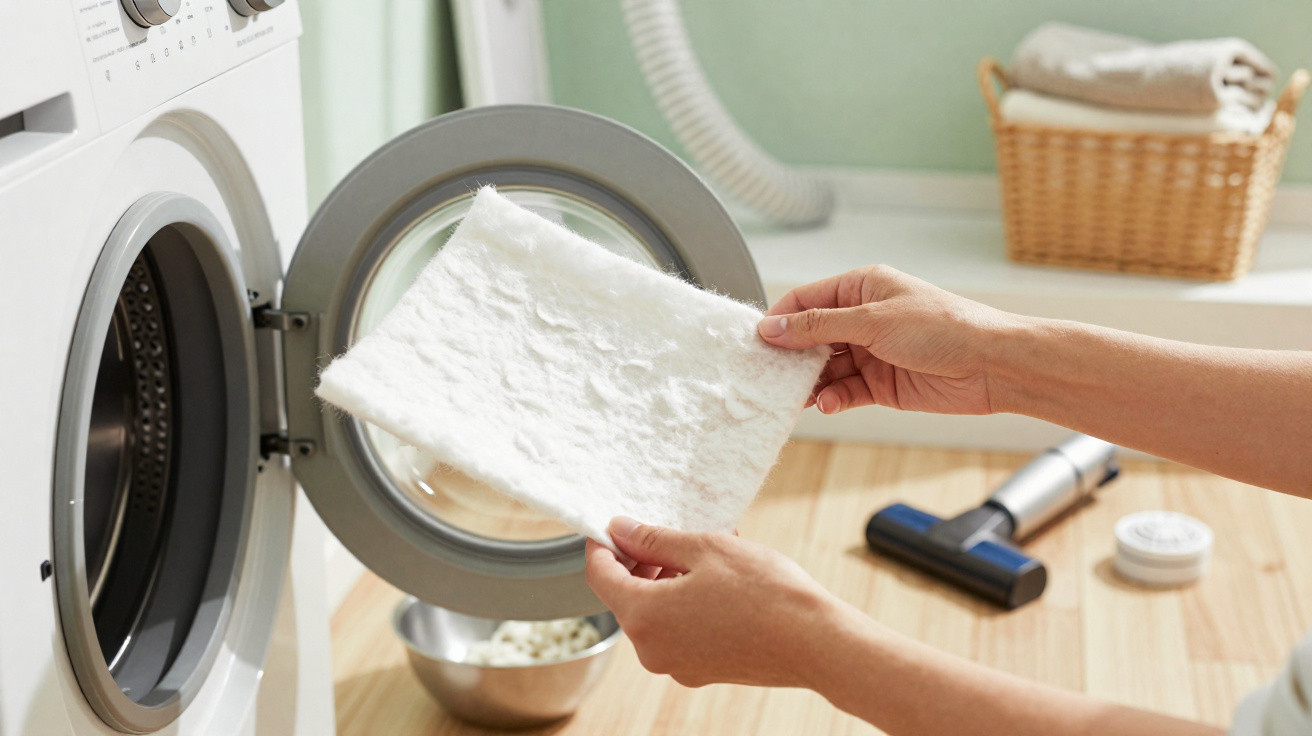
The humming cuts out before the timer reaches zero. You open the dryer, reach into the warm heap of T-shirts, and see that small grey layer sitting in the lint trap. Perhaps you clear it with two fingers. Perhaps you tell yourself, “Eh, I’ll do it next time.” The utility room carries that faint mix of warmth and fabric-softener sheets familiar from an ordinary evening in an ordinary home.
Then, weeks later, you are scrolling on your phone when a headline appears: “Family loses home in dryer fire.” The same appliance. The same neglected lint routine. The same quiet click of a Start button most of us never give a second thought.
The only difference is a small amount of fluff that was left behind.
Dryer lint: the small habit that separates routine from disaster
Most of us see the lint trap as advice rather than a requirement. The warning label may be right there, yet the towels still come out dry, so it cannot be that serious, can it? That is exactly the sort of thinking that allows debris to build up unnoticed in the slim compartment beneath the filter.
What collects in a lint trap is not merely soft dust. It is a dense mix of fibres shed during every wash, along with hair, pet fur, detergent deposits and minute plastic particles from synthetic clothing. It is loosely gathered and exceptionally dry.
Put that beside a heating element or a gas flame, then run the appliance for 60 minutes. Repeat that process again and again.
Fire investigators describe much the same scene in towns and cities everywhere: a gutted utility room, a melted dryer door and black scorch marks rising up the wall. The source can be distressingly straightforward-a blocked lint screen and a vent filled with years of grey deposits.
The U.S. Fire Administration estimates that nearly 3,000 clothes-dryer fires occur in homes every year, resulting in injuries, deaths and millions in property damage. The main cause is failure to clean. It is not defective wiring or an unusual manufacturing fault. It is simply missed cleaning.
On an ordinary day, it seems like dull household maintenance. When something goes wrong, it becomes the only subject anyone can discuss.
This is what takes place inside the appliance. When the lint trap is blocked, hot, damp air cannot flow out as it should. The dryer must run harder and for longer to force air through that dense layer of fibres, causing temperatures to rise where they should not.
The captured heat dries the lint even more, making it more like kindling than dust. Should overheating or a small spark occur near this material, it does not merely smoulder. It ignites rapidly. The plastic filter housing may melt, wiring can become exposed, and flames can enter the vent duct.
Once a fire reaches the vent, the duct can become a direct route through walls and ceilings, remaining out of sight until smoke eventually escapes through an opening.
How to clean your dryer lint trap as though your home depends on it
The essential step could not be easier. Before every load, remove the lint screen, lift away the lint with your fingers in a single layer, and put it in the bin. Refit the screen, then press Start. This brief routine should feel as automatic as switching on a light.
Once a month, take the process a little further. Remove the screen and wash it in warm water with a small amount of washing-up liquid. Fabric conditioner and dryer sheets leave behind an invisible coating that restricts airflow. Allow the screen to dry fully before replacing it.
Where possible, use a slim vacuum attachment inside the slot that holds the filter to remove the compacted lint below the screen.
Real life, of course, tends to get in the way. You may be managing children, work, late meals and a basket of gym kit that smells like a changing room in July. Pausing to thoroughly clean the lint trap hardly feels urgent.
Make the routine difficult to overlook instead. Keep a small bin next to the dryer so clearing the screen becomes part of the action. Attach a brief note to the dryer door: “Lint first. Then start.” It may sound ridiculous, until you remember that one handwritten prompt could separate you from a very bad night.
Let us be honest: almost nobody does this instinctively every day. The answer is to make it so easy that “I’ll do it later” becomes “I did it without thinking.”
Fire inspectors often express the same point in slightly different ways, and hearing it in person is sobering:
“Most dryer fires were preventable, and the people affected thought they were just doing laundry like everyone else.”
If that message stays with you, turn it into a practical checklist that you can tape to the wall:
- Remove lint from the screen before every load.
- Wash the lint screen with washing-up liquid once a month.
- Vacuum the lint-trap opening regularly.
- Have the entire vent duct professionally cleaned once a year.
- Press Stop if you notice a burning smell, rather than simply “hot laundry”.
Beyond efficiency: view your dryer as a heat machine, not a box
It is unsettling to consider how much heat we casually create in small rooms. A dryer is not simply a metal box that leaves clothes feeling soft. It is a controlled heat machine that drives air across heating elements and through fabrics at speed.
Cleaning the lint trap after every use is like removing leaves from a fire pit before striking a match. It does not seem dramatic until you picture that same lint igniting, spreading and moving into a wall at two in the morning while you sleep.
Once that little grey layer looks like fuel rather than fluff, it is difficult to see it any other way.
| Key point | Detail | Why it matters to the reader |
|---|---|---|
| Lint is highly flammable | Extremely dry fibres can sometimes sit in direct contact with heating elements | It explains why a simple “clump of dust” can lead to a major fire |
| Cleaning after every cycle reduces overheating | Clear airflow keeps internal temperatures more stable | There is less fire risk, while shorter cycles save time and energy |
| Maintaining the duct is as important as cleaning the filter | Dirty ducts hold years of lint out of sight | It helps prevent a fire from spreading behind walls without being immediately visible |
FAQ:
- How often should I really clean the dryer lint trap? Every single load. Before you press Start, pull the screen, peel off the lint, and put it back. Think of it as part of the same motion as closing the door.
- Isn’t cleaning the vent once a year enough to prevent fires? No. Annual vent cleaning is vital, but it doesn’t replace the daily lint trap habit. Fires often start right at the filter area where lint meets high heat.
- Can I use dryer sheets and fabric softener safely? Yes, though they leave residue on the lint screen over time. Rinse the screen with warm soapy water monthly to restore proper airflow and let it dry fully.
- Are some dryers more dangerous than others? Older, poorly maintained dryers and those with long, twisting vent runs carry more risk. Still, any dryer with a clogged lint trap can become hazardous.
- What warning signs should make me stop the dryer immediately? Burning or scorched smells, clothes or the dryer front feeling unusually hot, or cycles getting longer without explanation. Hit Stop, unplug the machine, and inspect or call a professional.






Comments
No comments yet. Be the first to comment!
Leave a Comment