
There is a more understated way to make a home smell fresh and feel properly clean-the sort that has visitors asking which fragrance you are wearing rather than which cleaning product you used.
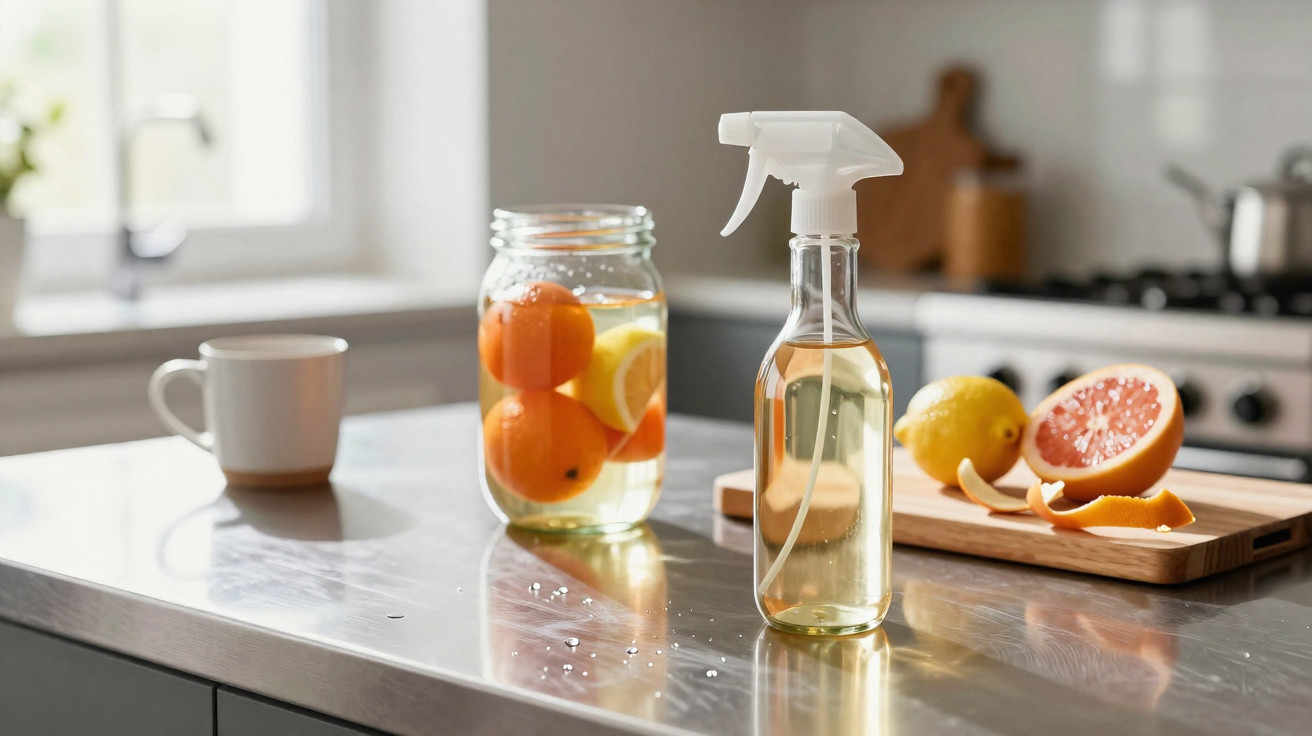
The first time I made it, my kitchen looked thoroughly Monday-ish: coffee rings on the table, an exhausted sponge and lemon rinds left over from the previous evening’s roast chicken. I put the peels in a jar of clear vinegar, tightened the lid and left it in the sunlight. When I opened it two weeks later, the smell of a warm orange grove seemed to drift out. I tipped some into a spray bottle, added water and sprayed the sticky cooker hood. The grease came away as though it had never been there. My partner came in, stopped and breathed in as you might when a scent brings back a memory. After one more wipe, I could see my reflection in the steel. It felt almost unfair. Then I moved on to the bathroom tap.
One jar, countless cleaning jobs
This cleaner begins with the contents of your fruit bowl. Citrus peel contains natural oils high in limonene, a solvent that breaks down greasy residue without a harsh synthetic smell. Infusing the peels in ordinary white vinegar combines those oils with acetic acid, which tackles mineral cloudiness and soap scum while improving glide and shine. The finished spray smells sunlit and performs like a professional cleaner. We have all sprayed a surface while quietly hoping it will work; with this, the cloth simply glides across it. You get shine without a headache, and the room smells lively again.
I put it to work on the chore that always defeats me: a cooker hood after a week of pasta dinners. Two sprays, a patient minute and a slow pass with a lint-free cloth were enough. The baked-on layer softened as though it had only been dust. Then came the fridge shelves: remove them, spray them, wipe them and there is no lingering cleaning-product taste. Even the microwave door recovered that clear, new-appliance look. My neighbour borrowed the bottle and later sent me a photograph of her bathroom taps, displayed as if they were jewellery. Her message contained just two words: “Game. Changed.”
The science is straightforward. Vinegar has a low pH, helping it dissolve mineral build-up and release soap residue. Citrus peels infuse the vinegar with limonene and other terpenes, bringing extra degreasing ability along with a rounded, cheerful fragrance. Once the infusion is diluted with water, it becomes a balanced all-purpose spray that dries cleanly on glass and stainless steel. It is not a hospital-grade disinfectant, nor does it need to be. Everyday cleaning calls for something that removes what you can see and much of what you can smell, without making the kitchen feel like a chemistry laboratory.
How to make citrus vinegar cleaner
Keep your orange, lemon, grapefruit and even clementine peels. Fill a clean jar halfway with them, then pour in enough distilled white vinegar to cover them completely. Press the peels down so that none remain above the liquid. Seal the jar and place it somewhere cool and bright for 10 to 14 days, shaking it briefly whenever you walk past. Strain the liquid through a fine sieve or cloth, then combine it 1:1 with water in a spray bottle. For a smoother feel, add a teaspoon of vodka to help disperse the oils. Mark the bottle with the date and fragrance. I never thought a jar sitting by the window would transform the way my home smells.
Spray it on sealed worktops, glass, tiles, chrome, stainless steel, laminate, fridge interiors, bins and the inside panels of car doors. Avoid natural stone, including marble, travertine and granite, as vinegar can etch it; also avoid unsealed wood, screens and waxed surfaces. Do not combine vinegar and castile soap in one bottle: soap is alkaline, so it neutralises the acid and leaves behind a gummy residue. For especially grimy jobs, use a soapy wash separately, then finish with the citrus spray. And label the bottle clearly. Honestly, no one makes this every day, so your Future Self will appreciate your Past Self when the unidentified bottle is no longer unidentified.
Never mix vinegar with bleach. Keep the two well apart, because combining them produces dangerous fumes. For occasional sanitising of non-porous surfaces, clean first and then apply hydrogen peroxide after the citrus vinegar-never combine them in the same bottle. Keep this citrus spray away from pet bowls and cages, and always test it first on a small concealed area of any surface.
“The best cleaner is the one you’ll actually use. Mine just happens to smell like orange peel at golden hour.”
- Ratio reminder: 1 part citrus infusion to 1 part water. Optionally add 1 tsp vodka per 473 ml.
- Contact time: leave the spray for 60 seconds on greasy areas before wiping.
- Cloths: choose microfibre for glass, cotton terry for dirt, and newspaper for a squeaky-clean mirror finish.
- Extras: a strip of lemon zest in the bottle looks attractive and revives the fragrance.
- Storage: keep the bottle tightly sealed and use within 3 months for the best scent.
Where citrus vinegar cleaner works-and where it does not
You will keep reaching for this bottle because it turns routine chores into little sensory victories. A sticky high-chair tray is clean after two wipes. Your bin smells of citrus rather than last night’s leftovers. Glass tables become properly clear, without rainbow smears. A spray and a soft brush will lift kitchen film from grout before it becomes a major task. It will not work miracles on deeply set stains or in the fight against germs, and it is unsuitable for stone worktops. That is perfectly all right. You are creating an easy cleaning routine that changes your mental setting: quick clean, pleasant smell, finished. Give a jar to a friend, swap peels and compare combinations-orange-clove, lemon-rosemary or grapefruit-mint. Use glass spray bottles where possible. They preserve the fragrance and make the habit feel like one worth keeping.
| Key point | Detail | Benefit for the reader |
|---|---|---|
| Citrus and vinegar infusion | Peels infused for 10–14 days, strained and diluted 1:1 | A straightforward formula that is inexpensive, repeatable and smells like sunshine |
| Where it works best | Glass, stainless steel, tile, sealed laminate and fridge interiors | One bottle can replace window, steel and kitchen sprays |
| What to avoid | Marble/granite, unsealed wood, and mixing with bleach or soap | Helps protect surfaces and keeps the routine safe |
Frequently asked questions
- Can I use bottled lemon juice instead of peels? You can, but the peels provide limonene-rich oils that strengthen both degreasing power and scent. Bottled juice alone has a sharper aroma and lacks that warm citrus note.
- Does it disinfect? It cleans well, but it is not an EPA-registered disinfectant. For sanitising, clean first, then apply hydrogen peroxide separately to non-porous surfaces and leave it to sit before wiping.
- Will it attract ants or other insects? No-vinegar deters many pests. Rinse away sticky residues before spraying; the finished cleaner contains no sugar.
- Can I make the infusion faster? You can keep the jar in a warm sunny window and shake it daily, but the flavour and fragrance develop with time. Ten to fourteen days is the ideal period for a fuller, rounder scent.
- Is it safe for fabrics or laundry? Test a discreet area first. A light spray may freshen washable curtains or gym bags. In the wash, plain white vinegar works well as a rinse aid; citrus infusion may add a slight tint, so test it on pale fabrics.


Comments
No comments yet. Be the first to comment!
Leave a Comment