
Rings that once sparkled beneath café lights can soon seem worn out. Necklaces lie knotted together, feeling more like memories than metal. There is no need for specialist equipment or a visit to the jeweller: only a kitchen ritual handed down almost like a secret.
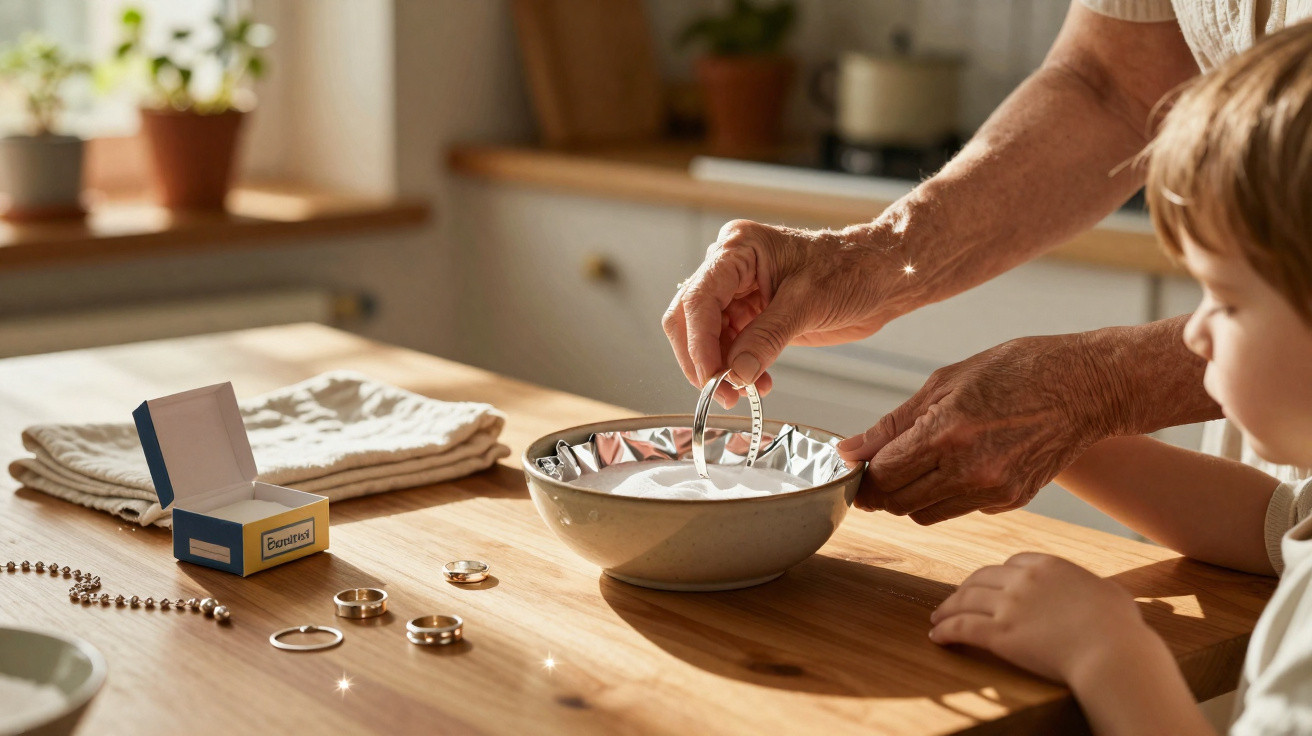
The first time I saw it, I was in a compact London kitchen carrying a faint scent of tea and toast. My eighty-two-year-old neighbour, Nora, covered a mixing bowl with aluminium foil and asked me to listen. We placed a chain inside, added spoonfuls of baking soda and salt, then covered it with water straight from the kettle. Bubbles rose like champagne. Slowly, the tarnish appeared to peel away, forming a slight haze around the metal, as though the years were lifting with it. We waited, rinsed it and dried it. The necklace reflected the light once more: bold and brilliant. Not a sponsored miracle. It felt like a small, satisfying triumph. Then Nora said, almost under her breath: “The smell means it’s working.”
Why Grandma’s way still wins
This traditional recipe has one clear advantage over shop-bought cleaner: it restores instead of abrading. Silver tarnish is silver sulphide, a layer that clouds the surface. In Nora’s bowl, the reaction removes that sulphur from the silver and attaches it to the aluminium. Rather than rubbing away part of the piece, you convert it back.
Everyone knows the feeling of pulling out a signet ring before an evening out, only to find it resembles something dredged from Thames mud. A commercial dip may promise quick results, but it also calls for gloves, ventilation and the hope that it will not remove a finish you did not realise was there. Nora’s approach is milder, and there is something unexpectedly pleasurable about it. You can hear the fizz, watch the transformation and take part in the process rather than simply avoiding it.
Then there is the kitchen-table calculation: a box of baking soda, a roll of aluminium foil and a pinch of salt. The cost of each clean is pennies. Many shop polishes contain strong acids or thiourea-based dips, which may be tough on both skin and the environment. A foil bath instead uses a gentle electrochemical exchange. It means less odour, less anxiety and greater control. The outcome makes its point softly, but unmistakably.
The recipe, step by step
Cover a heatproof bowl with aluminium foil, with the shiny side facing upwards. For every 250 ml of hot water, add 1 tablespoon of baking soda and 1 tablespoon of table salt. Pour in freshly boiled water until your jewellery is covered by 1–2 cm. Arrange the items so that they touch the foil. Leave them for 2–5 minutes, turning them once with a wooden spoon. Rinse under cold water, then pat dry using a soft microfibre cloth. It works in minutes.
Use a different approach for gold, platinum and hard gemstones such as diamonds, sapphires and rubies. Combine warm water in a small bowl with a few drops of mild washing-up liquid. Soak the pieces for 10 minutes, clean gently with a soft toothbrush, rinse and dry. For pearls, opals, turquoise, amber, malachite and anything held with glue, be gentler still: wipe with a barely damp cloth and dry immediately. Let’s be honest: nobody really deep-cleans their rings every week.
Most mistakes begin with good intentions. Avoid excessive heat and do not leave pieces in for too long; a brief bath is better than an extended soak. Do not use this foil technique on oxidised silver designs, matte finishes, vermeil, rhodium-plated jewellery or antiques whose patina is part of their character. Keep toothpaste and baking soda pastes away from soft metals, as tiny scratches quickly accumulate.
“Cleaning jewellery is like editing a good sentence,” says Hannah, a Hatton Garden bench jeweller. “You want to remove what doesn’t belong without losing what makes it sing.”
- Ratio to remember: 1 tbsp baking soda + 1 tbsp salt per 250 ml hot water.
- Touch the foil: contact completes the reaction.
- Time guide: 2–5 minutes for silver, less for delicate chains.
- Rinse, then dry thoroughly to prevent water marks.
- Store pieces separately to slow future tarnish.
What’s actually happening on the metal
Silver tarnishes when it reacts with sulphur in the air, producing silver sulphide. In a warm bath of salt and baking soda, aluminium is more reactive than silver. It takes hold of the sulphur, leaving elemental silver behind. You may notice a faint smell like struck matches. That is the sulphur changing address.
That is also why each item must make contact with the foil: together, they form a tiny circuit. Hot water accelerates the reaction, while the salt helps ions travel through the solution. Baking soda keeps the bath mildly alkaline, making it kinder to most metals than acidic dips. It is simple kitchen science, handled gently.
Commercial products can create shine as well, but they frequently use solvents or acids that strip the surface and begin again. This may wear down plating, soften engravings or disturb adhesives used in stone settings. The home technique takes minutes rather than hours, and it handles jewellery as a keepsake rather than a blemish. No expensive kit required.
Care tips that save shine for longer
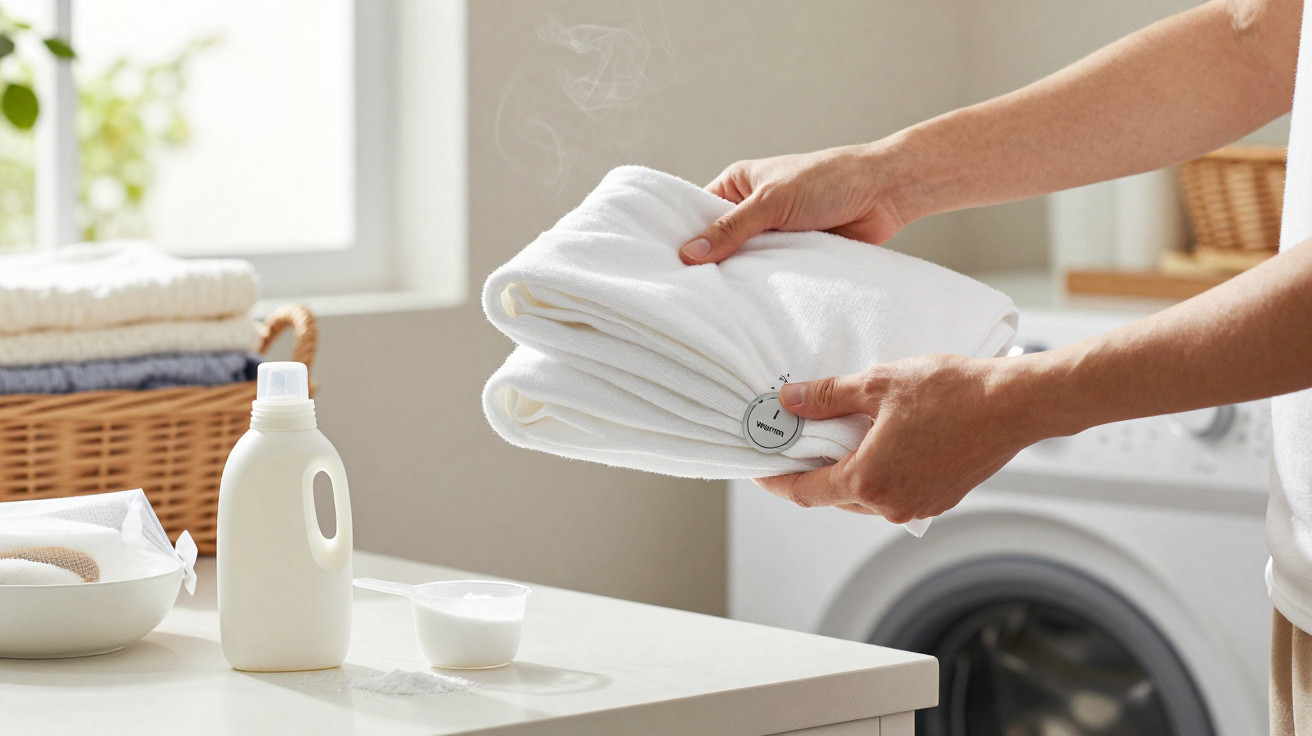
Once cleaned, dry each piece fully and polish it with a fresh microfibre cloth. Put a strip of anti-tarnish paper in your jewellery box. Keep silver in small zip bags with the air pressed out, placing every piece in a separate pouch so chains cannot touch, tangle or cling together. Wipe rings after wearing them; skin oils can be forgiving, but perfume and hairspray are not.
Follow one simple principle: last on, first off. Put jewellery on only after applying make-up, sunscreen and hair products. Take it off before washing up, exercising or having a hot bath. Leave rings at home when swimming, because chlorine and plating do not get along. If an item turns black overnight, consider sulphurous sources such as new rubber bands, certain felt linings or even uncovered eggs stored nearby in the fridge. Read the small print on your metals.
There is an emotional side to this, too. A ring is seldom only metal. Cleaning it with care preserves a gift without rubbing away its history.
“Use the softest method that works, and stop as soon as it does,” my grandmother used to mutter, like a kitchen spell.
- Skip the foil bath for: oxidised silver, rhodium plate, vermeil, glued stones, pearls and opals.
- Safe stand-in: mild soap and water with a soft brush.
- Never mix vinegar with bleach. Ever.
- Test on a less visible spot if you’re unsure.
- If a prong feels loose, stop cleaning and see a pro.
The small ritual that outshines the bottle
A foil-lined bowl, a singing kettle and a spoon against the side: this ritual is a reminder that proper care does not require a lab coat. You can watch the dullness clear like fog, then enjoy that private jolt of satisfaction when order returns.
The recipe travels because it honours both the metal and the memory attached to it. It creates little waste, costs very little and feels strangely calming. Pass it on to a friend convinced their necklace is beyond saving, and see their expression when it catches the light again. The method is not only about brightness. It teaches the subtle distinction between polishing and erasing.
| Key point | Detail | Benefit for the reader |
|---|---|---|
| Foil-and-soda method for silver | Aluminium foil, baking soda, salt, hot water, 2–5 minutes | A quick, inexpensive, reversible reaction that brings back shine |
| What to avoid | Oxidised finishes, rhodium plate, vermeil, pearls, opals, glued stones | Helps prevent damage and disappointment |
| Daily habits | Last on, first off; wipe after wear; store with anti-tarnish paper | Slows tarnishing and helps pieces retain a new appearance |
FAQ:
- Does the aluminium-and-baking-soda bath work on gold? It is intended for silver tarnish. For gold, use warm water, a few drops of mild washing-up liquid and a soft brush.
- Is baking soda safe for all jewellery? It is safe for solid silver in the foil bath, but not as an abrasive paste on soft metals. Do not use it on pearls, opals or anything glued.
- How often should I clean my jewellery? Give it a light wipe after wearing, then clean gently whenever you spot dullness. Rings worn often benefit from a monthly refresh. Let’s be honest: nobody really does that every day.
- What causes that black tarnish so quickly? Silver reacts with sulphur in the air and in materials including certain rubbers, felt and foods. Humidity makes the reaction faster.
- Can I use vinegar or ammonia instead? Vinegar is acidic and may damage finishes and stones, while ammonia can be harsh and produces strong fumes. Use the foil bath for silver, and soap for gold and gemstones.

Comments
No comments yet. Be the first to comment!
Leave a Comment